




Blog
Portable Power Station 1000W: What It Runs

A portable power station 1000w sounds simple on paper until you need it to keep a fridge cold during an outage, charge tools at a remote site, or run gear from the back of a truck in freezing weather. At that point, wattage stops being a spec sheet number and becomes a hard limit. If you are shopping for a portable power station 1000w, the real question is not whether 1000 watts is good or bad. It is whether it matches the work you expect it to do.
What a portable power station 1000w is really built for
A 1000-watt portable power station sits in a useful middle ground. It is more capable than the small battery boxes meant only for phones, lights, and laptops, but it is not a whole-home backup system and it is not a replacement for a serious generator when heavy loads need to run for long periods.
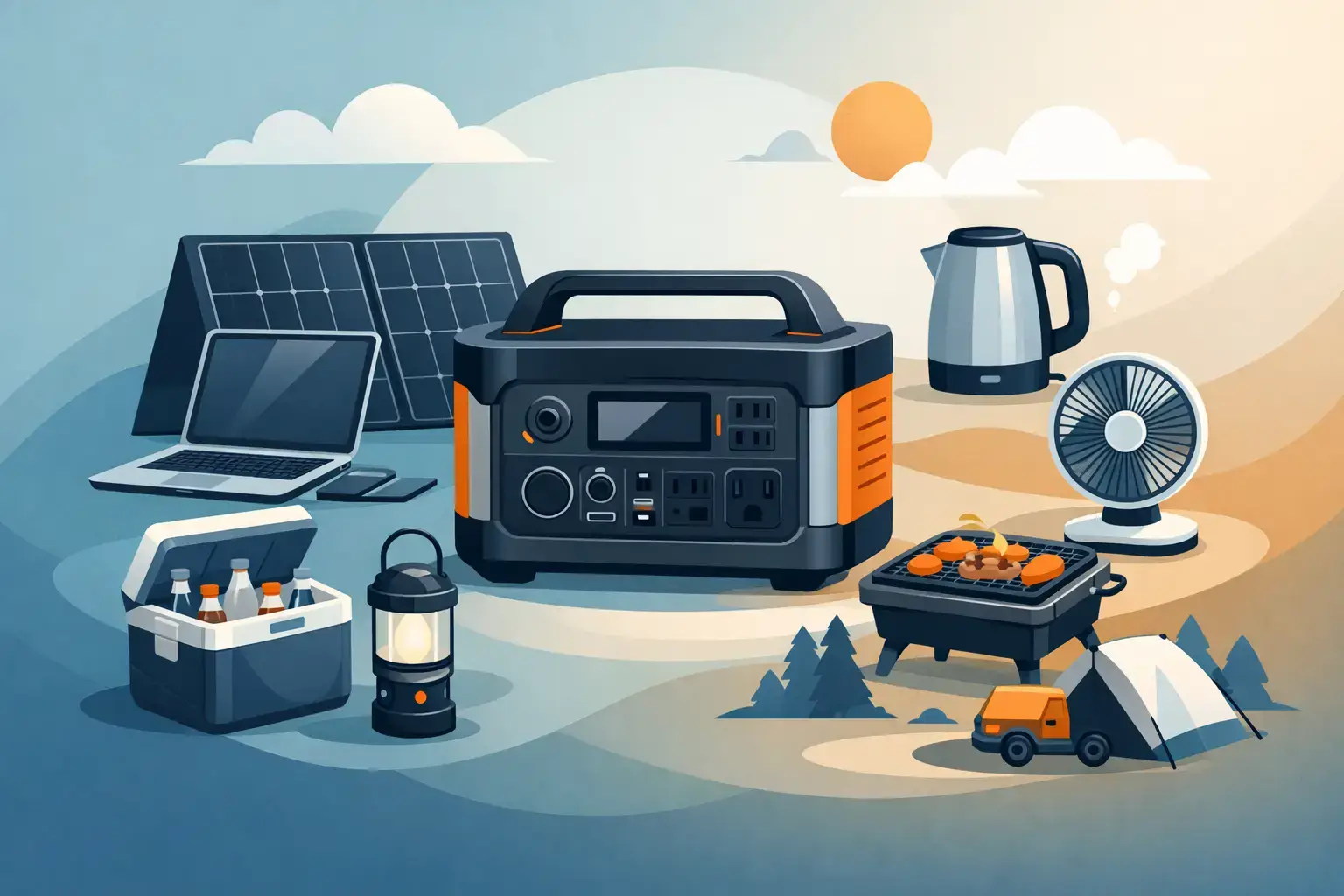
That middle ground is exactly why this size gets attention. It is compact enough to move between the house, workshop, vehicle, cabin, or campsite, yet strong enough to handle many of the devices people actually care about in short outages and off-grid use. Think routers, lights, laptops, monitors, camera gear, battery chargers, small TVs, CPAP machines, portable coolers, and in some cases a compact fridge.
The catch is that 1000 watts is only one part of the story. You also need to look at battery capacity, surge capability, output ports, recharge speed, and how the unit performs when temperatures drop. For buyers in northern climates, cold weather is not a side issue. It affects battery behavior, recharge times, and runtime expectations.
What can a portable power station 1000w run?
In practical terms, a portable power station 1000w can usually run low-draw and moderate-draw electronics without much drama. LED lights, internet equipment, laptops, tablets, phones, radios, camera batteries, and small fans are easy work. Many units in this class can also power a TV, a modem and router setup, or a compact electric cooler for several hours depending on battery size.
Small appliances are where buyers need to slow down and check numbers. A coffee maker, microwave, kettle, hot plate, space heater, or hair dryer can quickly push a 1000-watt station past its comfort zone. Some appliances may seem close enough on paper, but startup surges can still trip the inverter. A small refrigerator might run if its startup load stays within the station’s surge rating, but a larger fridge or freezer may be unreliable.
Power tools depend on the tool type and how hard it is being used. Charging cordless tool batteries is usually fine. Running a drill for brief periods may also be fine. Running higher-draw saws, grinders, compressors, or heaters is a different story. If your work depends on consistent output under load, battery power at this size can be limiting.
That is why a 1000W class station is often best for light-duty field power, emergency electronics, and short-duration appliance support rather than heavy continuous work.
1000W output is not the same as runtime
This is where many buying mistakes happen. Output tells you how much power the station can deliver at one time. Capacity tells you how long it can keep doing it.
A portable power station 1000w with a modest battery may run a 100-watt device for several hours, but not all day. The same station might handle a 700-watt appliance, yet only for a short window. If you are buying for outage protection, runtime matters as much as max wattage.
For example, if your goal is to keep a router, a few lights, phone chargers, and a laptop online during a blackout, a 1000W station may be a strong fit. If your goal is to power a refrigerator, backup lighting, and small kitchen appliances through an extended outage, capacity can disappear fast. That is where buyers start realizing they need either a larger battery platform or a fuel-based backup option.
For many households and field users, the right question is not Can it run this? It is How long can it run this, and what else needs to stay on at the same time?
Where a portable power station 1000w makes the most sense
This size works best when mobility matters and loads are predictable. It is a practical choice for vehicle-based travel, mobile work, garage and shed use, emergency communications, and temporary backup for essentials. If you want silent power for electronics, charging, lighting, and light equipment, it has real advantages.
It also suits people who want a simple emergency layer without storing fuel. For apartment use, occasional outages, camping setups, or a cabin with low-demand devices, a 1000W battery station can cover the basics cleanly and quietly.
On the other hand, if you live in an area where outages can stretch through cold nights, or you need backup for pumps, heaters, large refrigerators, freezers, or multiple appliances, this size may be too small as your only plan. In those situations, many buyers end up better served by a generator or a larger power station system.
Battery station vs generator for real backup use
A battery station and a generator solve different problems. A portable power station 1000w is quiet, easy to use indoors, and well suited to electronics and short-term support. There is no fuel to manage, no exhaust, and usually very little setup. That makes it useful for homes, vehicles, and enclosed spaces where combustion equipment is not an option.
A generator is the better tool when you need sustained output, higher surge handling, and longer runtimes. That matters during winter outages, jobsite use, and rural backup scenarios where refrigeration, pumps, tools, or multiple circuits need real support. Fuel-powered equipment also tends to recover faster operationally because you can refuel and keep going instead of waiting on a battery recharge.
There is no point pretending one replaces the other in every use case. If your priority is silent portable energy for lighter loads, battery power is hard to beat. If your priority is readiness for serious outages and heavy work, a generator is still the stronger answer.
What to check before you buy
Start with your load list. Write down the devices you actually need to power, not the ones that would just be nice to have. Check both running watts and startup watts. Motors, compressors, and heating elements can change the picture fast.
Then look at battery capacity, not just inverter output. A station may advertise 1000 watts, but that does not tell you whether it will last two hours or ten under your expected load. Recharge options matter too. AC wall charging is standard, but vehicle charging and solar input can make a major difference if you are using the station away from home.
Port selection is another practical point. If you need AC outlets, USB-C, 12V vehicle output, or regulated DC options for specific gear, confirm that the station supports the equipment you own. Build quality matters as well. Handles, casing, display readability, and straightforward controls are not cosmetic details when you are using the unit outdoors or during a power outage.
If you operate in cold climates, pay close attention to temperature limitations. Some battery systems lose noticeable performance in low temperatures, and charging restrictions can become a problem in winter. For buyers who expect dependable operation in Baltic or Nordic-style conditions, that detail deserves real attention, not an afterthought.
When 1000W is the right call – and when it is not
A 1000W portable power station is the right call when you need portable, clean, quiet energy for electronics, chargers, lighting, communications, and selected small appliances. It is a strong fit for organized users who understand their loads and want a practical backup layer they can move where needed.
It is not the right call if you expect it to behave like a large generator, cover a full household, or carry heavy heating and motor loads through long outages. That is not a flaw in the product category. It is just the reality of power demand.
The best equipment decisions usually come from being honest about the job. If your power needs are light to moderate and mobility matters, this size can be a smart, efficient tool. If your plan involves cold-weather resilience, longer runtimes, and work-ready backup under pressure, step up before the outage tells you that you should have. Choose the power source that matches the load, and you will trust it when the lights go out.
