




Blog
What Is Portable Power Station Used For?

A storm knocks out the power, your freezer is warming up, your phone battery is at 8%, and you still need light, communication, and enough power to keep the basics running. That is exactly where the question what is portable power station used for stops being theoretical and starts becoming practical.
A portable power station is a compact battery-based power source designed to run or charge electrical devices when you do not have access to a wall outlet. Unlike a traditional fuel generator, it stores electricity in an internal battery and delivers it through AC outlets, USB ports, and often 12V outputs. For the right jobs, it is quiet, clean, easy to move, and simple to use. The key is understanding where it fits best and where a generator is still the better tool.
What is portable power station used for in real life?
The short answer is mobile power, backup power, and convenience power. The longer answer depends on what you need to run, for how long, and where you are using it.
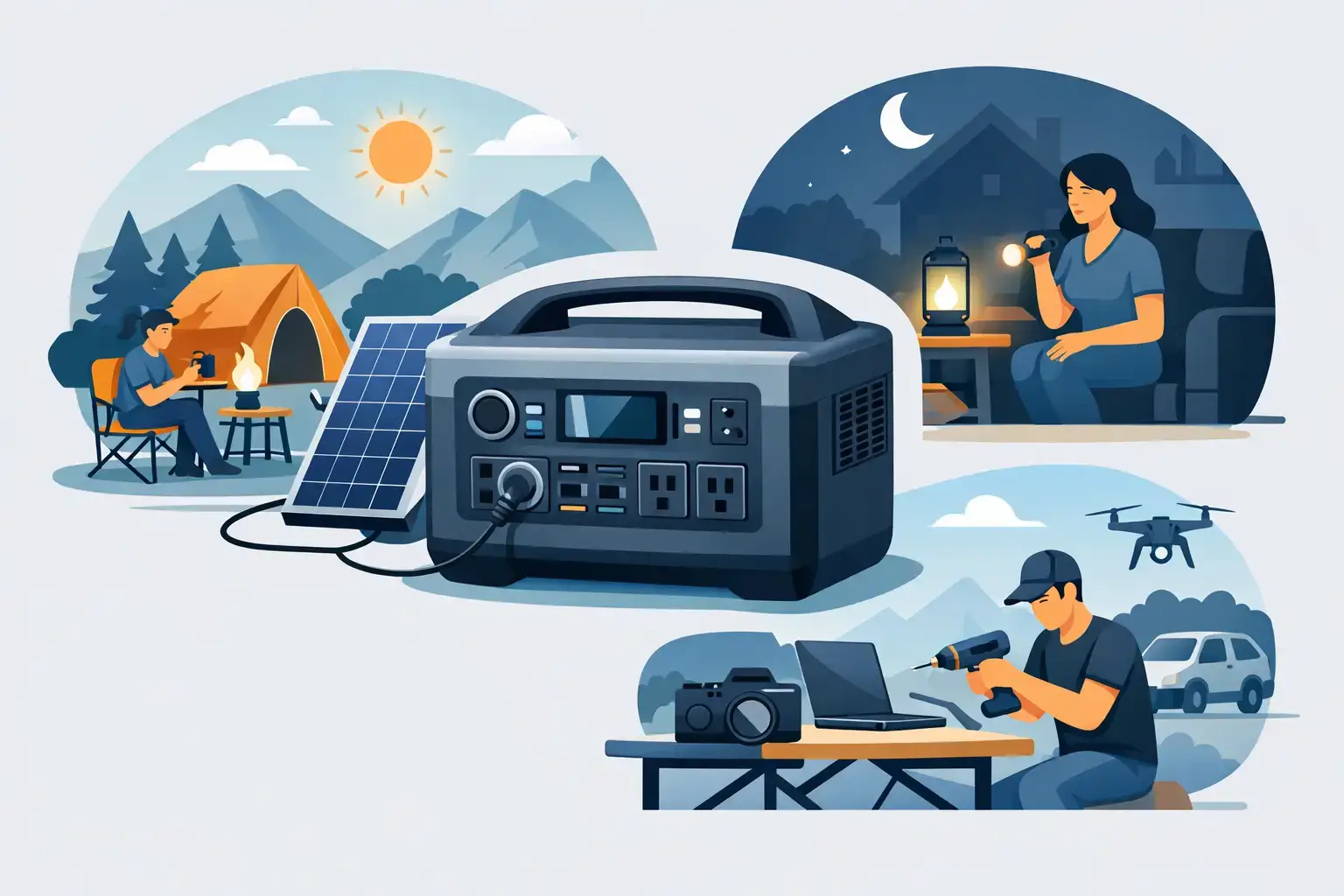
For many homeowners, a portable power station is used to keep essential electronics alive during an outage. That can mean charging phones, powering a router, running LED lights, keeping a laptop going, or supporting a CPAP machine overnight. In those situations, silent operation matters. You can use a battery power station indoors without fuel handling, engine noise, or exhaust concerns.
For campers, van users, and off-road travelers, it is a clean way to power small appliances and devices away from the grid. You can charge cameras, run a portable fridge for a period of time, power a fan, or keep navigation and communication gear ready. If you spend time in remote areas, that kind of dependable stored power is less about comfort and more about readiness.
For field professionals and tradespeople, portable power stations are often used for charging cordless tool batteries, inspection equipment, tablets, drones, and other light-duty electronics on the move. They are especially useful when the job does not justify hauling a fuel generator or when low noise is a priority.
Home backup for essential devices
One of the most common uses is short-term home backup. Not whole-house backup, but targeted backup for the gear that matters most.
A portable power station can keep communication devices charged, maintain internet service if your modem and router do not draw much power, and provide light in key rooms. It can also support small medical devices, radios, battery chargers, and some low-watt kitchen equipment for brief periods.
This is where buyers sometimes overestimate what battery backup can do. A power station may be ideal for electronics and light loads, but high-draw appliances change the picture fast. Space heaters, kettles, hair dryers, and many microwaves can drain a battery quickly or exceed the inverter’s output entirely. If your goal is to run larger household loads for extended periods, a generator is usually the more capable option.
That trade-off matters in cold climates. During a winter outage, a battery station is excellent for lights, phones, and communications, but not always the right answer for serious heating demands. If cold-weather resilience is the priority, you need to match the equipment to the load, not the marketing.
Camping, overlanding, and off-grid use
Portable power stations are a strong fit for outdoor users who want quiet operation and low maintenance. Press a button, plug in your gear, and you have usable power without pulling a starter cord or carrying fuel.
For camping, common uses include powering LED camp lights, charging phones and GPS units, running a cooler or compact fridge, inflating air mattresses, and keeping camera batteries topped up. If you are working from the road, a power station can also support a laptop and mobile hotspot.
The benefit here is not just portability. It is control. You can use power at night without engine noise, recharge from wall power before departure, and in some setups recharge from a vehicle or solar panel during the trip.
Still, runtime depends on battery capacity and device demand. A small station may handle weekend device charging easily but struggle with refrigeration. A larger unit gives more flexibility, but it will cost more and weigh more. Portable does not always mean light.
Jobsite and mobile work support
On a jobsite, portable power stations are best used as support power rather than full replacement power. They are excellent for low-draw, high-importance equipment.
That includes charging power tool batteries, running a laptop in a service van, powering testing meters, communication gear, or light-duty work lights. For mobile technicians, survey crews, and field teams, that is often enough to keep the day moving.
Where they become less practical is with continuous high-load tools. Angle grinders, compressors, large saws, and heavy-duty heaters usually call for more sustained output than many power stations are built to deliver. In those cases, an inverter generator or larger portable generator is the more dependable choice.
This is why the best buying decision starts with the actual wattage of the tools and devices you plan to use. If your needs are mostly charging and electronics, a power station can be the cleaner and quieter solution. If your work involves motor-driven equipment, you need more than convenience power.
Emergency kits and preparedness
Preparedness is another major reason people buy portable power stations. They are easy to store, quick to deploy, and useful across many short-notice situations.
During blackouts, storms, roadside breakdowns, and temporary evacuations, they can provide power for phones, radios, headlamps, rechargeable batteries, and medical devices. That makes them a practical part of a home emergency kit, especially for people who want a simple backup option without managing fuel.
For families, they also reduce one common outage problem: losing access to basic communication. When the grid is down, staying charged is not a luxury. It is how you get weather updates, contact family, and manage the next step.
A portable power station also works well as a layered backup strategy. Some users keep one for indoor essentials and pair it with a generator for heavier outdoor loads. That setup gives you quiet battery power where you want it and engine power where you need it.
What devices can a portable power station usually run?
In practical terms, most portable power stations are used for electronics, small appliances, and moderate loads. Phones, tablets, laptops, cameras, Wi-Fi equipment, portable TVs, fans, CPAP machines, routers, drones, and battery chargers are common examples.
Some larger units can also run mini fridges, small coolers, compact power tools, and certain kitchen devices for limited periods. The important detail is usually not whether the unit can start the device, but how long it can keep it running.
That is where two numbers matter: output wattage and battery capacity. Output wattage tells you what the station can power at one time. Battery capacity tells you how long it can do it. A unit with enough output but limited capacity may run the device, just not for as long as you expect.
If you are comparing options, pay attention to surge capability as well. Devices with motors or compressors may need extra power at startup.
When a portable power station is the wrong choice
A battery power station is not the answer for every power problem. If you need to run a well pump, sump pump for long periods, electric heating, large shop tools, or multiple home appliances at once, you are likely outside its ideal range.
That does not make it a bad product. It just means it has a specific job. Portable power stations are best when you need quiet, instant, low-maintenance electricity for lighter loads. They are less suited to high-demand, long-duration applications where fuel-based generators still lead on runtime and output.
For buyers in harsher environments, this distinction matters even more. Cold weather, long outages, and larger property needs often require more than battery backup alone. A serious power plan may include both battery and generator equipment, each used where it performs best.
How to decide if one fits your needs
Start with your use case, not the product category. Ask what you need to power, how long you need to power it, and whether you will use it indoors, outdoors, at home, in a vehicle, or on a worksite.
If your priority is charging devices, powering small electronics, and having silent backup during short outages, a portable power station makes strong sense. If you need longer runtime, more output, or support for heavy equipment, look at generators instead.
A practical buyer also thinks beyond day one. Consider recharge methods, battery size, outlet types, carrying weight, and whether replacement support and technical guidance are available. Equipment is only useful if it keeps working when conditions are rough. That is why many buyers look for suppliers that understand real operating demands, not just spec sheets. Champion Baltics serves that kind of customer every day.
The best portable power station is not the one with the biggest number on the box. It is the one that covers your real loads, fits your environment, and is ready when the power is not.
