






Blog
How to Choose Winch Capacity That Works

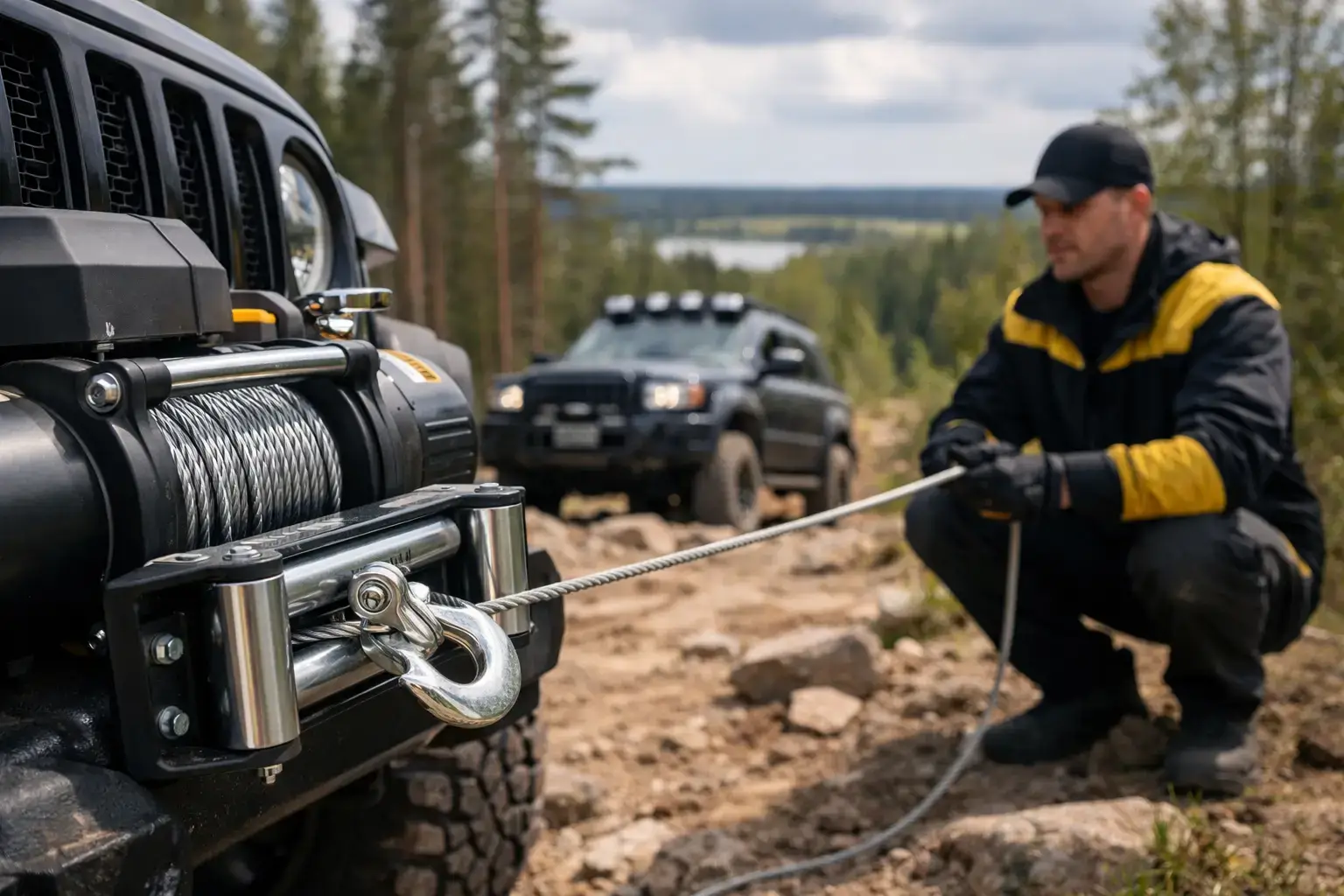
A winch that is too small does not just slow the job down. It can stall when you need it most, overheat under load, or force you into unsafe recovery attempts. If you are figuring out how to choose winch capacity, the right answer starts with the real load, not the number printed on the vehicle badge.
Most people begin with vehicle weight, and that is useful, but it is only the starting point. Mud, snow, slope, rolling resistance, and whether the load is dead weight or moving all change the amount of pulling force required. That is why choosing winch capacity is less about matching a machine to a brochure and more about giving yourself enough margin to work safely in rough conditions.
How to choose winch capacity without guessing
The basic rule is simple. For vehicle recovery, your winch should be rated for at least 1.5 times the gross vehicle weight of the heaviest vehicle you plan to pull. Gross vehicle weight means the vehicle plus fuel, passengers, tools, cargo, and accessories.
If your off-road vehicle weighs 4,500 lb empty but often carries gear, recovery boards, extra fuel, and bumpers, the real working weight may be closer to 5,200 to 5,500 lb. Multiply that by 1.5 and you are already in the 7,800 to 8,250 lb range. In that case, an 8,000 lb winch is the practical minimum, while 9,500 lb gives you more breathing room.
That 1.5x rule works well because recovery rarely happens on dry flat ground. A vehicle buried to the axles in wet ground can need far more force than its weight suggests. A trailer with locked wheels can feel much heavier than the number on paper. When conditions are bad, extra capacity stops being a luxury and starts becoming part of the safety margin.
The biggest mistake: sizing only by curb weight
Curb weight is what a vehicle weighs before the extras that make it useful. It does not include the loaded trailer tongue, the chainsaw kit in the back, the spare fuel can, or the steel skid plates you added for rough terrain. If you size a winch to bare vehicle weight, you can end up short very quickly.
This matters even more for working vehicles and utility setups. A pickup used around a property, forest road, or jobsite is usually carrying tools and materials. An ATV used for pulling or recovery may have racks loaded with equipment. A side-by-side fitted with protection, larger tires, and accessories can gain significant weight compared with stock.
When in doubt, estimate high. A slightly oversized winch is usually the better choice than one that lives at its limit.
Different jobs need different winch capacity
Not every winch is being used for self-recovery. Some owners need it for moving logs, loading equipment, pulling a trailer into position, or handling occasional stuck vehicles on private land. The correct size depends on the job.
ATV and UTV winches
For smaller machines, many buyers look at 2,000 to 4,500 lb winches. That range can be right, but it depends on whether the winch is mainly for the machine itself or for pulling other loads. A light ATV used for occasional self-recovery may be fine with a lower rating. A heavier UTV with cargo, plow equipment, or utility accessories usually benefits from more capacity.
If the machine weighs around 1,200 to 1,500 lb loaded, a 2,500 lb winch may technically cover basic recovery. But if you work in snow, soft ground, or wooded property where resistance is high, moving up to 3,500 or 4,500 lb gives you a more usable setup.
Truck and 4×4 winches
For pickups, larger SUVs, and serious off-road vehicles, common winch sizes start around 8,000 lb and go up through 9,500, 10,000, 12,000 lb and beyond. Here, the loaded weight matters a lot. Steel bumpers, roof racks, larger tires, tools, and camping or work gear add up fast.
A mid-size 4×4 may be well served by an 8,000 or 9,500 lb winch. A full-size truck used for towing, forestry access, or remote property work often fits better in the 10,000 to 12,000 lb range. Going too small on a heavier truck leaves little reserve once mud, incline, or poor traction enters the picture.
Trailer and equipment pulling
If you are winching equipment onto a trailer, the load is affected by the ramp angle, wheel condition, and whether the machine can assist under its own power. A rolling load up a shallow ramp needs less force than a dead machine with dragging tires. This is where buyers often underestimate required capacity.
For loading work, it is smart to size with extra headroom, especially if the equipment may be inoperable at times. A winch that handles the worst day is more useful than one that only works when everything goes right.
Real-world factors that increase pull resistance
Winch ratings are measured under controlled conditions, usually on the first layer of rope on the drum. Real jobs are not controlled conditions.
Mud is one of the biggest force multipliers. A vehicle that rolls freely on gravel can become extremely resistant when the tires sink. Snow can do the same, especially wet snow or packed drifts. On slopes, gravity adds load quickly. Even a mild incline can change the winch requirement more than people expect.
Tire condition matters too. A vehicle with free-rolling wheels is easier to move than one with damaged suspension, seized brakes, or tires buried against obstacles. Logs, rocks, and uneven ground all create short spikes in resistance. Those spikes are exactly why extra winch capacity is valuable.
Understand line pull before you buy
When comparing models, remember that maximum rated pull is strongest on the first wrap of rope on the drum. As more rope stays wound on the drum, effective pulling power drops. That means your 9,500 lb winch does not pull 9,500 lb at every point in the recovery.
This catches some buyers out. They assume the rating is constant, then wonder why the winch struggles on a longer pull. It is normal behavior, not necessarily a fault. If you expect long pulls, difficult terrain, or frequent recovery work, choose enough capacity to account for that reduction.
A snatch block can also help by increasing mechanical advantage, though it slows line speed and adds setup time. That is often a smart trade-off when the load is stubborn or conditions are poor.
Steel cable or synthetic rope changes the experience, not the rating
The choice between steel cable and synthetic rope does not usually change what capacity you need, but it does affect handling and use. Steel is durable and familiar, but heavier and harder to manage by hand. Synthetic rope is lighter and easier to handle, which is useful in cold weather and field conditions where fast setup matters.
For many users, the right question is not which one is universally better. It is which one suits the way the winch will actually be used. A recovery setup for remote property access or off-road travel may favor easier handling. A work-focused setup may prioritize abrasion resistance and routine durability. Either way, capacity should be chosen first, then rope type.
How much bigger should you go?
There is a point where oversizing becomes unnecessary. A much larger winch can add weight, draw more current, and require a mounting setup that does not make sense for the vehicle. Bigger is not always better if it creates fitment, electrical, or balance issues.
But modestly sizing up is often the right move. If your calculation points to a minimum 8,000 lb winch, moving to 9,500 lb is usually a practical decision. If your side-by-side sits near the upper edge of a 3,000 lb unit, stepping into a 4,500 lb class may give more reliable performance when conditions worsen.
The best target is a winch with enough reserve to handle realistic bad conditions without becoming oversized for the platform.
A practical way to choose winch capacity
Start with the heaviest real operating weight, not the factory brochure number. Then multiply by 1.5 for self-recovery as a baseline. After that, ask what kind of terrain and resistance you actually deal with. Flat hard ground is one thing. Wet woodland tracks, snow-covered access roads, and loaded work vehicles are another.
Then look at the system around the winch. The battery, mounting point, rope type, remote setup, and fairlead all affect how dependable the setup will be in practice. A winch is not just a rated number. It is part of a recovery system that has to work when the weather turns, the ground gives way, or the machine is stuck in the wrong place at the wrong time.
If you want a simple rule to keep in mind, choose the smallest winch that still leaves margin for your worst normal conditions. That is usually the setup you will trust when the job stops being easy.
