







Blog
Integrated Safety Features for Tactical Use of Winches

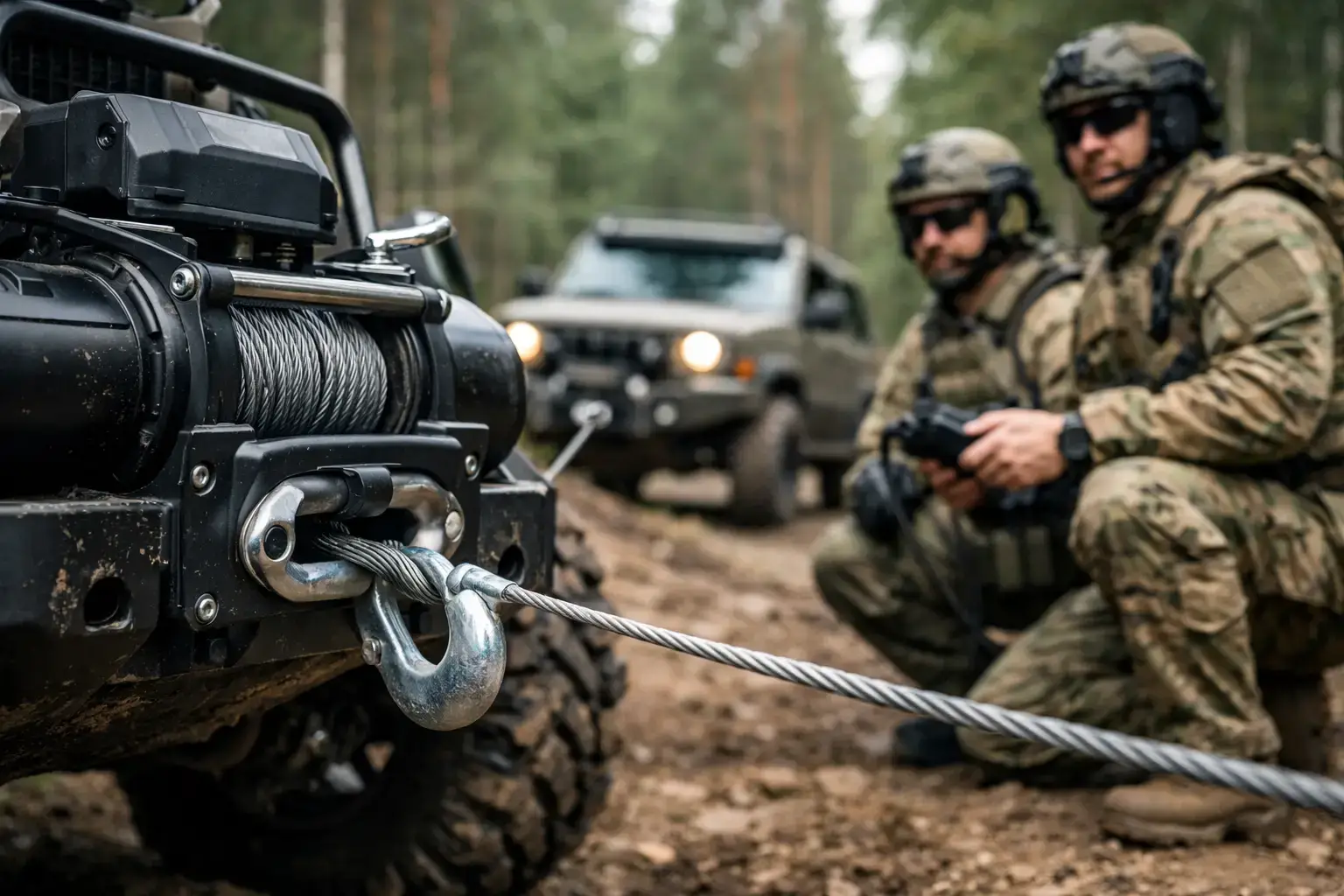
A recovery can turn dangerous in seconds when a vehicle is buried to the axles, the ground is uneven, and the line is carrying serious load. Integrated safety features for tactical use of winches give operators more control when conditions are working against them. They do not replace sound recovery technique, but they provide vital protection when a field vehicle, trailer, work truck, or off-road rig must move under pressure.
For practical owners and field crews, a winch is more than a pulling tool. It is recovery equipment. The right safety systems help protect the operator, the vehicle electrical system, the winch drivetrain, and everyone standing nearby.
Why Tactical Winch Safety Starts Inside the Unit
A tactical recovery environment is rarely clean or predictable. Mud, snow, rain, side loads, poor anchor points, low battery voltage, and limited visibility all affect the pull. An integrated safety feature is built into the winch or its supplied control system, rather than added later as an optional accessory.
That distinction matters. A high-capacity winch with dependable internal braking, protected electrical control, and a reliable remote is easier to operate safely than a basic unit that depends on the operator catching every problem before it develops. The best setup still includes quality recovery straps, rated shackles, gloves, and a recovery damper, but the winch itself needs to do its share of the work.
Safety features also protect equipment investment. Overloading a motor, overheating contact components, or allowing a vehicle battery to run flat can stop a recovery and leave a vehicle stranded farther from help. In cold Baltic winters or wet forest terrain, that is not a minor inconvenience.
Integrated Safety Features for Tactical Use of Winches
Automatic Load-Holding Brakes
A load-holding brake is one of the most important systems in an electric winch. When power to the motor stops, the brake is designed to hold the line load instead of allowing the drum to unwind. This gives the operator control during pauses in the recovery and prevents a vehicle from rolling back when the switch is released.
Braking performance is especially relevant on slopes. If the vehicle is being pulled uphill, a secure brake can hold progress while the operator checks the anchor point, clears an obstacle, or changes position. It is still essential to keep people out of the line path and never trust a winch brake as the only protection for a vehicle left unattended.
Brake location and design can vary. Some winches use systems that create more heat around the drum during repeated pulls. This can be harder on synthetic rope than on steel cable. For frequent long recoveries, match the winch, rope type, and duty cycle instead of choosing by pulling capacity alone.
Overload and Circuit Protection
Winching pulls high current from a vehicle electrical system. A stall, jammed drum, or badly overloaded line can push that demand beyond what the motor, cables, solenoid, or battery can safely handle. Integrated overload protection and correctly rated circuit protection help reduce the risk of damaged wiring and electrical failure.
A circuit breaker is not permission to pull beyond the winch rating. Its job is to interrupt an unsafe electrical condition. If it trips repeatedly, stop the recovery and find the cause. The line may be overloaded, the battery may be weak, the cables may be undersized, or the drum may be binding.
For field use, protected contactors and sealed control boxes also matter. Moisture and dirt can interfere with electrical connections at exactly the wrong moment. A properly protected control system is better suited to snow, rain, mud, and dusty work areas than exposed components.
Thermal Protection and Duty-Cycle Awareness
Winch motors create heat quickly under heavy load. Thermal protection can reduce the chance of motor damage by warning of excessive temperature or shutting down the unit before the motor overheats. This feature is valuable, but it has a trade-off: a protective shutdown can delay a recovery.
That is why duty cycle still matters. A winch rated for short, heavy pulls needs rest periods between pulls, especially when working near its maximum capacity. Cold air may help cooling, but it does not make a winch immune to heat buildup. A vehicle stuck in deep snow or peat can demand more sustained effort than a quick pull from a muddy rut.
Use short, controlled pulls. Pause to inspect the line, listen for motor strain, and let the winch cool when necessary. Trying to finish one difficult recovery without breaks is a common way to damage otherwise capable equipment.
Remote Controls With Emergency Stop Capability
A wired remote keeps the operator away from the front of the vehicle and out of the direct line of a loaded rope or cable. Wireless remotes add mobility, allowing the operator to see the anchor point and vehicle movement from a safer angle. For tactical use, the best choice depends on the environment.
A wired remote avoids battery and signal concerns, while a wireless remote gives more freedom of movement. In either case, a clear stop function is critical. The operator must be able to stop the pull immediately if the line begins to stack unevenly, the anchor shifts, a person enters the danger zone, or the vehicle moves unexpectedly.
Before every recovery, test the remote function while the line is unloaded. Keep the remote where it cannot be accidentally activated, and disconnect or isolate it when the winch is not in use. A powered winch should never be treated like inactive equipment.
Controlled Spooling and Drum Protection
Loose or uneven line on the drum is more than a storage issue. Under load, a poorly spooled cable or rope can bury itself into lower wraps, pinch, damage fibers, and make the next deployment difficult. A free-spool clutch allows the operator to pull line out by hand without running the motor, reducing unnecessary heat and battery drain.
Use the free-spool function only with the vehicle secured and the load removed from the line. When rewinding, guide the line from a safe position with heavy gloves. Never place hands close to the fairlead or drum while the winch is powered.
A quality fairlead is part of safe line management. Roller fairleads are commonly used with steel cable. Hawse fairleads are generally preferred with synthetic rope because they provide a smooth path with fewer sharp contact points. The wrong fairlead can shorten rope life and increase abrasion risk.
Safety Features Do Not Fix Poor Recovery Setup
Even a well-equipped winch can fail in an unsafe setup. The anchor point must be strong enough for the expected load. A small tree, damaged tow point, or unknown roadside object is not automatically a safe anchor. Use rated recovery points, tree-saver straps where appropriate, and hardware matched to the load.
Winch capacity should also be selected for the vehicle and the work. Rated line pull is normally measured on the first layer of rope or cable on the drum. As line builds up on the drum, pulling force falls. A winch that appears adequately rated on paper may have less available pull during a long recovery with many wraps remaining.
For difficult recoveries, a snatch block can change the direction of pull or create a double-line pull. That can reduce load on the winch, but it also adds rigging, connection points, and more details to inspect. Use it only when the operator understands the setup and has properly rated equipment.
Never use a vehicle recovery winch to lift people. Do not step over a loaded line or stand in line with the rope, cable, hook, or anchor point. Keep bystanders well clear before applying power.
Choosing a Winch for Real Field Readiness
Start with line pull capacity, but do not stop there. Check whether the winch has a dependable automatic brake, weather-protected controls, a usable remote, and electrical components suited to the vehicle system. Review cable length, rope material, fairlead compatibility, mounting pattern, and the available space on the bumper or mounting plate.
Synthetic rope is lighter and easier to handle, which makes it attractive for off-road and remote recovery. Steel cable offers strong abrasion resistance and can suit hard-working utility applications. Neither option is automatically safer in every case. Rope condition, correct spooling, and disciplined operation matter more than the material alone.
Maintain the winch before it is needed. Inspect the cable or rope for crushed sections, broken strands, cuts, heat damage, and contamination. Check mounting bolts, battery connections, control leads, hook latch operation, and fairlead condition. Replace worn parts before the next recovery, not after a failure in the field.
A winch earns its place on a vehicle when it gives you a controlled way out of trouble. Choose integrated protection that fits the job, maintain the recovery system, and make every pull slow, visible, and deliberate.
