





Blog
Best Water Pump for Garden Watering and Drainage

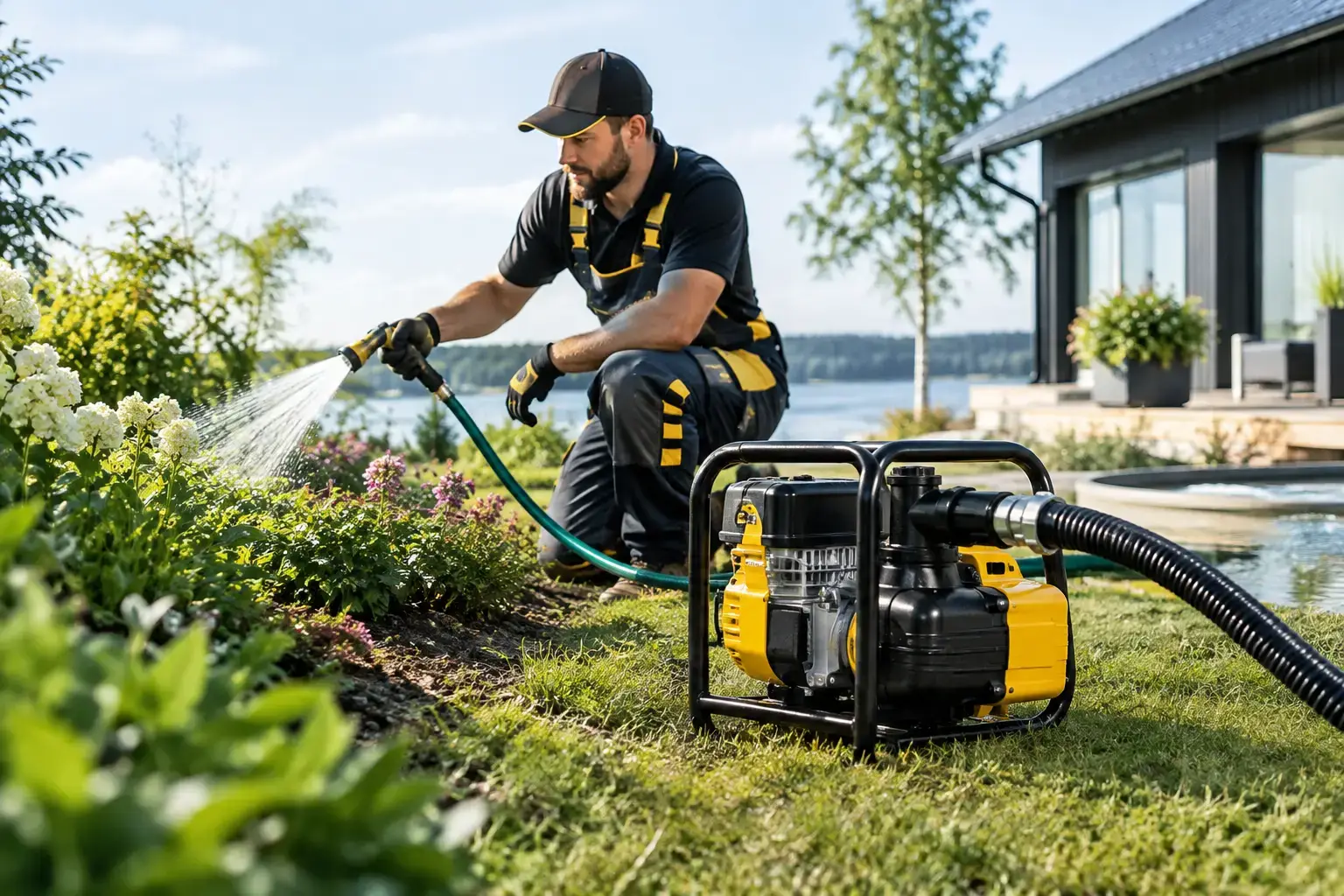
A pump that looks powerful on paper can still leave you waiting beside a half-filled tank if it is wrong for the hose run, water source, or height of your property. The best water pump for garden use is not simply the one with the highest flow rating. It is the pump that moves the water you have, to the place you need it, at a pace that makes the job worth doing.
For a small garden supplied from a rain barrel, a compact electric pump may be all you need. For irrigation from a pond, a long hose run to an orchard, or emergency drainage after heavy rain, a portable gasoline water pump gives you the reach and independence to work away from an outlet. Start with the job, then select the pump.
Choose the best water pump for garden work by task
Garden pumping jobs usually fall into three groups: watering and transferring clean water, moving dirty water during drainage, and lifting water from a source below the pump. Each calls for different pump features.
For routine irrigation, rainwater transfer, and filling storage tanks, choose a clean-water transfer pump. These pumps are designed for relatively clear water with only small particles. They are a practical choice for water butts, cisterns, pools, tanks, and clean ponds. A 1-inch pump suits smaller hoses and targeted garden watering, while a 2-inch model can move a much larger volume for bigger plots, multiple tanks, or long irrigation sessions.
For a flooded basement, ditch, construction area, or muddy section of a property, use a trash pump or dirty-water pump. Its wider internal passages can pass sand, leaves, grit, and debris that would quickly clog a standard transfer pump. It will not make dirty water safe for irrigation equipment, but it can clear the water out of the problem area reliably.
If the task is draining a shallow pond or collecting the last few inches of water from a flat surface, a submersible pump is often the better fit. Because it sits in the water, it does not need to pull water up through a suction hose. The trade-off is that it needs electrical power and is less convenient where no outlet or generator is available.
Clean-water transfer pumps for irrigation
A self-priming gasoline transfer pump is a strong all-around choice for landowners who need water where electrical supply is limited. It can draw from a pond, stream, tank, or large rainwater storage system and deliver water to sprinklers, drip irrigation storage, or a distant garden zone.
Look closely at hose diameter. A 2-inch pump moves high volumes quickly, which is useful when filling an intermediate tank or supplying several irrigation lines. But high flow is not always ideal for direct watering. A smaller hose, a valve, or a tank between the pump and the irrigation system can give you better control. Do not force a large pump into a light-duty hose setup and expect precise watering.
Dirty-water pumps for drainage
A drainage pump earns its place when weather turns against you. Low ground, driveways, trenches, crawl spaces, and outbuildings can collect water fast. A trash pump is built for these conditions, provided the debris size stays within the pump’s stated solids-handling limit.
Avoid using a clean-water pump in silty or leaf-filled water just because the job is urgent. Clogged impellers, damaged seals, and lost time cost more than choosing the correct pump from the start. If you expect muddy water, buy for muddy water.
Flow rate matters, but head height decides performance
Pump output is commonly listed in gallons per minute, or GPM. This number tells you how much water the pump can move under ideal conditions. It is useful, but it does not tell the full story.
The harder question is how far and how high the water must travel. This is where head height matters. Total head includes the vertical lift from the water source, the height to the discharge point, and the resistance created by hose length, bends, fittings, and narrow pipe. The higher the total head, the lower the actual flow.
For example, a pump may fill a tank rapidly when it sits beside the water source and discharges through a short, wide hose. Move that same pump uphill through 150 feet of hose with several bends, and the delivery rate can drop sharply. This does not mean the pump is faulty. It means the system is asking more of it.
Check both maximum head and the pump performance curve when available. Maximum head is the point where flow approaches zero, not the output you should plan around. For practical irrigation, choose a pump with enough head capacity to maintain useful flow at your real working height and hose distance.
Suction lift also deserves attention. Surface pumps pull water through the inlet hose, but they cannot draw from unlimited depth. In real use, keeping the pump close to the water level is the smart move. Use a reinforced suction hose, seal every connection, and fit a strainer and foot valve at the intake. Even a small air leak can prevent proper priming.
Match the power source to where you work
Electric pumps are quiet, simple, and well suited to a home garden close to power. They are especially useful for rain barrels, decorative ponds, light drainage, and occasional water transfer. Make sure the electrical connection is protected from moisture and use proper ground-fault protection for outdoor work.
Gasoline-powered pumps are built for distance and mobility. They make sense for larger rural properties, gardens beyond the reach of extension cords, off-grid sites, and emergency water movement. A portable engine-driven pump can be taken to the pond, ditch, field tank, or remote outbuilding rather than bringing the water source to the power outlet.
The trade-offs are fuel, engine maintenance, and noise. Store fresh fuel correctly, check engine oil before use, and run the pump outdoors only. Never operate a gasoline pump in a garage, shed, greenhouse, or enclosed space. Exhaust fumes are dangerous, and a pump must have clear ventilation around it.
Size the hoses and fittings before you buy
Hose size can either support a pump’s capacity or choke it. The pump inlet should use the manufacturer-recommended suction hose diameter. Reducing the inlet size can make priming difficult and restrict water supply to the impeller.
On the discharge side, a smaller hose may offer more manageable delivery for garden tasks, but it also creates more friction over distance. Wide hose moves more water with less resistance. If you need to send water a long way, use the largest practical discharge hose and avoid unnecessary sharp bends.
Plan for the complete setup, not just the pump. A working system normally needs a suction hose, discharge hose, clamps or couplings, intake strainer, foot valve where required, and a nozzle, manifold, or irrigation connection suited to the final task. These parts determine whether the pump starts easily and runs without interruption.
Practical checks that prevent pump damage
Before starting a surface pump, fill the pump housing with water if the model requires priming. Running a centrifugal pump dry can damage the mechanical seal quickly. Keep the intake strainer fully submerged but above the mud at the bottom of a pond or tank, where sediment is most concentrated.
Do not let the pump run unattended for long periods. Watch the water level, hose connections, discharge area, and engine temperature. If flow suddenly falls, shut down and inspect the intake for a blocked strainer, collapsed hose, air leak, or depleted water source.
After use, flush dirty water from the pump with clean water where appropriate. Drain the casing before freezing weather. In cold conditions, trapped water can freeze, crack the housing, and turn a ready-to-work machine into a repair job. For gasoline models, follow the engine service schedule and keep spare oil, spark plugs, filters, and service parts on hand.
A dependable choice starts with an honest job assessment
A compact electric pump is often enough for a patio garden and rain barrel. A clean-water gasoline transfer pump is the practical middle ground for gardens, greenhouses, tanks, ponds, and remote irrigation. A trash pump is the right tool when debris and floodwater are part of the job.
Choose capacity with room to spare, but do not buy flow you cannot control or a pump you cannot transport and maintain. Measure the lift, count the hose distance, look at the water quality, and select the hoses with the same care as the pump itself. When the next dry spell or heavy downpour arrives, that preparation is what keeps water moving.