





Blog
Water Pump Hose Selection for Real-World Jobs

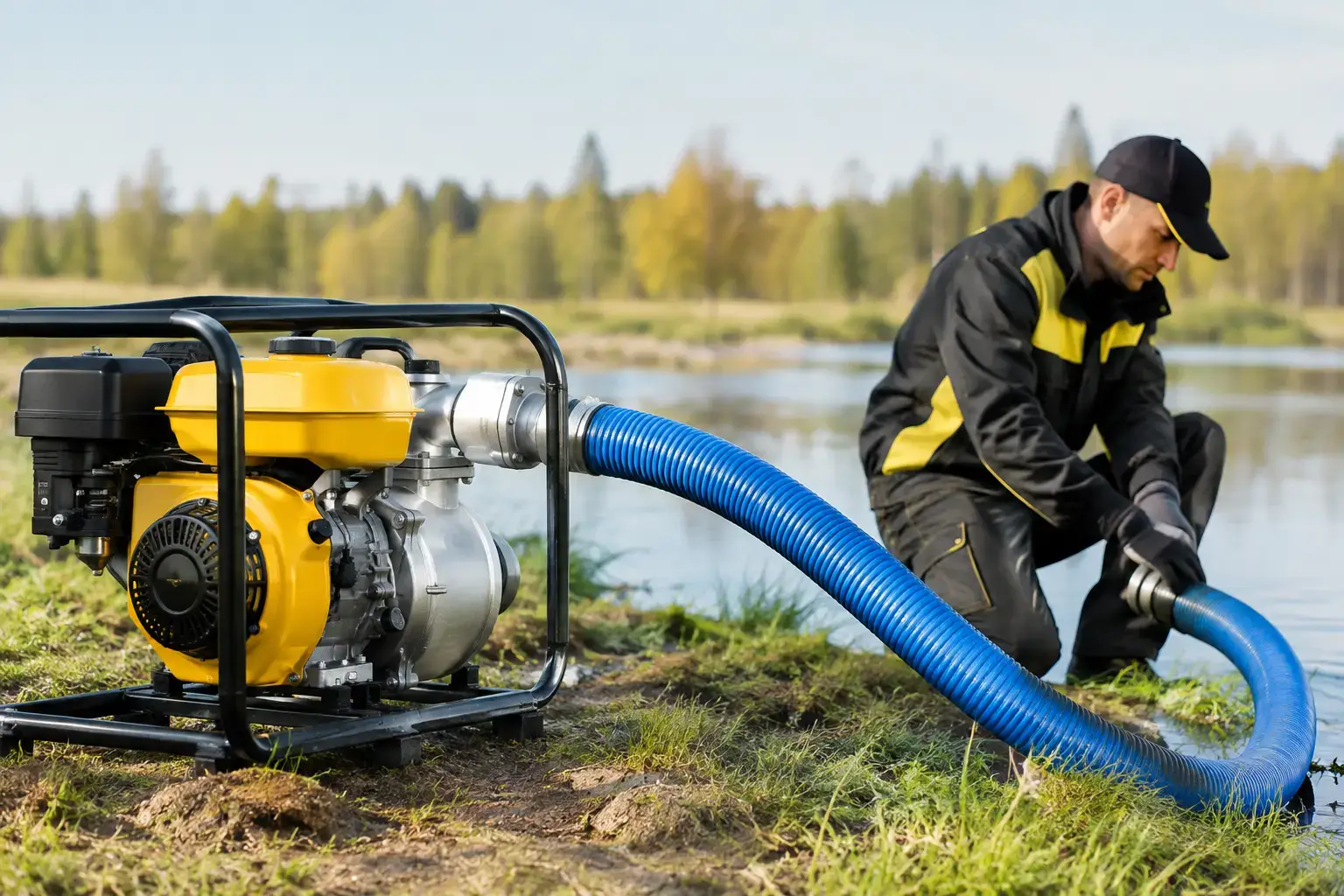
A water pump can have the right engine, flow rate, and lift capacity and still perform badly if the hose is wrong. Water pump hose selection determines how quickly the pump primes, how much water it can move, and whether a drainage job finishes cleanly or turns into a frustrating stop-and-start repair. For flooded basements, construction pits, irrigation runs, ponds, and remote property work, the hose is not an afterthought. It is part of the pumping system.
The practical rule is simple: match the hose to the pump connection, the water being moved, and the distance the water must travel. A large hose on the wrong fitting leaks air. A small hose restricts flow. A lightweight discharge hose may be fine across a lawn but can tear when dragged over sharp stone or frozen ground.
Start Water Pump Hose Selection With the Job
Before choosing a hose, identify whether it will be used on the suction side or the discharge side. These hoses do different work and should not be treated as interchangeable.
A suction hose runs from the water source to the pump inlet. It must hold its shape under vacuum while the pump draws water upward. A discharge hose carries water from the pump outlet to the place where it will be released. It operates under positive pressure and needs flexibility, abrasion resistance, and a pressure rating suitable for the pump.
If you are clearing a flooded area, a short suction hose with a strainer and a longer lay-flat discharge hose is often the practical setup. For drawing water from a pond or ditch, suction lift becomes more critical. For irrigation, the discharge run and elevation gain may matter more than the suction side.
Also consider what is in the water. Clear-water pumps are designed for relatively clean water, while trash pumps handle water carrying sand, leaves, sludge, and small debris. A hose that is suitable for clean water may clog, wear through, or allow debris to enter when used on a dirty-water job. Match the hose and strainer to the pump’s stated solids-handling capability. Do not assume a larger hose makes a clear-water pump safe for muddy water.
Match Hose Diameter to the Pump Port
The hose inside diameter should normally match the pump’s inlet or outlet size. A 2-inch pump is designed to work with 2-inch hose, while a 3-inch pump needs 3-inch hose to deliver its rated high-volume performance.
Reducing hose diameter can be useful in a limited case, such as sending water through an existing smaller line. But it creates restriction. The pump may still run, yet actual flow falls, discharge pressure rises, and the engine works harder. This is especially noticeable when a high-capacity 3-inch pump is forced through a 1.5-inch hose.
Oversizing is not automatically better either. A larger hose requires compatible couplings and can be heavier, more awkward to store, and harder to route. The best starting point is always the manufacturer’s port size. Use reducers only when there is a clear reason, and expect a performance trade-off.
For suction hose, correct diameter is even more important. An undersized suction line can slow priming and starve the pump. If the pump cannot receive water freely, it cannot produce its rated output at the discharge end.
Check the actual fitting standard
Port diameter alone is not enough. Confirm the thread type or coupling system used by the pump and hose. Camlock couplings are common for fast connection on higher-volume water transfer setups, while threaded fittings may be used on smaller pumps. Hose tails, clamps, gaskets, and adapters must all be compatible.
Air leaks on the suction side are a frequent cause of priming failure. A connection can appear tight and still leak enough air to prevent the pump from lifting water. Use the correct gasket, secure clamps evenly, and inspect fittings for cracked plastic, damaged threads, or hardened seals before heading to a remote site.
Choose the Right Hose Material
Hose construction should fit the terrain, temperature, and type of water. There is no single best option for every job.
Reinforced PVC suction hose is a dependable general-purpose choice for many portable pumps. Its rigid spiral construction helps prevent collapse under suction, and transparent versions make it easier to see air bubbles or blockages. It is well suited for clear water and moderate dirty-water work when paired with the right strainer.
Lay-flat PVC discharge hose is popular because it is light, compact, and easy to deploy over long distances. Once water starts flowing, it expands. It works well for drainage, water transfer, and temporary irrigation, particularly where the hose can lie on relatively smooth ground. Its weakness is abrasion. Dragging it repeatedly over gravel, timber, scrap metal, or rough concrete shortens its life.
Rubber or heavy-duty reinforced discharge hose costs more and weighs more, but it handles demanding sites better. It is a strong choice for contractors, farm work, frequent transport, and locations where the hose will be pulled around corners or across rough surfaces. In colder conditions, a hose that remains flexible is easier to handle and less likely to crack during setup.
For contaminated water, chemical exposure, or hot water, check material compatibility before use. Standard water-transfer hose is not designed for every liquid. Fuel, solvents, aggressive chemicals, and water at elevated temperatures can damage the hose and create a safety risk.
Length, Lift, and Head Change Pump Performance
Buying the longest hose available can feel like preparation, but unnecessary length reduces pumping efficiency. Every meter of hose adds friction, especially with smaller diameters, bends, and fittings. The farther water travels, the more flow you lose.
Keep the suction hose as short and straight as the job allows. Portable surface pumps do not pull water indefinitely upward. In real operating conditions, practical suction lift is substantially limited by atmospheric pressure, hose losses, temperature, and connection quality. If the pump struggles to prime from a deep source, moving the pump closer to the water is usually more effective than adding power or repeatedly refilling the pump housing.
On the discharge side, account for total head, not just vertical height. Total head includes the vertical rise from the pump to the outlet, friction through the hose, and restriction from valves, elbows, nozzles, and adapters. A pump may move a large volume on level ground but deliver much less water when sending it uphill through a long hose.
A few practical choices protect performance: use the largest practical hose diameter, avoid sharp kinks, limit unnecessary elbows, and route the hose with broad turns. If a long discharge run is unavoidable, inspect the pump’s performance chart rather than relying only on its maximum flow figure.
Protect the Suction Side
The suction setup deserves careful attention because it protects both pump performance and the pump itself. Fit a strainer or foot valve at the water end. The strainer keeps leaves, stones, and larger debris from entering the pump, while a foot valve can help retain water in the hose after priming.
Keep the intake off the bottom of a pond, ditch, or tank. Pulling directly from the bottom stirs sediment and increases wear on the impeller and seals. Suspending the strainer slightly above the bottom or placing it in a protected intake basket helps reduce debris intake.
Never run a centrifugal water pump dry. The mechanical seal and internal components rely on water for cooling and lubrication. Prime the pump according to its instructions, check the suction line for leaks, and stop the engine if water flow suddenly drops. A blocked strainer, collapsed hose, or air leak is easier and cheaper to fix than a damaged pump seal.
Pressure Rating and Secure Connections Matter
Discharge hose must be rated for the pressure the pump can produce. This matters most when using high-head pumps, long uphill runs, or restrictive nozzles. Do not use a thin lay-flat hose for applications that exceed its rated working pressure simply because the diameter fits.
Use proper clamps sized for the hose outside diameter, and tighten them securely without cutting into the hose. Recheck clamps after the first few minutes of operation, particularly when the hose is new or the water is cold. Vibration can loosen fittings, and a discharge hose that comes free under pressure can whip violently.
Plan the outlet location before starting. Fast-moving water can erode soil, flood a neighboring area, undermine gravel, or wash debris back toward the intake. Direct discharge away from buildings, electrical equipment, and unstable ground. If water is being moved from a contaminated source, follow local requirements for where it can be released.
Build a Hose Kit That Is Ready for Work
For most portable pump owners, a ready-to-use kit is more valuable than a pile of loose accessories. Keep the suction hose, strainer, discharge hose, couplings, clamps, spare gaskets, and a suitable adapter together with the pump. After use, drain the hose, remove trapped water before freezing conditions, and let it dry before storage.
Inspect hoses at the start of each season and after hard use. Look for soft spots, crushed sections, cracks near fittings, loose spiral reinforcement, abrasion damage, and seals that no longer sit flat. Replacing a worn gasket before a storm costs very little. Discovering it during an emergency drainage job costs time when time matters.
The right hose lets a water pump deliver the capacity you paid for. Choose it for the real job – water source, debris level, terrain, distance, and fittings – then test the complete setup before the next flood, irrigation day, or field repair puts it under pressure.
