




Blog
Centrifugal Versus Trash Pump for Tough Water Jobs

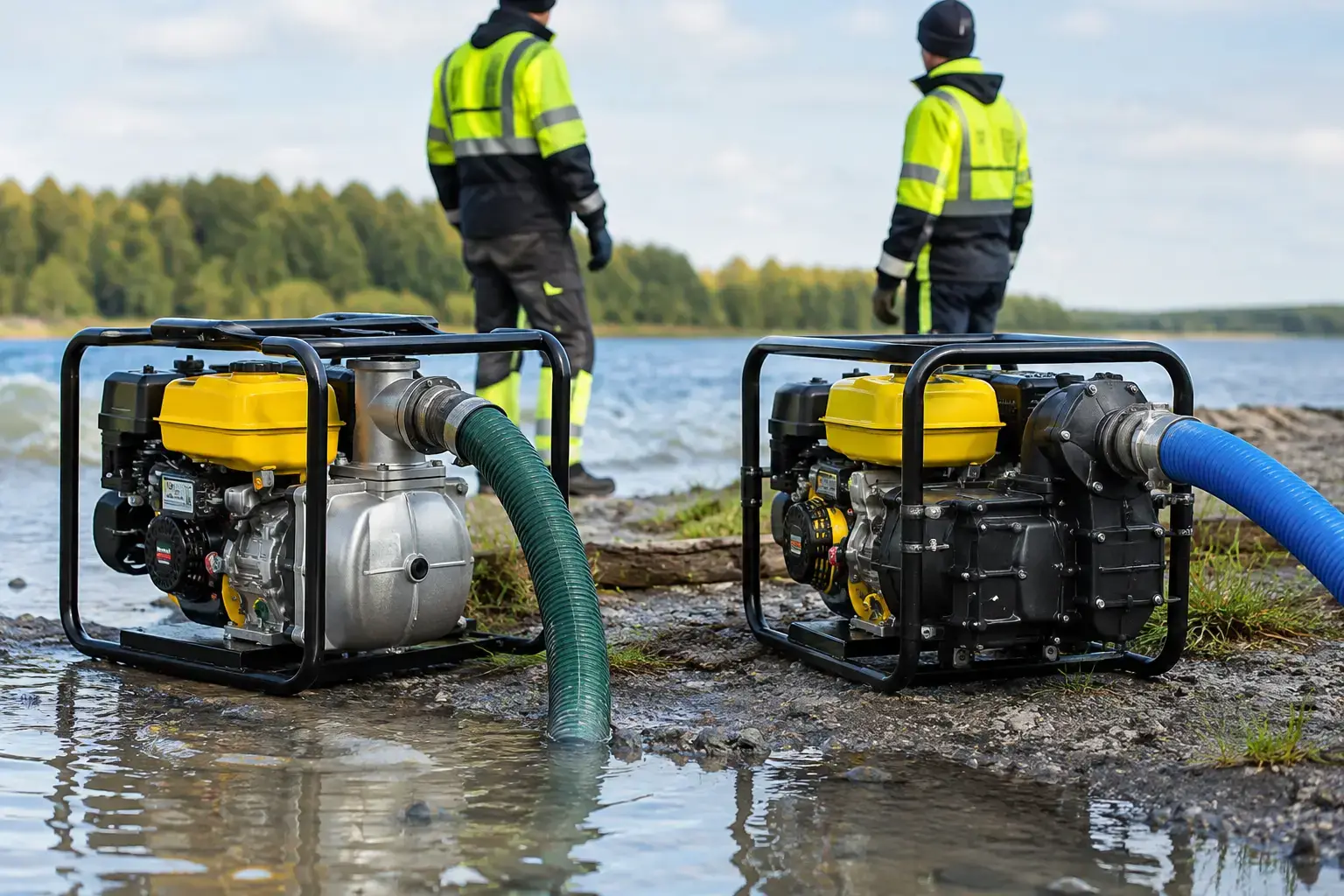
A flooded cellar, a drainage ditch full of silt, and a clean-water storage tank may all need water moved fast. But centrifugal versus trash pump is not a simple choice between a light-duty and heavy-duty machine. The water itself decides much of the answer. Choose the wrong pump and a job that should take an hour can turn into repeated clogs, damaged seals, and costly downtime.
Centrifugal Versus Trash Pump: The Core Difference
A centrifugal pump uses a spinning impeller to pull water into the pump housing and push it through the discharge hose. This is the basic operating principle behind many portable water pumps. It is efficient for transferring relatively clean water at high volume.
A trash pump is also a centrifugal pump, but it is built to pass solids. It has wider internal clearances, a different impeller design, and a larger passage between the impeller and pump housing. Those features allow it to move water carrying sand, mud, leaves, small stones, and site debris without blocking as easily as a standard clean-water centrifugal pump.
The key distinction is not whether one uses centrifugal force and the other does not. Both do. The real question is how clean the water is, how large the solids are, and how much interruption the job can tolerate.
When a Standard Centrifugal Pump Is the Better Tool
A standard centrifugal pump is the practical choice when water is clean or only lightly contaminated. Typical jobs include emptying rainwater tanks, transferring water between reservoirs, irrigating gardens, filling livestock troughs, draining a clean basement, or supplying water for pressure washing where the source has been screened.
These pumps are often lighter, simpler to carry, and well suited to high-flow transfer. If you need to move a large volume of clear water over a moderate distance, a clean-water pump can deliver the capacity you need without paying for solids-handling capability that will never be used.
That efficiency matters when the pump will run regularly. A correctly sized centrifugal pump uses its engine power to move water rather than forcing water and debris through oversized internal passages. It can be a sensible choice for property maintenance, irrigation systems, and planned water transfer where the intake conditions are under control.
However, clean water does not mean perfectly clear water. Fine grit can still wear an impeller and seal over time. If the source is a pond, stream, or open ditch, use an intake strainer and keep the suction hose off the bottom. A pump that works well in a clean tank may have a short working life when it is repeatedly fed abrasive sediment.
When a Trash Pump Earns Its Place
A trash pump is built for uncertain water conditions. It is the right direction for construction-site drainage, storm runoff, muddy trenches, ditch clearing, floodwater, farmyard drainage, and off-road work where water carries soil and debris.
During heavy rain, water rarely stays clean. It picks up gravel, leaves, bark, roots, sand, and loose material from driveways and work areas. A standard pump may lose flow as debris catches in the housing. A trash pump has the clearance to keep working through material that would stop a clean-water model.
This does not mean a trash pump can swallow anything. Every pump has a rated maximum solids size, commonly expressed in inches or millimeters. Check that specification before buying. A pump rated for solids up to 1 inch should not be expected to pass fist-sized stones, long stringy weeds, plastic sheeting, or chunks of timber. Those materials can still wrap around the impeller or obstruct the suction strainer.
Trash pumps also tend to make sense when access is difficult. If you are pumping water from a trench in cold rain or draining a remote property after a storm, stopping every few minutes to clear an intake is not a workable plan. A pump with more solids capacity gives you useful operating margin when conditions are messy and time matters.
Semi-Trash Pumps: The Middle Ground
Some portable pumps are sold as semi-trash models. These are designed for water with smaller suspended particles and modest debris, but they do not have the same solids capacity as a full trash pump. They can be useful for runoff, shallow flooding, and water with sand or grit, provided you know the debris is limited.
A semi-trash pump can be a good compromise for landowners who usually handle clean water but occasionally need to drain muddy areas. For repeated trench, flood, or construction work, a full trash pump is usually the safer choice.
Flow Rate Is Only Part of the Calculation
Many buyers focus first on gallons per minute. Flow rate matters, but it is only meaningful when considered with lift height and hose distance.
A pump must first lift water from the source to the pump. This is called suction lift. Portable surface pumps have practical limits, and performance falls as the vertical lift increases. Place the pump as close to the water as safely possible, use a short suction hose, and make sure every connection is airtight.
After the pump has pulled in the water, it must push it through the discharge hose. Vertical rise, hose length, hose diameter, bends, valves, and fittings all add resistance. This is commonly described as total head. A pump may advertise a high maximum flow rate, but that figure is usually measured under favorable conditions. Pumping uphill through a long, narrow hose will reduce actual output.
For fast drainage, hose size is especially important. A 2-inch pump paired with a restricted hose cannot perform at its intended capacity. Match the discharge hose to the pump outlet, keep runs as straight as practical, and avoid unnecessary reductions in diameter.
Choose by Water Condition First, Then Pump Size
Start with the source. Clean tank water, clear rainwater, and screened irrigation water point toward a standard centrifugal pump. Muddy water, runoff with leaves, silty ditches, and jobsite drainage point toward a trash pump.
Then consider the volume of water and the time available. A small pump may be enough for occasional puddles or a rain barrel. For a flooded basement, a large pond transfer, or a drainage trench that needs to be cleared before work can continue, higher capacity can save substantial time.
Next, measure the vertical rise from the water surface to the discharge point, then estimate the discharge hose length. Do not select a pump based on maximum flow alone. Read its head and lift ratings so the machine can still deliver useful flow at your actual setup.
Finally, think about how the pump will be transported and maintained. A portable gasoline-powered pump is useful where grid power is unavailable, but it needs fuel, oil checks, proper ventilation, and a level operating surface. Keep spare engine oil, hose clamps, gaskets, and a serviceable suction strainer on hand. These small items prevent many field failures.
Setup Practices That Protect Any Water Pump
Correct setup has as much effect on performance as pump type. Prime the pump housing before starting unless the manufacturer specifically states otherwise. Running a non-self-primed centrifugal pump dry can damage the mechanical seal quickly.
Use a reinforced suction hose, not a standard lay-flat discharge hose. Suction creates vacuum, and an unsuitable hose can collapse. Fit a strainer to the inlet, even with a trash pump, because it prevents oversized debris from entering the system.
Check hose connections for air leaks. A tiny leak on the suction side can prevent priming or cause weak, inconsistent flow. Once the job is complete, flush dirty water from the pump and hoses. In freezing conditions, drain the pump fully before storage. Water left in the housing can freeze, expand, and crack components that were working perfectly the day before.
The Practical Decision
Choose a standard centrifugal pump when you control the water source and need efficient, high-volume transfer of clean water. Choose a trash pump when the water is dirty, the solids are unpredictable, or downtime is not acceptable. For many rural properties and worksites, the extra capability of a trash pump is cheap insurance during storm season and drainage emergencies.
The best pump is not the one with the biggest number on the box. It is the one that matches the water, hose run, lift height, and working conditions you will actually face. Before the next flood, runoff event, or drainage job, inspect the source and plan for the mess rather than hoping clean-water equipment will survive it.
