





Blog
Are Pressure Washer Hoses Universal? No.

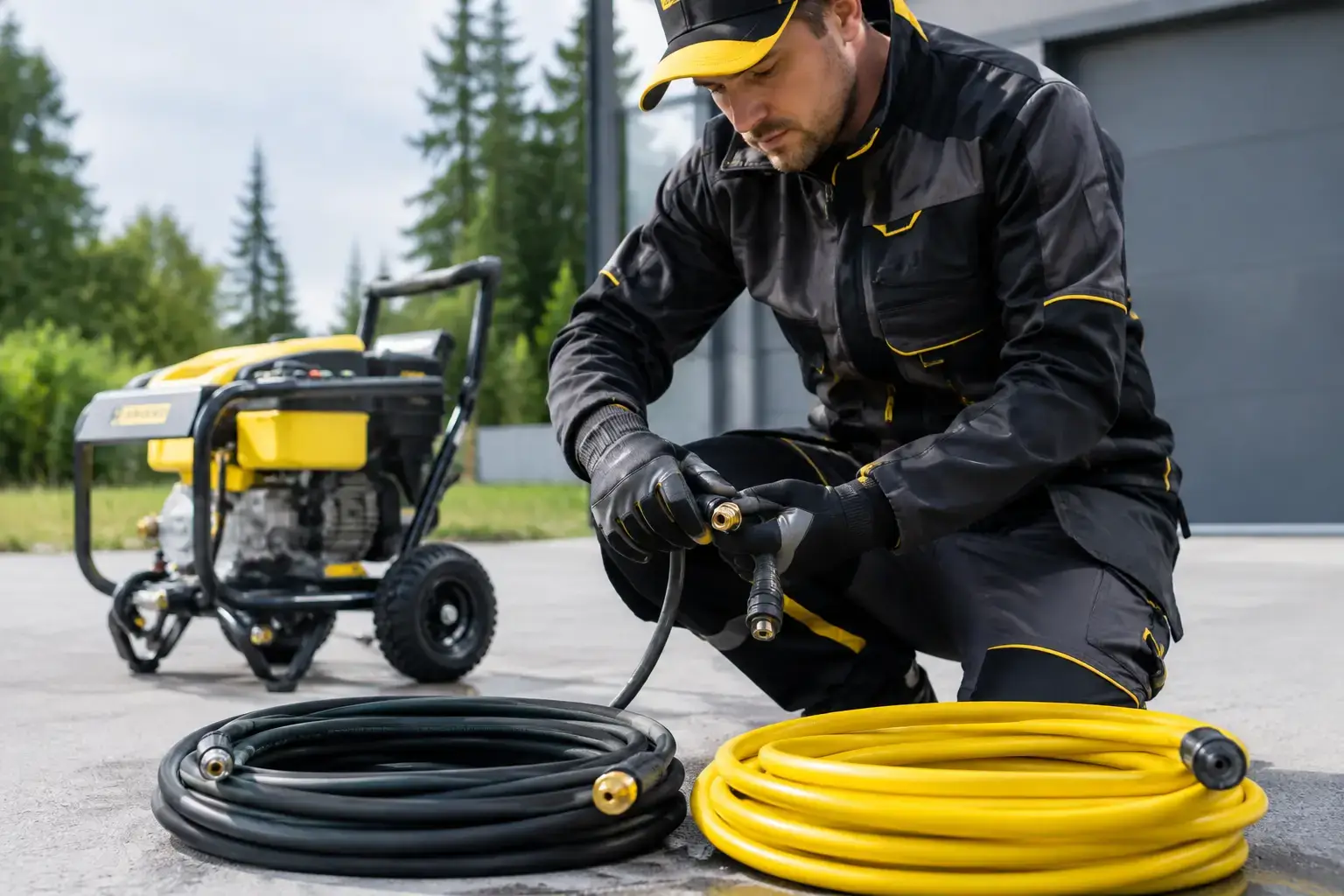
A hose can look right, thread on easily, and still be the wrong part for your pressure washer. If you are asking, are pressure washer hoses universal, the practical answer is no. Compatibility depends on the connection at each end, the hose’s working-pressure rating, its inside diameter, and the flow your machine requires.
Getting those details right protects the pump, gun, and wand while keeping cleaning power where you need it. This matters whether you are washing farm equipment, clearing muddy ATV panels, cleaning paving, or preparing a property for winter.
Are Pressure Washer Hoses Universal Across Brands?
Pressure washer hoses are not universal across brands or even across models from the same manufacturer. Many consumer machines use similar connections, but similar is not the same as interchangeable. A hose may attach to the spray gun but not to the pump outlet. It may also fit physically while being rated too low for the machine’s pressure.
The good news is that replacement hoses are widely available because the industry uses several common fitting styles. Once you identify your original hose and machine specifications, choosing a compatible replacement is straightforward.
The safest approach is to match the hose to the pressure washer’s manual or specification label. Check the maximum PSI, gallons per minute, and both connection types before ordering. Never assume that a threaded fitting with the same outside appearance will seal correctly.
Start With the Two Hose Connections
Every high-pressure hose has two ends: one connects to the pressure washer pump and the other connects to the trigger gun. Those ends may use different fittings. This is why measuring only one side of a damaged hose can lead to an expensive mistake.
M22 threaded fittings
M22 fittings are common on homeowner and light-duty pressure washers. They use a threaded collar, but there are important variations. The most frequent confusion is between M22 fittings with a 14 mm internal stem and versions with a 15 mm internal stem. They can appear nearly identical, yet they do not seal reliably when mismatched.
If an M22 hose connects but leaks at the fitting, the internal stem size is often the issue. Measure the inside stem of the existing connection rather than relying only on the M22 label.
Quick-connect fittings
Quick-connect systems use a plug and socket arrangement that locks together with a sliding collar. They are fast to connect when changing hoses, guns, wands, and nozzles. Common sizes include 1/4-inch fittings for spray guns and accessories and 3/8-inch fittings for larger hoses and pump connections.
A 1/4-inch quick connect is not automatically compatible with a 3/8-inch quick connect. The sizes refer to the fitting system, not merely the visible opening. They are designed for different flow demands and will not lock together without the correct adapter.
Proprietary or specialty connections
Some compact electric pressure washers and older units use brand-specific hose connections. These may have a custom threaded end, a molded hose connection, or a unique locking system. In that case, an adapter can sometimes make a standard hose usable, but an adapter adds another potential leak point and must be rated for the machine’s full pressure.
For demanding work, a direct-fit hose is usually the cleaner, more reliable solution.
Pressure Rating Is a Safety Requirement
A replacement hose must be rated at or above your pressure washer’s maximum PSI. If your machine produces 3,200 PSI, fit a hose rated for at least 3,200 PSI. Choosing a higher-rated hose is generally acceptable, provided the fittings and diameter also match.
Do not use a hose rated below the washer’s maximum output. High-pressure hose failures can cause injury, damage nearby equipment, and create an immediate loss of control. A hose that has survived on a lower-pressure electric unit may not be safe on a gas-powered washer.
Also look at temperature rating. Hot water reduces the safe operating margin of many standard hoses. If you use a hot-water pressure washer, select a hose specifically rated for the water temperature involved. Cold-weather users should consider a flexible, cold-weather-rated hose because stiff hose is harder to handle and more prone to damage when bent sharply.
Hose Diameter Affects Cleaning Performance
Most consumer pressure washer hoses use a 1/4-inch inside diameter. This is a practical match for many electric and gas machines used around homes, vehicles, workshops, and rural properties. Larger 5/16-inch and 3/8-inch hoses are often used with higher-flow or commercial equipment.
A smaller-diameter hose creates more restriction over distance. On a modest residential machine, that may not be noticeable over a short run. On a higher-flow machine or a very long hose, excessive restriction can reduce effective performance and place unnecessary strain on the system.
Match the original hose diameter whenever possible. If you are upgrading to a longer hose, confirm that the machine manufacturer supports that length and diameter. A longer hose gives more reach around buildings, trailers, and machinery, but it is not always a free performance upgrade.
Choose Length for the Job, Not Just Convenience
A short hose is lighter, easier to store, and less likely to snag around wheels, timber, or tools. It is a good choice for compact cleaning areas. A 25-foot hose suits many homeowner tasks, while 50 feet is often more practical for washing vehicles, patios, equipment, and larger work areas without constantly moving the pressure washer.
Longer hoses can save time when the washer must stay on firm, level ground while you work around a building or piece of machinery. The trade-off is greater weight, more storage space, and potentially more pressure loss. For most users, 50 feet offers a useful balance. Go longer only when the working area genuinely requires it.
Avoid joining multiple ordinary hoses together unless the fittings, adapters, and combined hose ratings are approved for the pressure and flow. Every extra connection is another point that can leak, loosen, or catch on obstacles.
Do Not Confuse a Garden Hose With a Pressure Washer Hose
The water supply hose and the high-pressure hose do completely different jobs. A garden hose carries incoming water from the tap or tank to the pressure washer inlet. The high-pressure hose carries pressurized water from the pump to the trigger gun.
A garden hose is never a replacement for a pressure washer hose. It is not built for thousands of PSI. Likewise, a high-pressure hose should not be used as a supply hose. Use a clean, adequately sized garden hose to feed the washer, and keep its inlet filter clear to protect the pump.
A Fast Compatibility Check Before You Buy
Before selecting a replacement, confirm these five details:
- Maximum PSI and gallons per minute listed for the pressure washer
- Hose inside diameter and required length
- Pump-end connection type and size
- Trigger-gun-end connection type and size
- Whether you need cold-weather flexibility, hot-water capability, or abrasion resistance
Take clear photos of both hose ends and measure the critical fittings if the manual is unavailable. A photo beside a tape measure can prevent confusion between similar M22 fittings and quick-connect sizes.
When an Adapter Makes Sense
An adapter is useful when you want to add a quick-connect gun, replace a hard-to-find hose, or standardize accessories across several machines. It can make setup faster and expand the range of compatible lances, surface cleaners, and spray guns.
But adapters are not a cure for every mismatch. They cannot make an under-rated hose safe, correct an unsuitable diameter, or compensate for a damaged fitting. Use only quality high-pressure adapters rated above your washer’s maximum PSI, and inspect them regularly for corrosion, worn seals, and leakage.
Replace a Hose Before It Fails
Inspect the hose before each serious cleaning job. Replace it if you find exposed reinforcement braid, deep cuts, bubbles, crushed sections, persistent leaks at the crimp, or fittings that no longer lock securely. Do not wrap a high-pressure hose with tape and put it back into service.
After use, release pressure through the trigger, disconnect carefully, and coil the hose in broad loops. Avoid kinks, driving over it, dragging it across sharp edges, or storing it in direct sun for long periods. In freezing conditions, drain water from the hose before storage. Frozen water can damage the hose lining and fittings.
A pressure washer is only as dependable as the parts carrying its pressure. Match the fitting, pressure rating, diameter, and length, then buy the hose that suits the work ahead. The right replacement keeps your equipment ready when the mud, grime, and hard jobs do not wait.
