






Blog
Best Generator for Well Pump: Size It Right

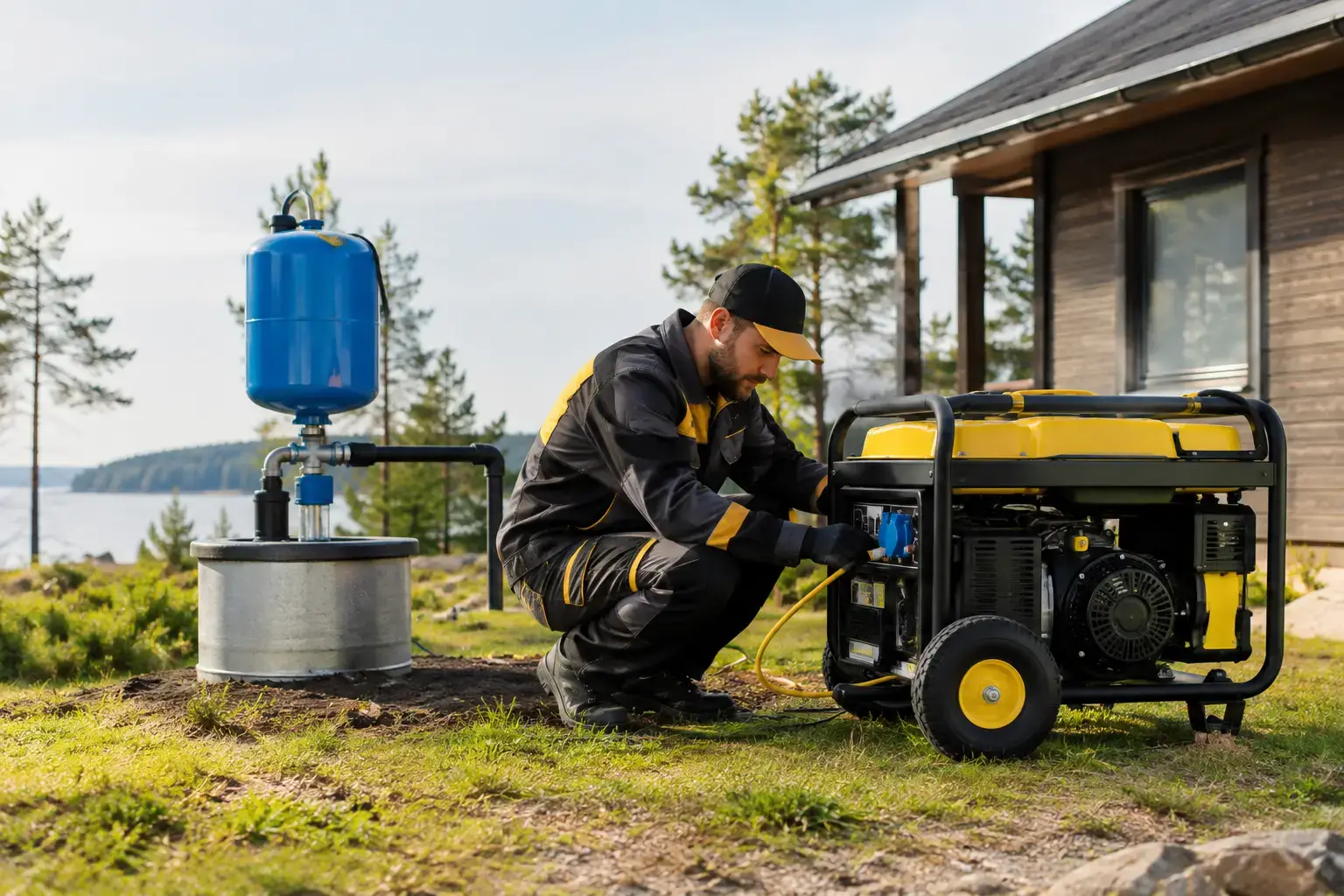
A well pump does not give much warning before it becomes urgent. When the power fails, water pressure drops, toilets stop refilling, and a home or remote property can quickly lose one of its basic services. The best generator for well pump backup is not simply the unit with the highest wattage. It must deliver the correct voltage, handle the motor’s startup surge, and run reliably for as long as the outage lasts.
Choosing too small can leave the pump humming without starting, trip the generator’s overload protection, or put extra stress on the motor. Choosing the right generator gives you dependable water for the house, livestock, washing, and essential daily work.
Start With the Well Pump, Not the Generator
Most residential well pumps are powered by a 240-volt circuit. They may be submersible pumps installed deep in the well or above-ground jet pumps. Both use electric motors, and motors demand a sharp burst of power when they start.
This startup demand is the point many buyers miss. A pump may use 1,000 to 2,000 running watts once water is flowing, yet need two to five times more power for a few seconds at startup. The exact requirement depends on the horsepower, motor condition, water depth, pressure system, and whether other loads are already running.
Before buying a generator, check the pump control box, motor label, pressure switch documentation, or electrical panel. Record the voltage, horsepower, running amps, and any listed locked-rotor amps. If the information is unclear, an electrician or well-pump technician can identify the circuit and calculate the demand safely.
A generator must provide 240 volts if the pump is wired for 240 volts. A large 120-volt portable generator cannot run a 240-volt pump, regardless of its advertised wattage.
How Much Generator Power Does a Well Pump Need?
Generator sizing is based on two figures: running watts and starting watts. Running watts support the pump while it is operating. Starting watts cover the brief surge needed to get the motor turning.
A practical starting point for a typical 240-volt residential well pump is:
- A 1/2 HP pump often needs roughly 1,000 to 1,500 running watts and 3,000 to 4,000 starting watts.
- A 3/4 HP pump may need around 1,500 to 2,000 running watts and 4,000 to 5,500 starting watts.
- A 1 HP pump commonly requires 2,000 to 2,500 running watts and 5,000 to 7,000 starting watts.
- Larger 1 1/2 HP and 2 HP pumps can require substantially more starting capacity, often moving into the 8,000-watt-plus generator range.
These are planning figures, not a substitute for the motor data plate. Some modern pumps start more easily, while older motors, long cable runs, and higher-pressure systems may demand more surge capacity than expected.
For a 3/4 HP well pump that needs 5,000 starting watts, a generator rated at only 5,000 peak watts leaves no margin. Add a refrigerator, freezer, lighting, circulator pump, or battery charger, and overload becomes likely. In this case, a 7,000- to 8,000-watt generator with enough 240-volt output is usually the more dependable choice.
The Best Generator for Well Pump Backup Has Reserve Capacity
Do not size a generator to operate at its limit. A well pump cycles on and off as water pressure changes, so the startup load can return repeatedly. Reserve capacity helps the generator handle those cycles without voltage drop or nuisance shutdowns.
For pump-only operation, aim for a generator with starting watts comfortably above the pump’s known startup requirement. For whole-home essentials, add the running wattage of every load that may operate at the same time, then allow extra room for another motor starting.
For example, a property may need to power a well pump, refrigerator, freezer, LED lights, internet equipment, and a furnace blower. The steady load may look modest on paper, but the refrigerator and well pump can both start unexpectedly. A larger open-frame generator is often a better fit than a compact unit when water supply is the priority.
This does not mean bigger is always better. An oversized generator costs more, uses more fuel, weighs more, and may be harder to move. The right target is sufficient 240-volt surge capacity, useful runtime, and enough headroom for the loads you genuinely need.
Inverter, Dual Fuel, Gasoline, or Diesel?
Fuel type and generator design matter during a long outage.
Inverter generators
An inverter generator is a strong choice for smaller pump systems and homes that also need clean power for electronics. It can run quietly and adjust engine speed as the load changes, which helps save fuel at lighter loads. However, not every inverter generator supplies 240 volts, and not every model has enough starting capacity for a deep-well pump. Check both points before choosing one.
Conventional gasoline generators
A conventional gasoline generator is often the practical workhorse for well-pump backup. It offers strong surge capability, straightforward operation, and a wide range of output sizes. For rural properties, a 240-volt model in the mid-to-high output range can cover a pump plus essential circuits without complicated load management.
Gasoline needs proper storage and rotation. Keep fuel in approved containers, use fresh stabilized fuel, and run the generator periodically. A generator that sits unused for years is less likely to be ready when a storm hits.
Dual-fuel generators
Dual-fuel generators add flexibility by running on gasoline or propane. Propane stores longer than gasoline and can be especially useful for planned emergency backup. The trade-off is that output on propane is commonly lower than on gasoline. If your pump needs a high starting surge, size the generator using its propane-rated wattage when propane will be your primary fuel.
Diesel generators
Diesel can be a sensible choice for heavy-duty use, larger pumps, workshops, or properties that already store diesel fuel. Diesel equipment is built for long running hours and demanding loads, but it is usually heavier, louder, and less convenient for occasional portable use. Cold-weather fuel management also matters in northern conditions.
Connection Safety Is Part of the Generator Choice
Never connect a generator to a home outlet or panel with a homemade backfeed cable. This can energize utility lines, injure utility workers, damage equipment, and create a serious fire risk.
The correct setup uses a manual transfer switch, generator interlock, or dedicated transfer equipment installed by a qualified electrician. This lets you isolate the home from the utility supply and choose only the circuits you need, such as the well pump, refrigerator, heating controls, and selected lights.
A well-pump circuit may also have a control box, pressure tank switch, or protection device that affects starting behavior. Test the complete system after installation. Do not assume a generator will start the pump just because its wattage looks adequate on paper.
Run portable generators outdoors only, well away from doors, windows, vents, and enclosed spaces. Carbon monoxide is invisible and deadly. Keep the unit dry, use a properly rated outdoor extension cord where applicable, and place it on stable ground where exhaust cannot collect near the building.
Cold Weather and Long-Outage Readiness
A generator for a well pump is emergency equipment. It needs to start when temperatures are low, daylight is limited, and the power may be out for days.
Look for electric start if the generator will be used by more than one person or stored in a location where manual recoil starting is difficult. Low-oil shutdown, overload protection, covered outlets, and a clear fuel gauge are also useful features. Wheel kits and folding handles matter more than they seem when a heavy generator must be moved across snow, gravel, or uneven ground.
Test-run the generator several times each year under a real load. Let it start the well pump, confirm the pressure tank reaches normal cutout pressure, and check that the generator does not struggle or trip. Keep engine oil, spark plugs, air filters, fuel treatment, and the correct extension cables on hand. Champion Baltics supports this practical approach with generators and maintenance items intended for ongoing ownership, not just one-time purchase.
Choose for Water First, Then Add Comfort Loads
If water is the non-negotiable need, buy for the pump’s voltage and startup surge first. After that, calculate what else should run during an outage. A properly sized 240-volt generator can keep the pressure tank charged and still support selected household essentials, but it should not be expected to run every appliance at once.
The smart setup is the one you can fuel, start, connect, and maintain without hesitation. When the lights go out, dependable water starts with a generator that has already proven it can do the job.
