







Blog
Winch Battery Drain Causes and Real Fixes

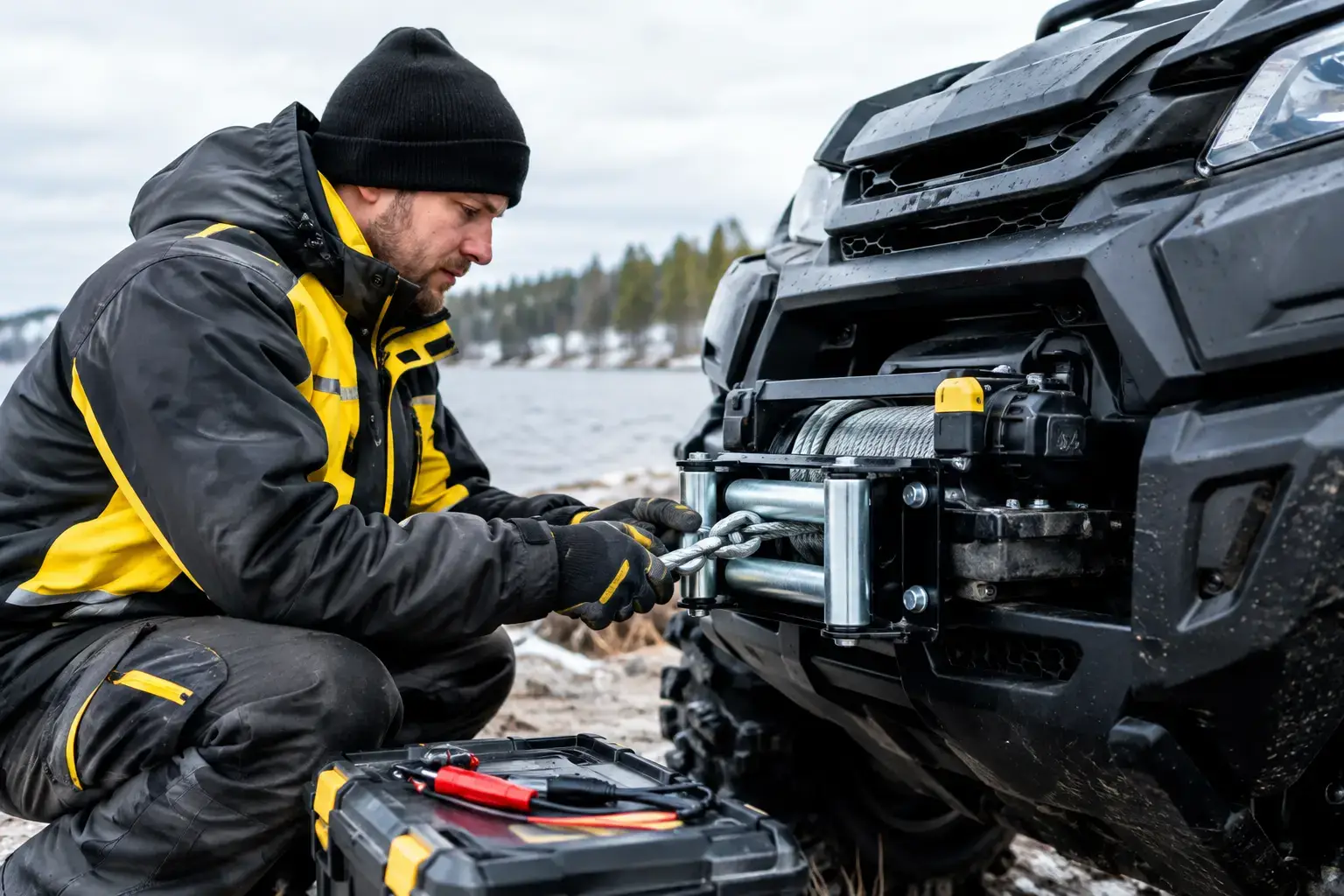
A winch can pull a vehicle out of deep mud, clear a fallen tree from a track, or recover a loaded trailer. But high pulling power has a cost: winch battery drain can leave you with a recovered vehicle that will not start. The problem is rarely the winch alone. It is usually a combination of heavy current draw, battery condition, cable losses, cold weather, and poor recovery habits.
A working winch system needs more than a strong-looking battery. It needs enough reserve capacity, clean heavy-duty connections, suitable wiring, and an engine that can support the load when conditions allow. Get those basics right before you need a recovery, not after the battery voltage drops in the field.
Why Winch Battery Drain Happens
An electric winch draws serious current, especially under load. A light pull on level ground may be manageable, while a hard pull through mud, snow, sand, or a steep incline can demand several hundred amps. The closer the winch gets to its rated pulling capacity, the more power it requires.
Your vehicle battery supplies that power first. The alternator contributes only when the engine is running and only within its available output range. Many factory alternators cannot keep up with a heavily loaded winch at idle. That means the battery continues to discharge even while the engine is running.
The battery also loses usable capacity in cold conditions. A battery that starts a vehicle without trouble on a mild day may struggle after repeated winch pulls below freezing. This matters for off-road users, forestry work, remote properties, and winter recovery jobs where the vehicle may be running lights, heaters, radios, or auxiliary equipment at the same time.
A single long pull is hard on the system. Repeated pulls without rest are worse. If the winch motor is hot, the cables are warm, and the battery voltage is falling, forcing another pull can damage more than the battery. Heat and low voltage increase stress on the winch motor, solenoids, cables, and connectors.
The Most Common Causes of Winch Battery Drain
A battery with too little reserve capacity
Cold cranking amps matter for starting an engine, but reserve capacity and amp-hour rating matter when operating a winch. A battery can have enough starting power yet still run down quickly under sustained winching.
An aging lead-acid battery is another common weak point. Sulfation, repeated deep discharge, and poor charging reduce real capacity over time. The battery may show a normal resting voltage, then collapse under load. A proper load test gives a far better answer than checking voltage alone.
Voltage drop in cables and grounds
Winch cables must carry high current with minimal resistance. Corroded terminals, loose connections, undersized cable, damaged insulation, or a poor chassis ground can create major voltage drop. The winch receives less voltage, so it works harder and draws more current. The result is slower line speed, extra heat, and faster battery drain.
Inspect both positive and negative paths. The negative cable is not an afterthought. A clean, secure battery-to-chassis connection and a strong engine ground are essential. On a vehicle-mounted winch, the mounting points and ground path must be free from rust, paint buildup, and contamination.
Winching with the engine off
Winching with the engine off is sometimes unavoidable, but it is the fastest way to flatten a starting battery. Even a short recovery can remove enough reserve power that the vehicle will not restart, particularly in cold weather.
When it is safe to do so, keep the engine running during a recovery. Do not assume this means the alternator is charging the battery fully while the winch works. It simply reduces the battery’s workload. Avoid high engine speed unless the vehicle manufacturer and winch instructions allow it, and keep people clear of moving parts at all times.
Excessive line pull and poor rigging
The first layer of cable on the drum has the highest pulling capacity. As more layers build up, mechanical advantage decreases and motor load rises. Pulling at an angle also places extra strain on the rope, fairlead, and drum.
Use proper recovery rigging. A snatch block can reduce the winch load and cut current demand by increasing mechanical advantage, although it makes the recovery setup more involved and requires a secure anchor point. For difficult recoveries, this trade-off is usually worth it. A slower, controlled pull is easier on the battery and safer for the entire setup.
A winch that draws power while parked
A winch should not drain a healthy battery while the vehicle is parked. If it does, inspect the control box, solenoid or contactor, remote socket, and wiring. Water intrusion, damaged insulation, a stuck contactor, or an incorrectly wired accessory can create a parasitic draw.
Disconnect the winch power supply before working on wiring. If you suspect a parked-current issue, use a multimeter or have the system checked by a qualified technician. Do not treat a recurring dead battery as normal maintenance.
How to Check Your Winch Electrical System
Start with the battery fully charged. A rested 12-volt lead-acid battery should generally read around 12.6 volts at rest. Lower voltage does not automatically mean the battery is bad, but it does mean testing should begin before the next recovery.
Check every heavy connection at the battery, isolator, contactor, winch motor, chassis, and engine ground. Look for green or white corrosion, loose nuts, melted insulation, cracked terminals, and cable sections that feel stiff or damaged. Clean terminals with the correct tools and tighten them securely.
Next, watch voltage during a controlled winch test. Under load, some voltage drop is expected. A sharp collapse, slow winch operation, clicking contactors, or dimming lights points to a battery, cable, or connection problem. If the battery tests well but voltage at the winch is much lower than voltage at the battery, resistance in the wiring is likely the cause.
Also inspect the rope and drum. A tangled rope, damaged synthetic line, or uneven spooling raises the load on the winch. Electrical performance and mechanical condition are connected. A winch that has to fight its own rope pack wastes battery power.
Preventing Battery Drain During Recovery
Plan the pull before pressing the remote. Clear the recovery path, use a rated recovery point, and avoid shock loading the line. Pull in short, controlled intervals instead of holding the switch continuously for long periods. Give the motor time to cool if the recovery is demanding.
Keep the engine running when safe, reduce unnecessary electrical loads, and do not use the winch as a substitute for good positioning. If the vehicle can be moved closer to the anchor, unloaded, or repositioned for a straighter pull, do it. Every reduction in line load saves battery power.
For vehicles that regularly run a winch, auxiliary lights, compressors, refrigerators, or work equipment, a dual-battery system can be a practical upgrade. A dedicated auxiliary battery with a quality isolator protects the starting battery from deep discharge. However, it adds cost, weight, wiring complexity, and maintenance. It must be sized for the winch load and charged correctly, not installed as a quick fix for poor cables or a failing alternator.
A higher-output alternator may also help on vehicles used for frequent recovery or professional field work. It is not mandatory for occasional light pulls, and it cannot overcome an undersized battery bank during extreme winching. Match the charging system to the real workload, not the winch’s maximum rating printed on the box.
Battery Care for Cold and Hard Use
Charge the battery after a hard recovery. Do not rely on a short drive to restore a deeply discharged battery, especially if the vehicle has many electrical accessories. A compatible smart charger is the better option for restoring charge fully and maintaining battery health between uses.
Keep battery terminals clean and protect the battery from unnecessary vibration. In winter, verify charge level before heading into remote areas. A battery kept near full charge resists freezing far better than a discharged one, and it gives the winch a stronger power reserve when conditions turn difficult.
Carry the equipment that prevents small electrical issues from becoming a stranded vehicle: insulated hand tools, a battery tester, recovery gloves, rated shackles, and a safe jump-start solution. These are practical items for landowners, off-road drivers, and work crews operating beyond easy assistance.
A winch is recovery equipment, not an unlimited power source. Build the system around the load, maintain it before the season starts, and use smart rigging when the pull gets hard. When the time comes to recover a vehicle in mud, snow, or a remote work site, that preparation keeps your winch pulling and your engine ready to start.
