





Blog
Vehicle Winch Recovery: Pull Hard, Recover Safely

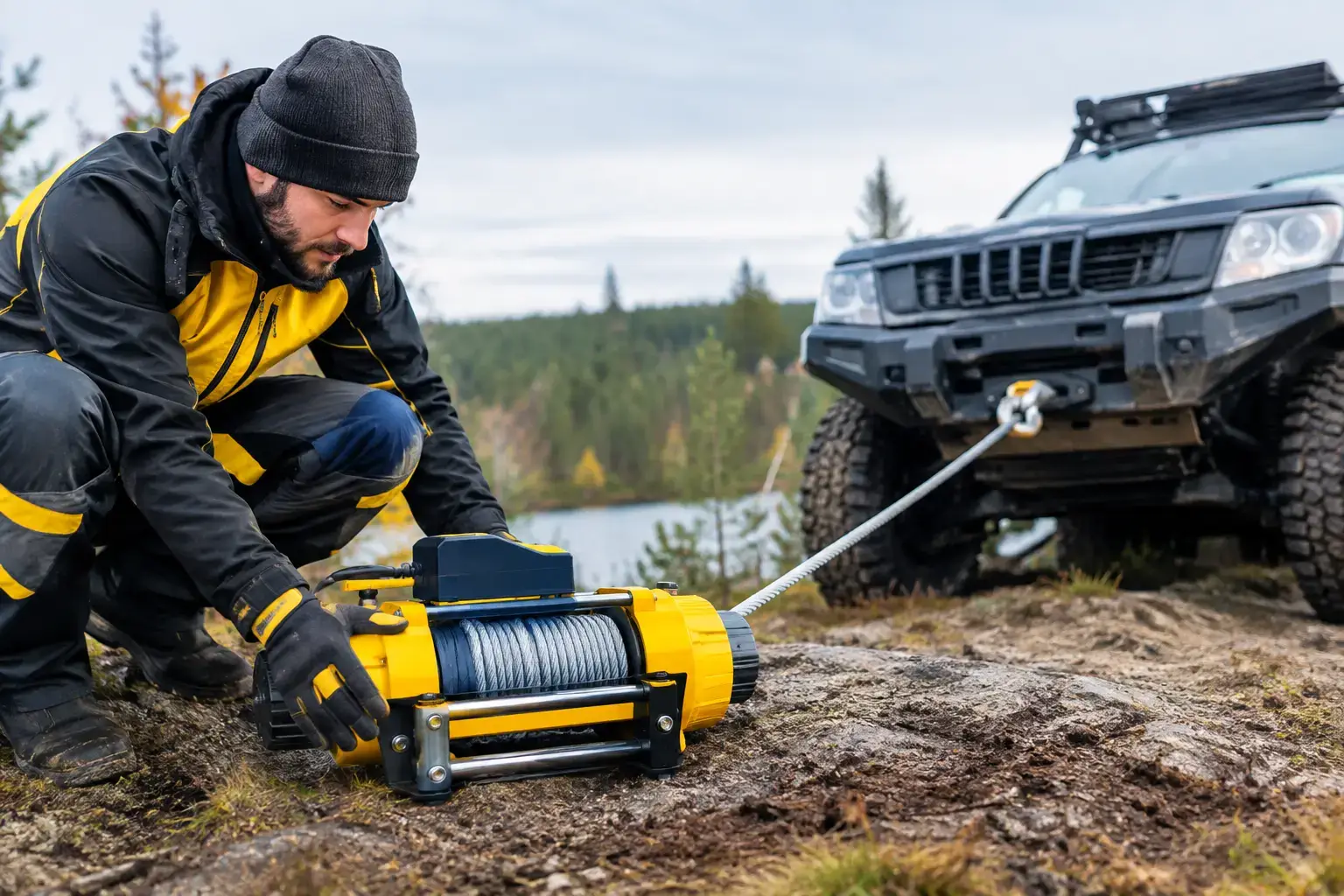
A vehicle buried to its axles in mud does not need more throttle. It needs controlled force applied from the right direction. Proper vehicle winch recovery turns a bad situation into a manageable job, whether you are clearing a forest track, pulling a work truck from snow, or recovering an off-road vehicle far from a paved road.
A winch is powerful equipment, not a shortcut. The cable or rope stores energy under load, anchors can shift, and a vehicle can move suddenly once traction returns. Good recovery work starts before the winch motor runs: assess the scene, rig the pull correctly, keep people clear, and use equipment rated for the load.
Start Vehicle Winch Recovery With an Assessment
Stop and look before connecting the hook. Identify why the vehicle is stuck. Is it high-centered on snow, buried in soft ground, hung on a rut, or unable to climb a slippery slope? The answer determines the direction and force needed.
Whenever possible, pull the vehicle in the direction it was traveling. A straight, gradual pull places less stress on recovery points, the winch, and the anchor. Pulling at a sharp angle can drag the vehicle sideways, damage steering components, or move it deeper into a ditch.
Reduce resistance before relying on the winch. Clear packed mud or snow from in front of the tires, remove branches or rocks under the chassis, and use traction boards or natural material where appropriate. If the vehicle is high-centered, lifting or digging may be required before a winch pull can work effectively.
Check the ground around the recovery vehicle too. A winch can pull another vehicle forward, but it can also pull its own vehicle toward the stuck load if its tires have no grip. Set the parking brake, place the transmission in park or low gear as appropriate for the vehicle, and use wheel chocks when the terrain allows.
Use Rated Recovery Points, Never Convenient Metal
The strongest winch line is only as safe as the point it is attached to. Connect to manufacturer-rated recovery points on the stuck vehicle and a suitable rated point or anchor on the recovery side. Recovery points are designed to transfer load into the vehicle structure. Tow balls, bumper brackets, suspension parts, and random hooks are not.
A tow ball is particularly dangerous in a recovery pull. It can shear away under shock loading and become a high-speed projectile. Do not connect a winch hook, shackle, or recovery strap to one.
For a ground anchor, a large healthy tree, a properly installed ground anchor, or another securely positioned vehicle may be suitable. A tree saver strap should be used around a tree rather than wrapping winch rope directly around bark. It protects the tree and creates a wider, more stable connection point.
If using another vehicle as an anchor, ensure it has traction, is positioned in line with the pull, and is connected through rated recovery points. The driver should understand the plan before any tension is applied.
Match the Winch and Rigging to the Real Load
Winch capacity is often described as a maximum line pull, typically measured on the first layer of rope around the drum. As more rope winds onto the drum, the effective pulling force drops. A vehicle that weighs 5,000 pounds does not always require a 5,000-pound pull, but mud suction, steep grades, deep snow, and tire resistance can multiply the force required.
For that reason, choosing a winch only by vehicle weight is not enough. A properly sized winch gives useful reserve capacity for difficult terrain rather than working continuously at its limit. It also needs a mounting system designed for the vehicle, a battery and charging system in good condition, and cables protected from abrasion and corrosion.
Synthetic rope is light, easy to handle, and stores less kinetic energy than steel cable if it fails. It still needs care. Keep it away from sharp edges, inspect it for cuts and melted fibers, and protect it with an abrasion sleeve where it contacts rough surfaces. Steel cable handles abrasion well but can develop sharp broken strands and requires gloves for handling.
A snatch block can be valuable when a direct pull is too demanding or the line needs to be redirected. A double-line pull can increase available pulling force while reducing winch load, though it also cuts line speed and adds rigging complexity. Every part of the system – shackles, soft shackles, pulley block, straps, and recovery points – must be rated for the forces involved.
Set Up the Line for a Controlled Pull
Pull out enough winch rope to keep as much line as possible off the drum. More rope on the drum generally gives the winch better mechanical advantage. Lay the line straight, without crossing it over rocks, sharp metal, or exposed roots. Use a line damper or a heavy recovery blanket over the middle section of the tensioned line. It will not eliminate all danger, but it can help reduce line recoil if a component fails.
Keep bystanders well away from the line, the anchor, and both vehicles. Nobody should stand over, straddle, or step across a tensioned rope. A safe position is outside the likely path of the line and clear of the vehicle’s direction of travel. One person should direct the recovery, and everyone involved should know the hand signals or radio commands before work begins.
Connect the winch hook with the safety latch closed. Do not use the hook tip as a connection point. If you use a shackle, ensure its pin is fully engaged and that the shackle is not side-loaded. Soft shackles can be excellent for compatible recovery gear, but they also require protection from sharp edges and correct sizing.
Use Steady Tension, Not Sudden Shock Loads
Engage the winch slowly until the line is taut. Pause and inspect the system: is the anchor stable, are the straps sitting correctly, and is the vehicle aligned with the pull? Then winch in with smooth, steady control.
The stuck vehicle’s driver may gently assist with engine power if conditions are safe and the recovery leader instructs them to do so. Spinning tires can dig deeper and create sudden load changes, so use only enough throttle to help the vehicle climb out. Avoid jerking the winch line or trying to shock-load the vehicle free. That is how straps, shackles, mounts, and recovery points fail.
Watch the winch motor and battery condition. Long, heavy pulls generate heat quickly. If the winch slows significantly, smells hot, or the battery voltage drops, stop and allow the system to cool. Continuous hard use can damage the motor, solenoids, rope, or electrical connections.
Recover, Secure, and Inspect Before Driving Away
As the vehicle reaches firm ground, reduce tension gradually. Do not immediately unhook while the vehicle is still rolling or sitting on an unstable slope. Secure it with the brake, confirm it can move under its own power, and only then release the winch line.
Rewind the rope under light tension, using gloves and a safe hand position. Guide it evenly across the drum, but keep hands away from the fairlead and rotating drum. A poorly spooled line can bury itself under load on the next recovery and become difficult to pull out.
Afterward, inspect the whole system. Look for damaged rope, bent hooks, stretched straps, cracked shackles, loose mounting hardware, and overheated electrical connections. Clean mud, sand, and road salt from the winch and recovery gear before storing it. In cold, wet conditions, this maintenance matters as much as winch capacity. Frozen moisture and corrosion can turn ready equipment into unreliable equipment.
Build a Recovery Kit That Works in the Field
A winch alone is not a complete recovery system. A practical kit includes rated recovery straps, a tree saver, compatible shackles or soft shackles, a snatch block, a line damper, gloves, wheel chocks, and basic tools. Traction boards, a shovel, and a compact air compressor can often prevent a full winch recovery by improving tire grip first.
Choose gear with clearly marked working load limits and use it according to the manufacturer’s instructions. Avoid mixing unknown hardware, worn straps, or improvised connectors. Recovery equipment lives a hard life in mud, water, grit, and freezing temperatures, so regular inspection is part of owning it.
Champion Baltics customers often need equipment that can sit ready through winter, work on rural property, and perform when help is not close by. That makes correct sizing, rated accessories, and routine maintenance practical requirements, not optional extras.
The best recovery is the one that ends without damaged gear, injured people, or a second vehicle stuck beside the first. Take time to rig the pull, apply force smoothly, and stop whenever something does not look right. A few careful minutes can save a long, expensive day.
