





Blog
Can Pressure Washer Clean Tractors Safely?

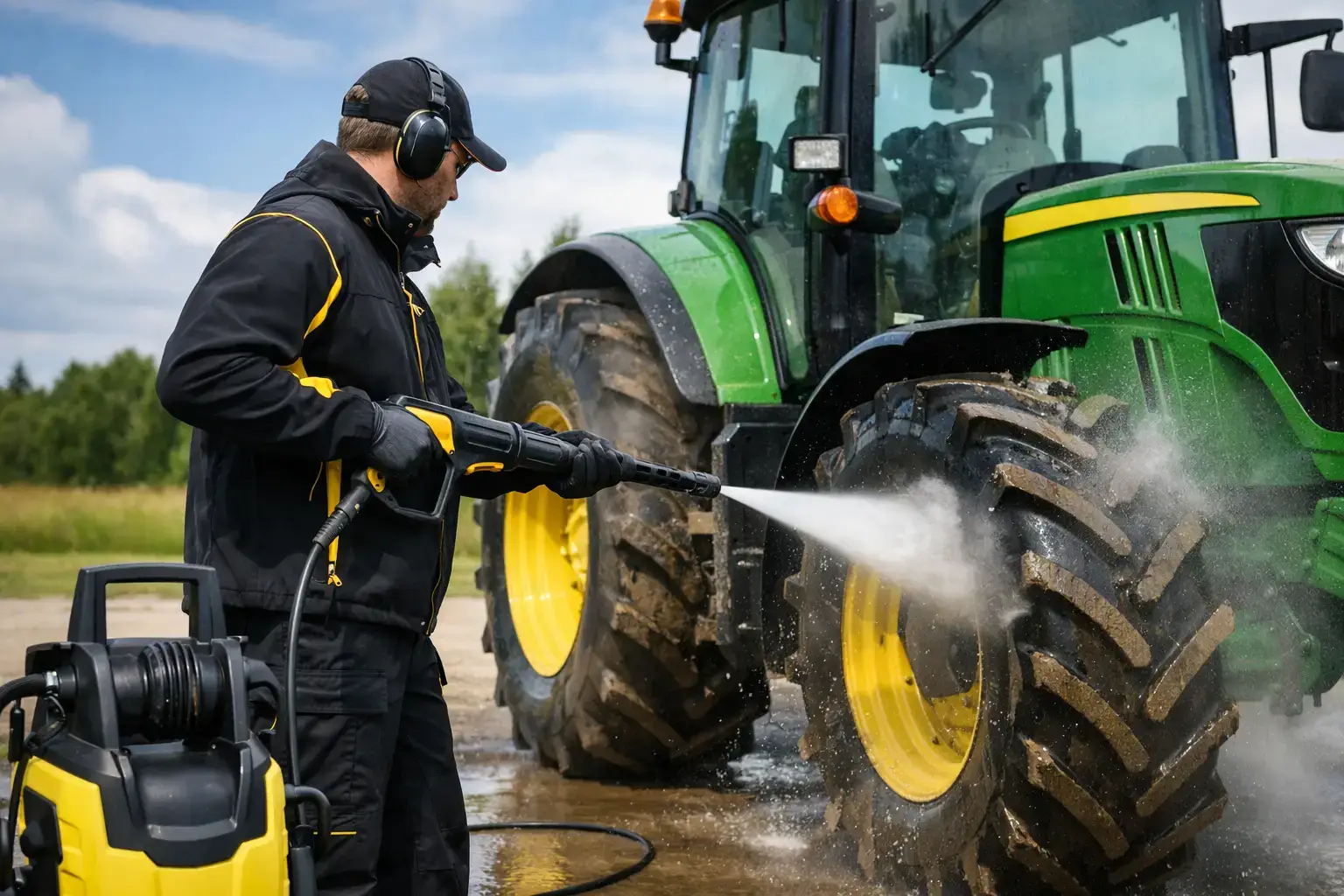
A tractor covered in packed mud, chaff, manure, oil film, and road salt is harder to inspect and less pleasant to service. But can pressure washer clean tractors without creating electrical faults, forcing water into bearings, or stripping paint? Yes, when it is used with controlled pressure, the right nozzle, and a clear idea of where water does not belong.
For landowners, workshop operators, and field crews, pressure washing is one of the fastest ways to keep equipment ready for work. Clean machines run cooler, leaks are easier to spot, lights stay visible, and accumulated debris is less likely to hold moisture against metal parts. The key is treating a tractor differently from a concrete yard or a trailer frame.
Can a Pressure Washer Clean Tractors Without Damage?
A pressure washer can clean tractors very effectively, especially around tires, wheels, fenders, loader arms, implements, and muddy undercarriage areas. The risk comes from using excessive pressure at close range or aiming directly at seals, electrical connections, gauges, air intakes, and exposed components.
Modern tractors have more wiring, sensors, electronic controls, and emissions equipment than older machines. That does not make them impossible to wash. It means the operator needs more control. A medium-pressure setting with a wide fan nozzle will usually remove field dirt without the aggressive impact that can cut decals, lift old paint, or drive water past a seal.
Pressure is only one part of the job. Water flow, nozzle angle, distance from the surface, detergent choice, and how long dirt has been sitting all affect the result. Fresh mud may rinse away with moderate pressure. Dried clay, oily residue, and compacted crop waste may need soaking and detergent first, not a harder blast from six inches away.
Why Regular Tractor Cleaning Matters
Washing a tractor is not just about appearance. Dirt hides hydraulic leaks, loose fittings, damaged hoses, cracked guards, and missing fasteners. If a loader pivot or hydraulic coupling is covered in grime, a small problem can become an expensive repair before anyone notices it.
Debris also affects operation. Chaff and dust around radiators, oil coolers, grille screens, and engine compartments restrict airflow. In heavy summer work, that can contribute to overheating. Mud packed around wheels and axles adds weight, traps moisture, and makes routine inspections more difficult.
In colder conditions, cleaning matters before storage as well. Road salt, fertilizer residue, and wet organic material can accelerate corrosion. A clean tractor that is dried properly and greased after washing is in a better position to start work when it is needed again.
Choose Pressure for the Job, Not the Highest Number
High pressure sounds useful, but more pressure is not automatically better. For most tractor washing, controlled medium pressure is the safer operating range. A pressure washer with adjustable output or interchangeable nozzles gives you more flexibility when moving from heavy wheel mud to painted body panels.
Start with a 25-degree or 40-degree fan nozzle. The wider spray spreads the force across a larger area and is more forgiving around paint, plastic, decals, and rubber. Keep the nozzle moving and begin at least 18 to 24 inches from the tractor. Move closer only when necessary, and test an inconspicuous section first.
Avoid a zero-degree pencil jet for routine tractor cleaning. It can gouge paint, damage soft materials, and force water into places where it should not go. A rotary or turbo nozzle can be useful on heavily caked implements, wheel rims, and bare steel surfaces, but it should be handled carefully and kept away from sensitive tractor components.
Cold water is suitable for mud, dust, grass, and general field dirt. Warm water and a degreasing detergent are more effective for oil-stained engine areas, greasy loader joints, and workshop equipment. Do not use harsh chemicals on aluminum, painted surfaces, or rubber unless the product is approved for those materials.
Areas to Protect Before You Wash
A tractor is built for rain and outdoor work, but concentrated pressure is different from weather. Before starting, let hot engine and exhaust components cool. Park on a stable surface where wastewater will not flow directly into a drain, waterway, or livestock area.
Use a lower-pressure rinse or avoid direct spraying around these areas:
- Electrical connectors, fuse boxes, battery terminals, alternators, starter motors, and exposed wiring
- Air intake openings, exhaust outlets, breather tubes, and engine bay vents
- Instrument panels, display units, switches, seat controls, and cab door seals
- Bearings, grease seals, wheel hubs, PTO seals, hydraulic cylinder seals, and universal joints
- Radiator fins, oil coolers, and condenser fins, which can bend under an aggressive spray
Do not spray directly into the exhaust stack or air intake. If the tractor will be washed thoroughly around the engine, covering vulnerable openings with suitable temporary protection is a sensible precaution. Remove that protection before starting the machine.
Radiators and coolers deserve special care. Clean them with a wide fan spray from a safe distance, working in the direction that pushes debris out rather than deeper into the fins. If grass seed and chaff are tightly packed, use compressed air or a soft brush first. High-pressure water can flatten fins and reduce cooling performance.
A Practical Tractor Washing Method
Start by knocking off loose dirt with a low-to-medium-pressure rinse. Work from the top downward so dirty water does not keep running onto areas you have already cleaned. For thick mud around tires, steps, three-point hitches, and loader frames, let the water soak in for a few minutes before trying to remove it.
Apply a tractor-safe detergent or degreaser where it is needed, especially on greasy areas and lower body panels. Give it time to work, but do not allow it to dry on hot paint. A soft brush can save time and reduce the need for higher pressure around stubborn grime.
Rinse with a wide fan pattern, maintaining distance around decals, hoses, seals, and painted panels. Keep the wand angled rather than pointing straight into gaps, boots, and joints. Angled water lifts dirt away. Direct pressure is more likely to push water and grit inward.
Once the tractor is clean, inspect it while the surfaces are wet and exposed. Look for hydraulic oil tracks, coolant stains, worn hoses, loose clamps, damaged wiring, and missing grease fittings. This is often the most valuable part of the wash.
Let the machine dry before parking it in enclosed storage. Open the cab door briefly if moisture has collected around entry seals, wipe electrical areas if needed, and operate the brakes gently after washing to clear surface water. Grease points that were cleaned thoroughly, particularly loader pivots and other joints exposed to water.
When Not to Use a Pressure Washer
There are times when a hose, brush, compressed air, or hand cleaning is the better option. Avoid pressure washing a tractor with damaged electrical insulation, loose connectors, cracked seals, or an active hydraulic leak until the fault is repaired. Water can make an existing problem harder to diagnose and may spread contamination.
Be cautious with older equipment too. Aging paint, brittle decals, weathered rubber boots, and worn seals may not tolerate the same cleaning method as newer machinery. On restoration projects or tractors that have spent years outdoors, begin with the gentlest approach and increase cleaning force only where the surface can handle it.
A pressure washer is also not the right tool for every engine compartment. If the engine is only dusty, a brush and compressed air are often safer. Save water and detergent for areas where they provide a real cleaning benefit.
Equipment That Makes the Job Easier
For regular tractor care, choose a pressure washer with enough output to move mud quickly but enough control to protect the machine. A reliable unit with adjustable pressure, a detergent system, a durable hose, and a selection of fan nozzles is more useful than a machine built only around maximum PSI.
Portable equipment matters when tractors are cleaned in a yard, field shed, forest property, or remote work area. Pairing a pressure washer with dependable water access and suitable power or fuel supply keeps maintenance practical instead of becoming another delayed task. Champion Baltics focuses on work-ready equipment because cleaning is part of keeping machinery prepared, not a weekend cosmetic project.
Wash the tractor before dirt becomes concrete, use pressure with discipline, and make every cleaning session double as an inspection. A clean machine is easier to maintain, safer to operate, and more likely to be ready when the next job cannot wait.
