






Blog
What Generator Size for Freezer Backup Power?

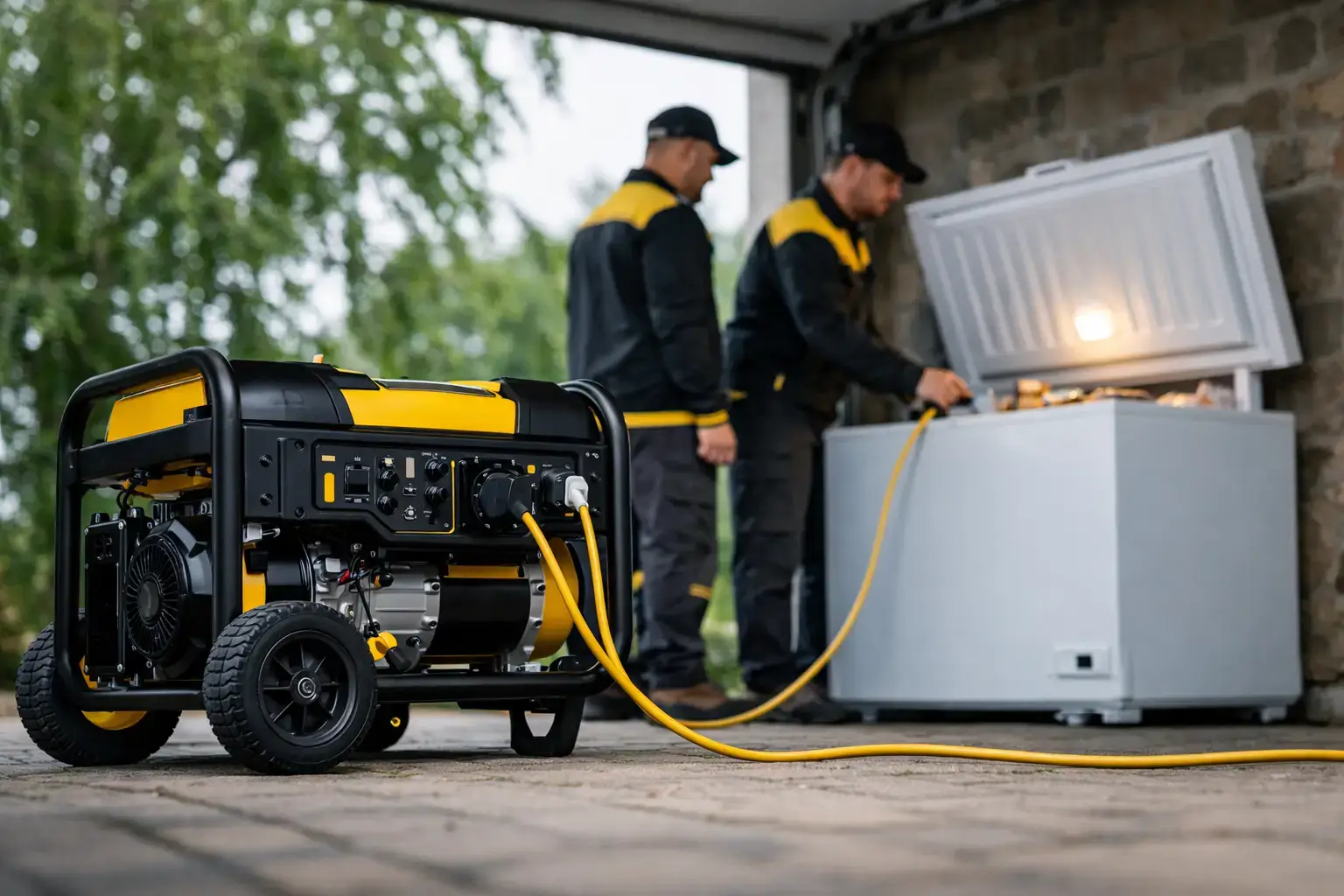
A freezer can preserve hundreds of dollars of food, but only if it has dependable power when the grid goes down. The answer to what generator size for freezer backup is usually not complicated: most household freezers run on a properly sized 1,000 to 2,000-watt generator. The right choice depends on the freezer’s running wattage, its brief startup surge, and whether you need to power other essential equipment at the same time.
Buying too small can leave the compressor struggling to start. Buying far larger than necessary adds cost, fuel use, weight, and noise. The practical goal is enough reserve power for a clean startup and stable operation, especially during a winter outage or at a remote property.
Start With the Freezer’s Running Watts
Every freezer has a data label, usually on the back, inside the door frame, or near the compressor. Look for watts, amps, volts, or sometimes an energy-use figure. The best number is the rated running watts. If the label shows amps instead, calculate watts with this simple formula:
Watts = volts x amps
For a typical US 120-volt freezer, a label showing 2 amps equals about 240 running watts. In real use, most modern chest and upright freezers draw roughly 100 to 700 watts while the compressor is running. Larger older units can use more.
Do not size a generator only around that running number. A freezer compressor draws a higher burst of power when it starts. This is called starting watts, surge watts, or peak watts. The surge often lasts only a second or two, but the generator must handle it without tripping an overload protection system.
A useful field estimate is to allow two to three times the freezer’s running watts for startup. For example, a freezer rated at 400 running watts may need 800 to 1,200 watts during compressor startup. Check the appliance manual if it provides locked-rotor amps or a startup-watt rating, since the manufacturer figure is more accurate than a general estimate.
What Generator Size for Freezer Use?
For one average household freezer, a generator with 1,000 to 1,500 running watts and adequate surge capacity is often enough. A 2,000-watt inverter generator is a stronger all-around choice when you want a useful safety margin, quieter operation, and room for a few small loads.
Here is how common setups usually work:
- A compact or efficient chest freezer may run reliably from a 1,000-watt generator, provided the generator’s peak rating covers compressor startup.
- A standard upright freezer is generally well matched to a 1,500 to 2,000-watt generator.
- A large freezer, older compressor, or freezer connected with a long extension cord may justify a 2,000-watt generator or more.
- A freezer plus refrigerator, lights, phone chargers, internet equipment, and a small circulation pump is better served by a 2,000 to 3,500-watt unit, depending on the appliances involved.
Generator ratings need careful reading. A model advertised as 2,000 watts may provide 2,000 peak watts but only 1,600 running watts. Continuous running watts are what the generator can supply for extended periods. Peak watts cover short startup demands. Both figures matter.
Leave at least 20 to 30 percent of the generator’s continuous output unused. This reserve gives the engine and alternator room to respond when the compressor cycles on. It also avoids operating flat out for hours, which increases fuel consumption and can make voltage control less stable.
Example: Sizing a Generator for One Freezer
Suppose your upright freezer uses 500 running watts. You estimate 1,200 starting watts. A 1,000-watt generator may technically run it after startup, but it has little margin and may overload when the compressor kicks in.
A generator rated around 1,600 running watts and 2,000 peak watts gives a more dependable result. It can start the freezer, handle normal compressor cycling, and still run a few LED lights or charge communication devices. This is why a 2,000-watt inverter generator is often the practical backup-power sweet spot for homeowners.
Add Every Load You Plan to Run
The generator must be sized for the combined load, not just the freezer. During an outage, it is tempting to plug in a refrigerator, electric kettle, microwave, space heater, sump pump, and chargers. That can overload even a capable portable generator quickly.
Start by adding the running watts of every item you need at the same time. Then add the highest startup surge from motor-driven equipment such as a refrigerator, freezer, well pump, sump pump, or furnace blower. You do not add every startup surge together unless those appliances will start at exactly the same time, but extra margin is wise when several compressors and pumps are connected.
A freezer and refrigerator commonly need 1,500 to 2,500 watts of generator capacity once startup allowance is included. Add a sump pump or well pump and the requirement can climb sharply. Pumps often have substantial startup demand, so check their labels before choosing a generator.
Avoid electric resistance heating loads on small backup generators. Space heaters, hot plates, kettles, toasters, and electric ovens consume a lot of continuous power. A 1,500-watt heater can use nearly the full output of a small generator by itself. Keep the generator focused on food storage, water management, lighting, communications, and essential equipment.
Inverter Generator or Conventional Generator?
For freezer backup, both types can work if the wattage is correct. An inverter generator is often the better fit for residential emergency use because it is typically quieter, more fuel-efficient at partial load, and provides stable power for electronics. That matters when the same generator is also charging phones, running a router, or powering sensitive controls.
A conventional open-frame generator can make sense where higher output and lower purchase cost matter more than low noise. For a workshop, farm building, or a property with several appliances, a larger conventional unit may provide the capacity needed. The trade-off is usually more noise, more weight, and higher fuel use at light loads.
Dual-fuel generators add flexibility. If gasoline is difficult to obtain during an extended outage, propane can be a valuable stored fuel option. Keep in mind that generator output is often slightly lower on propane than on gasoline, so account for that when sizing close to the limit.
Cold Weather Changes the Plan
Freezers are common backup loads in cold climates, but winter creates challenges for both the appliance and the generator. Engines need fresh fuel, the correct oil grade, a charged battery for electric-start models, and regular test runs. A generator that has sat unused for a year is not emergency equipment. It is an unknown.
Store fuel safely and rotate it according to the fuel manufacturer’s guidance. Use fresh stabilized gasoline where appropriate, and keep propane cylinders upright and protected from damage. Never run a portable generator in a garage, basement, shed, enclosed porch, or near open windows. Carbon monoxide can build up rapidly and is deadly.
Set the generator outdoors on a dry, firm surface, away from doors, windows, and vents. Protect it from direct rain or snow with a purpose-built generator cover or open-sided shelter that preserves full ventilation. Do not wrap the generator in tarps or place it inside an enclosed box while running.
Use a heavy-duty outdoor extension cord rated for the load and long enough to keep the generator at a safe distance. Undersized cords create voltage drop, heat, and poor compressor performance. Keep cord connections dry and inspect them for cuts, loose plugs, or worn insulation before every use.
Run the Freezer Efficiently During an Outage
A freezer does not need generator power every minute of the day if it is kept closed. A full, unopened freezer can generally hold safe temperatures for about 48 hours, while a half-full freezer may hold for about 24 hours. Actual time depends on room temperature, insulation, how often the door opens, and how full the cabinet is.
For a longer outage, many owners run the generator in scheduled intervals to bring the freezer back down to temperature, then shut it off to save fuel. This can work well, but monitor food temperature with a freezer thermometer rather than guessing. Keep the door closed as much as possible and group frozen food together to retain cold longer.
Before storm season, test the exact freezer-and-generator combination. Start the generator, connect the freezer with the intended cord, and let the compressor cycle several times. If overload protection trips, the engine bogs down, or lights dim sharply when the compressor starts, move up to a generator with more surge and running capacity.
Champion Baltics customers often choose a quiet inverter model for a single freezer and household essentials, then step up to higher-output equipment when pumps, tools, or multiple appliances must run. The right generator is not the biggest one available. It is the one that starts your freezer confidently, carries your essential load with reserve power, and is ready before the next outage begins.
