





Blog
Which Generator for Power Tools?

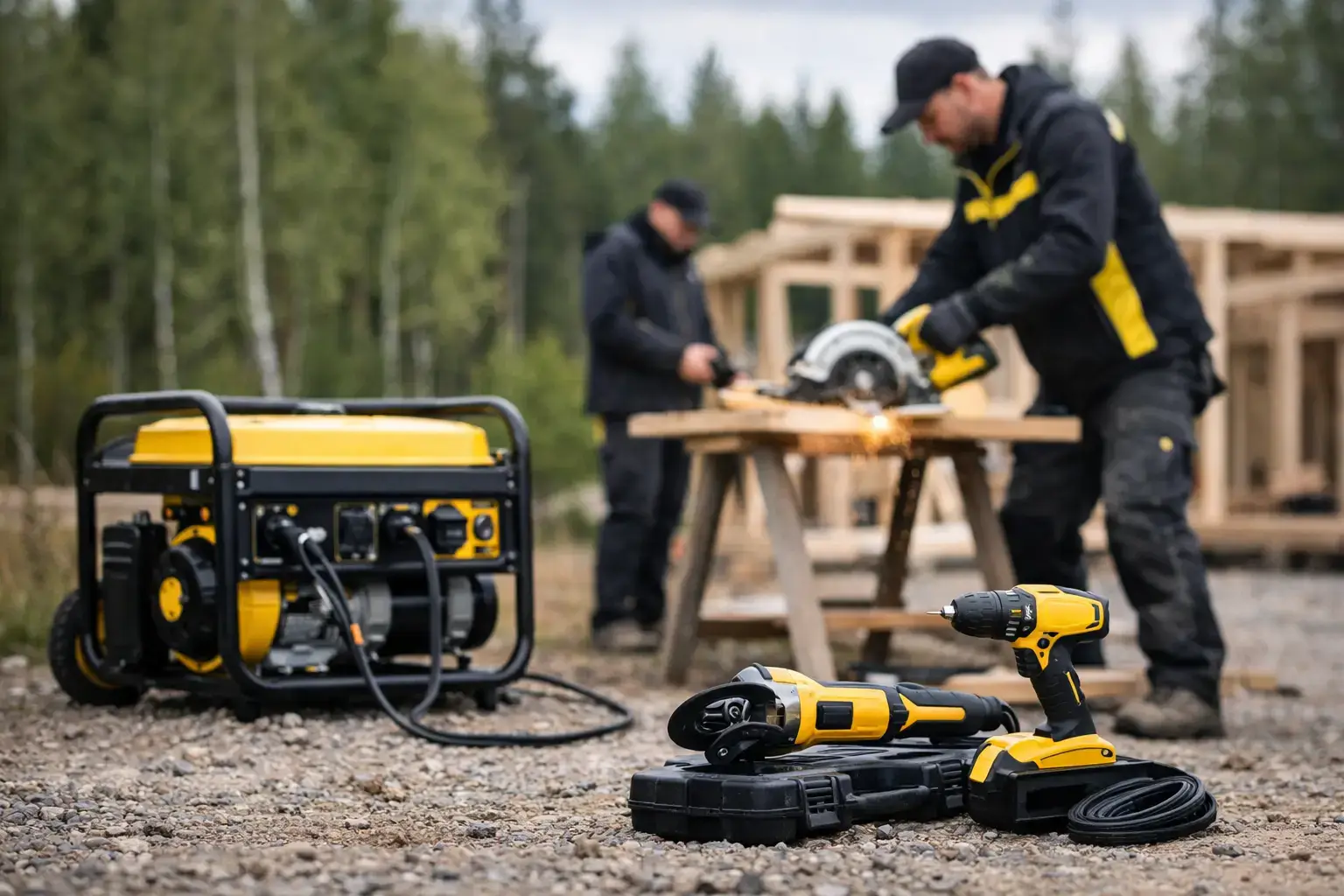
A circular saw that keeps tripping a small generator is more than annoying – it slows the whole job down. If you are asking which generator for power tools, the real answer starts with how your tools draw power in the first second of startup, not just the number printed on the label.
Most buyers make one of two mistakes. They either buy too small and fight overloads, voltage drops, and tool performance issues, or they overspend on more generator than the job actually needs. The right choice sits in the middle: enough clean, stable power for startup and continuous use, with the portability and fuel setup that fits where you work.
Which generator for power tools depends on the load
Power tools are not all equal, even when their names sound similar. A small drill, an angle grinder, and a jobsite table saw can behave very differently on a generator. The key numbers are running watts and starting watts.
Running watts are what the tool needs once it is up to speed. Starting watts are the short surge needed when the motor kicks on. That startup demand is where undersized generators usually fail. A miter saw may run at a moderate wattage once cutting, but it can ask for a much higher surge at startup. The same goes for air compressors, shop vacs, and some heavier saws.
If you want a generator that actually works in the field, add up the running watts of the tools you expect to use at the same time, then account for the highest startup surge among them. Do not stack startup surges unrealistically, but do give yourself headroom. A generator running flat out all day is louder, less efficient, and harder on the machine.
As a practical rule, aim for about 20 to 25 percent reserve above your expected real-world load. That gives you breathing room for startup spikes, extension cord loss, and the simple reality that jobsite use is rarely perfectly controlled.
Common tool ranges to think about
Lighter handheld tools such as drills, oscillating tools, and small sanders often sit in an easier range for portable generators. Grinders, circular saws, demolition hammers, dust extractors, and compressors are where sizing starts to matter more. If you run one major tool at a time, a compact generator may be enough. If you want a saw, vacuum, charger, and site lights working together, you need to size for the full working setup, not just the biggest single tool.
A lot of homeowners and landowners underestimate shop vacs and compressors. They may look secondary, but their motor startup can be the reason a generator struggles.
Inverter or conventional generator?
For many buyers trying to decide which generator for power tools, this is the next big choice. Both types can run tools, but they fit different jobs.
Inverter generators are usually the better pick when you want quieter operation, easier transport, and cleaner power output. That clean power matters most for sensitive electronics, battery chargers, laser levels, or tools with advanced electronic controls. They are also a strong fit for residential areas, mobile service work, and any place where noise gets noticed fast.
Conventional generators make sense when raw output matters more than refinement. If the job involves heavier power demand, rougher conditions, and less concern about noise, a conventional unit can offer more watts for the money. For outdoor building work, rural property tasks, and backup utility around sheds or workshops, that trade-off often works.
This is where the jobsite matters. A trim carpenter working near finished homes may value quiet inverter power. A crew cutting timber well away from houses may care more about higher output and runtime.
When clean power matters for tools
Basic motor-driven tools are generally less sensitive than electronics, but modern worksites are full of equipment beyond the motor itself. Battery chargers, inspection gear, control modules, and digital measuring tools all benefit from stable power. If your generator will do double duty for tools and sensitive equipment, an inverter model often earns its place.
Fuel type changes the ownership experience
Power output gets attention, but fuel type affects how convenient the generator is to live with. Petrol generators are common because they are widely understood, portable, and straightforward for occasional or regular use. For many users, that is enough.
Dual fuel models add flexibility. If petrol is your normal choice but you want a backup fuel option for longer storage or emergency use, dual fuel gives you more control. That matters for preparedness-minded buyers who do not want to depend on a single fuel source.
Diesel generators tend to fit heavier-duty or longer-running applications, especially where durability and fuel efficiency under load are priorities. They are often less about weekend mobility and more about serious work cycles.
Cold weather also matters more than many people expect. In harsh conditions, starting reliability becomes part of generator selection, not an afterthought. A unit that looks good on paper but becomes difficult in low temperatures can be a poor fit for rural property use, winter field work, or storm response.
Portability is not a small detail
A generator that is powerful enough but awkward to move can still be the wrong machine. Think honestly about how often you will lift it into a truck, drag it across uneven ground, or carry it around a property.
For mobile trade work, smaller inverter units with handles and manageable weight can save time every day. For workshop backup or property use where the generator stays closer to one location, a larger frame with wheels may be perfectly practical. If you need to power tools in a forest lot, remote cabin build, or field repair setting, portability becomes operational, not cosmetic.
Also pay attention to outlet layout. The right number and type of outlets can make a workday easier. Adapters and splitters can get you by, but the cleaner setup is a generator that already matches the tools and accessories you expect to use.
How much generator do most tool users actually need?
There is no single answer, but there are common buying lanes.
If you mainly run one handheld power tool at a time, charge batteries, and support light-duty site work, a smaller portable generator can be enough. If your setup includes a saw plus dust extraction, or multiple users on the same power source, you move into a more serious wattage range quickly. Add an air compressor or high-demand cutting tool, and the generator should be sized with real margin.
This is why shopping by headline wattage alone causes trouble. A generator that looks close enough on paper may work fine with a drill and fail with a saw under load. Tool motors do not care about optimistic assumptions.
A smarter approach is to build your normal work sequence. Ask what runs first, what runs together, and what absolutely cannot stall. Then choose a generator around that pattern.
A simple way to size it
Start with your heaviest motor-driven tool. Check its running wattage and estimated startup demand. Then add the continuous load from anything else that will operate at the same time, such as lights, chargers, or dust extraction. After that, add reserve capacity so the generator is not pinned at maximum output all shift.
If you are between two sizes, the better choice often depends on whether your use is occasional or frequent. For occasional home projects, the smaller unit may be fine if you manage tool use carefully. For daily work, going one step up usually pays off in smoother operation and less frustration.
Mistakes that cost more than the generator
The first mistake is underestimating startup surge. The second is ignoring cable length and voltage drop. Long extension cords can reduce performance, especially with high-draw tools. The third is forgetting future use. Plenty of buyers size for today, then add a compressor, heater, or second worker later.
Noise is another one. A loud generator may be acceptable on an isolated property and a bad fit in a neighborhood or service van setup. Runtime matters too. If you are stopping to refuel at the worst moment, the generator is not really supporting the job.
Finally, do not separate the machine from ownership support. Maintenance items, oil, spark plugs, filters, and replacement parts are part of the real value of a generator. A dependable unit backed by parts access and practical support is worth more than a slightly cheaper option that becomes difficult to keep in service.
Choosing the right fit for real work
If your priority is compact size, quieter running, and stable power for mixed tool and charger use, an inverter generator is often the strongest match. If you need higher output for heavier tools and tougher field use, a larger conventional model may be the better workhorse. If fuel flexibility matters, dual fuel deserves a close look. If long-running heavy-duty use is the plan, diesel may be the right lane.
The best answer to which generator for power tools is usually not the biggest generator you can afford. It is the one that starts reliably, carries your real load without strain, and fits the way you actually work – in the driveway, on the property, in the shop, or out where utility power does not exist.
Buy for the load, buy for the conditions, and leave yourself enough headroom to get the job done without fighting your equipment.
