







Blog
How to Drain a Flooded Basement Safely and Fast

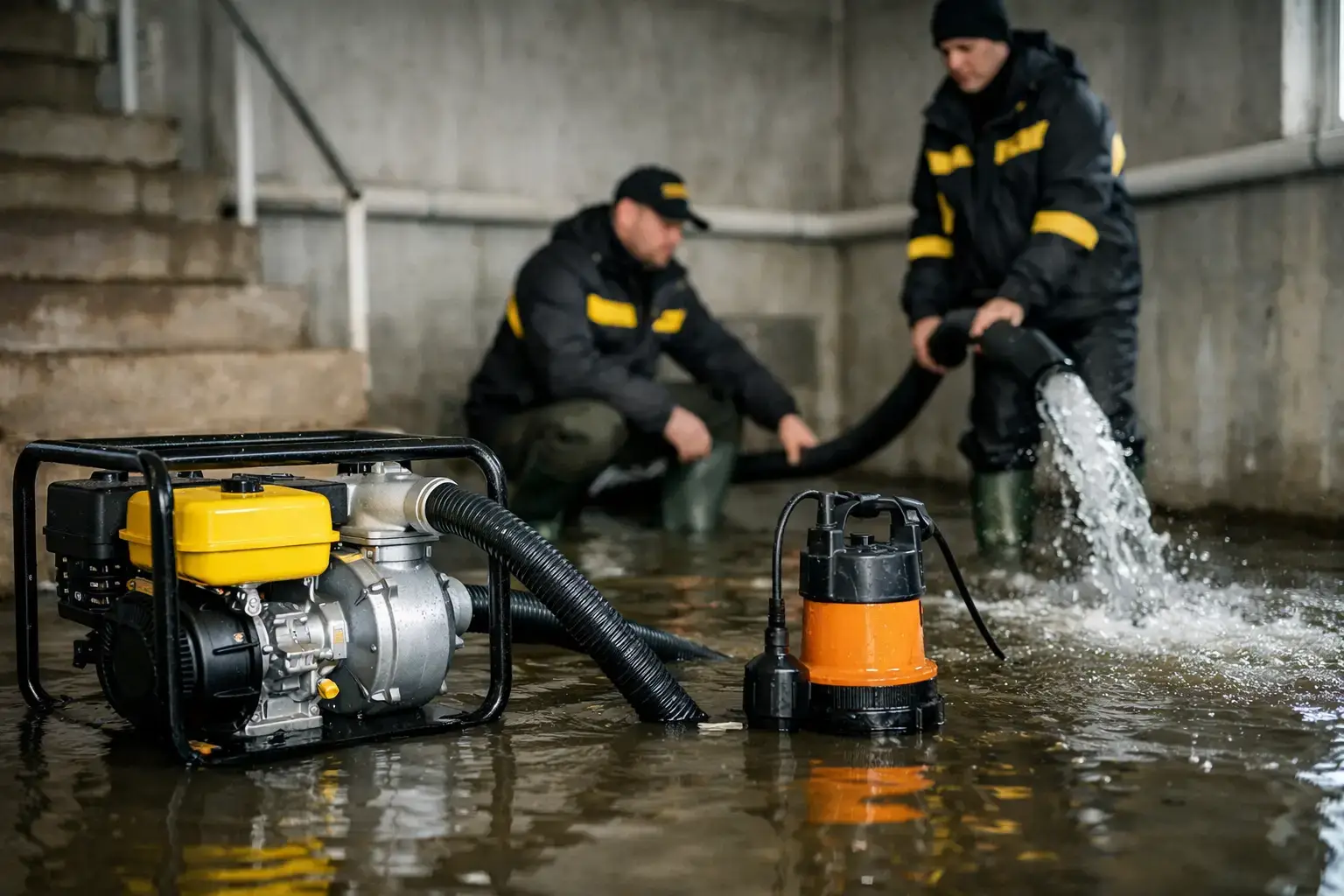
A basement can go from dry storage space to a serious property problem in a few hours. The priority is not just removing water quickly. Knowing how to drain a flooded basement safely means protecting people first, preventing electrical hazards, and choosing equipment that can handle the volume of water without failing halfway through the job.
Do Not Enter Until the Area Is Safe
Standing water and electricity are a dangerous combination. If the water is near outlets, appliances, a furnace, an electrical panel, or extension cords, do not step into it. Shut off power to the basement from a dry location only if you can do so safely. If the breaker panel is in the flooded area, call a qualified electrician.
You should also stop and call for professional help if the water is rising quickly, the foundation wall is damaged, or the floodwater may contain sewage, fuel, chemicals, or other contaminants. Wear waterproof boots, work gloves, eye protection, and a mask when contamination is possible. Do not let children or pets near the area.
If flooding followed a major storm and the water outside is higher than the water in the basement, be cautious about pumping everything out at once. Rapidly removing water from a deeply flooded basement can create pressure differences around the foundation. For serious flooding, remove water gradually and check for wall movement, cracks, or shifting.
Find the Source Before You Start Pumping
A pump removes the result of the problem, not the cause. Take a few minutes to identify where the water is coming from. Common sources include a burst pipe, failed water heater, blocked floor drain, sump pump failure, overflowing appliance, backed-up sewer line, or groundwater entering through walls and floor joints.
Turn off the home water supply if a broken plumbing line is responsible. If the sump pump has failed, check whether its float switch is stuck, its discharge line is blocked, or a tripped breaker has cut power. During a power outage, a backup pump or portable generator can keep a drainage system running, but the generator must stay outdoors, well away from doors, windows, and vents.
A sewage backup requires a different cleanup approach than rainwater or a leaking pipe. Treat it as contaminated water. Keep porous materials such as carpeting, insulation, cardboard, and upholstered furniture separate from salvageable hard items.
Choose the Right Pump for Basement Floodwater
For most homeowners, a submersible utility pump is the practical choice. It sits directly in the water and moves it through a discharge hose to a safe drainage point outside. The right pump depends on water depth, debris level, lift height, and the distance to the discharge area.
A clean-water submersible pump works well for water from a burst pipe, appliance leak, or rainwater that contains little debris. If the water is muddy or carries leaves, sand, and small solids, use a trash-capable pump designed for dirty water. A clean-water pump can clog quickly if used in heavy debris.
Pump capacity is usually measured in gallons per minute or gallons per hour. More flow is useful, but it is not the only specification that matters. The pump must also overcome vertical lift, often called head height. A pump may move a large volume on level ground yet deliver far less water when it must push through a long hose and up to ground level.
Use a discharge hose sized for the pump outlet and keep it as straight as possible. Sharp bends, crushed sections, and unnecessary hose length reduce flow. Direct the water well away from the house, downhill where possible, and never toward a neighboring property, septic system, or foundation wall. Make sure the outlet will not send water straight back toward the basement.
How to Drain a Flooded Basement Step by Step
Start by opening doors or windows only when outdoor conditions are drier than the basement and doing so will not let in more rain. Move dry belongings to a safe area. Photograph damage before disposal if you may need insurance documentation.
Place the submersible pump at the lowest accessible point of the basement. If the floor is uneven, use a flat, stable surface such as a paver beneath the pump to reduce the amount of sediment pulled into the intake. Keep the intake clear of rags, insulation, and loose debris.
Run the discharge hose outside and secure its end. Water pressure can cause an unsecured hose to move, damaging siding, flooding another area, or disconnecting completely. If the pump needs portable power, position the generator outdoors on level ground, protected from direct rain but never operated in a garage, basement, shed, or enclosed porch.
Start the pump and monitor its operation. Check that water is actually leaving the discharge end and that the hose is not leaking or kinked. Do not leave a pump running unattended for long periods, especially if debris is present. As the water level drops, reposition the pump toward the lowest remaining area.
Most utility pumps cannot remove every last inch of water. Once the pump loses prime or reaches its minimum operating depth, use a wet/dry vacuum, mop, squeegee, or towels to remove the remaining water. Do not use a standard household vacuum cleaner for wet cleanup.
If water was more than a few inches deep, remove it in stages rather than trying to empty the basement immediately. A practical approach is to pump down a portion, pause, inspect walls and floors, then continue. This matters most when groundwater has saturated the soil around the foundation.
Dry the Basement Before Mold Takes Hold
Water removal is only the first half of the job. Mold can begin growing within 24 to 48 hours on damp drywall, wood, carpet backing, and insulation. Get air moving as soon as it is safe.
Use fans, dehumidifiers, and open ventilation where weather allows. Run a dehumidifier continuously and empty its reservoir or route its drain hose to a suitable location. If you have access to portable power during an outage, prioritize the sump pump, fans, dehumidifier, refrigerator, and basic lighting based on available generator wattage.
Remove wet carpet and padding if they cannot be dried immediately. Lift stored items off the floor and separate them so air can circulate. Wet drywall and insulation may need to be removed above the visible water line, especially after contaminated flooding. Clean hard surfaces with an appropriate disinfectant, then allow them to dry completely before repainting or rebuilding.
Do not restart a furnace, boiler, water heater, or electrical equipment that was exposed to water until it has been inspected. Water damage inside equipment can cause delayed failure, corrosion, or fire risk.
Prevent the Next Basement Flood
Once the basement is dry, inspect the drainage system while the problem is still fresh. Test the sump pump float, clean the pit, and verify that the discharge line carries water away from the foundation. A battery backup sump pump offers protection during outages, while a properly sized portable generator can support a primary pump when grid power is down.
Check gutters, downspouts, grading, and exterior drainage. Downspouts should discharge well away from the house. Soil should slope away from the foundation, not toward it. Seal small cracks only after addressing exterior water management, because sealant alone will not solve persistent groundwater pressure.
Keep a flood-readiness kit near the basement: a tested utility pump, correct-length discharge hose, wet/dry vacuum, gloves, boots, flashlight, spare fuel where appropriate, and a reliable portable power source. Champion Baltics equipment is built for practical emergency and field use, but any pump or generator is only useful if it is tested, maintained, and ready before the storm arrives.
A dry basement is protected long before heavy rain begins. Test your equipment, clear the drainage path, and make sure every member of the household knows where the shutoffs and safety gear are located.
