




Blog
Electric vs Petrol Pressure Washer: Which Works?

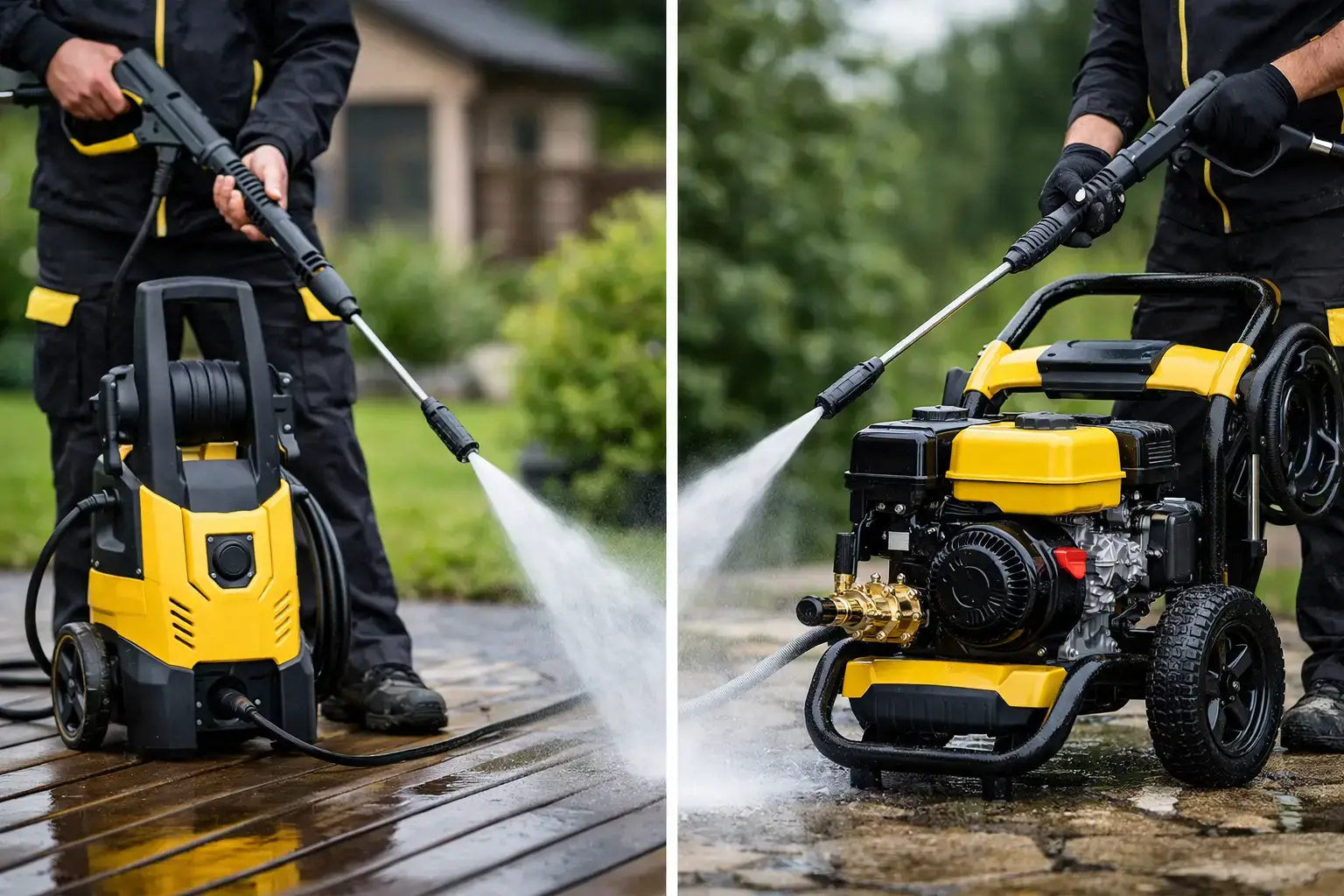
A pressure washer that cannot reach the far gate, clear years of moss from paving, or run long enough to finish a fleet wash is not a bargain. The electric vs petrol pressure washer decision comes down to where you work, how often you clean, and how much water volume the job demands. Choose for the workload, not the headline PSI figure.
For US readers, petrol pressure washers are more commonly called gas pressure washers. The machine type is the same: an engine drives the pump rather than an electric motor. Both can be effective tools, but they suit very different operating conditions.
Electric vs Petrol Pressure Washer: The Real Difference
Electric pressure washers plug into a household outlet or suitable generator and are usually lighter, quieter, and simpler to start. They are a practical fit for patios, decks, garden furniture, bicycles, cars, small boats, exterior walls, and occasional driveway cleaning. Press the start switch, open the water supply, and you are ready to work.
A petrol pressure washer carries its own power source. That freedom matters on farms, rural properties, forestry tracks, construction sites, storage yards, and anywhere an outlet is too far away or unavailable. Petrol models are generally built for longer work sessions and harder surfaces, with higher water flow as well as higher pressure.
Pressure is measured in PSI, while flow is measured in gallons per minute, or GPM. PSI helps break loose dirt. GPM carries that dirt away and lets you cover more surface area in less time. A machine with impressive PSI but low flow can still feel slow when cleaning a large yard. For serious cleaning, consider both figures together.
Choose an Electric Washer for Controlled Home Cleaning
Electric models make sense when the work is close to a power outlet and you value quiet, clean operation. They do not need fuel, engine oil changes, spark plugs, or carburetor care. Storage is easier too: drain the hose and pump, protect the unit from freezing, and put it away.
Most electric pressure washers are compact enough to move around a home, garage, or workshop without much effort. Their lower noise level is useful in built-up areas and for jobs that take place early in the morning or near neighbors. They also produce no exhaust at the point of use, so they are the sensible choice for well-ventilated indoor work such as cleaning a garage floor. Never run a petrol engine indoors, in a shed, or in an enclosed workspace.
There are limits. The power cord sets your working radius, and long or undersized extension cords can cause voltage drop, overheating, and poor motor performance. If an extension cord is necessary, use a heavy-duty outdoor-rated cord with the correct wire gauge for the washer and cord length. Keep all electrical connections dry and use a ground-fault protected outlet.
Electric units are also usually designed around shorter duty cycles. They can handle routine cleaning well, but an all-day job involving concrete, agricultural equipment, heavily soiled vehicles, or long fencing can push a smaller electric machine beyond its comfortable role.
When electric is the better buy
An electric washer is usually the right call if you clean once or twice a month, have reliable outlet access, and mainly work on lightly to moderately dirty surfaces. It is a straightforward, lower-maintenance tool for property upkeep. Spend the difference on quality hoses, quick-connect fittings, and nozzles that match the surfaces you actually clean.
Choose a Petrol Washer for Distance and Heavy Dirt
A petrol pressure washer is built for jobs where mobility and output matter more than quiet operation. It can be loaded into a pickup, taken to a remote building, or moved across a large property without searching for an outlet. With a reliable water source, it works where the task is.
The practical advantage is often GPM. A higher-flow petrol model can rinse broad concrete areas, wash tractors and trailers, clear mud from off-road equipment, and clean long runs of fencing faster than a compact electric unit. This is not only about force. More water volume means quicker rinsing and fewer passes across the same surface.
Petrol machines also tend to use more durable components, including stronger frames, larger wheels, and engines intended for repeated outdoor work. That makes them a better match for tradespeople, workshop operators, landowners, and anyone maintaining equipment rather than just cleaning a driveway on a Saturday.
The trade-off is ownership. You need fresh fuel, engine oil checks, seasonal servicing, and proper fuel storage. Engines are louder, heavier, and produce exhaust. Cold weather can make starting harder if fuel is old or the machine has been neglected. In Baltic winter conditions, draining water from the pump, hose, and spray gun before freezing temperatures arrive is non-negotiable. Frozen water can crack pump components on either electric or petrol equipment.
When petrol is the better buy
Choose petrol when you regularly clean large areas, work away from mains power, or need the productivity of higher flow. It is the more capable option for demanding property maintenance, mobile work, and equipment cleaning. A smaller petrol washer is not automatically better than a quality electric model, however. Match engine power, pump rating, hose length, and water supply to the size of the job.
Do Not Buy on PSI Alone
Marketing often puts PSI front and center, but the highest number does not guarantee the best result. Excessive pressure can damage timber, force water behind siding, cut into soft brick mortar, strip paint, or mark vehicle trim. The right nozzle, working distance, and detergent do as much for cleaning performance as raw PSI.
For cars, motorcycles, painted surfaces, windows, and delicate trim, use a wide fan nozzle, keep the spray moving, and stand back. For concrete or heavily soiled machinery, a narrower fan angle and more flow may be appropriate. A turbo nozzle can speed up tough concrete cleaning, but it concentrates the spray and should be used carefully. Test an inconspicuous area first.
Water supply matters just as much. A pressure washer cannot create water that is not available. If the supply hose is kinked, undersized, or fed by a weak source, the pump may starve, surge, or suffer damage. Check the required inlet flow in the machine specifications and use a clean water source. A filter is worthwhile when drawing from tanks or other non-mains supplies, because grit can shorten pump life quickly.
Running Costs, Storage, and Maintenance
Electric washers cost less to maintain because there is no engine service schedule. Their ongoing needs are mainly hose inspection, inlet filter cleaning, nozzle care, and winter protection. For routine domestic use, that simplicity has real value.
Petrol washers ask more from the owner but repay it with range and output. Check engine oil before use, replace it at the recommended intervals, inspect the air filter, and do not leave stale fuel in the system through a long storage period. Use the correct pump oil if the pump design requires it. Before transport, secure the machine upright and allow the engine to cool before refueling.
Both types need basic operating discipline. Connect the water supply before starting the machine, squeeze the trigger to purge air from the system, and never leave the washer running unattended with the trigger released for long periods. Water circulating in a bypass can overheat the pump. After use, release pressure from the hose before disconnecting fittings.
A Practical Buying Decision
If your work is close to the house and mostly involves vehicles, patio furniture, paving, and seasonal exterior cleaning, an electric pressure washer is likely the efficient choice. It starts easily, stores neatly, and keeps noise and maintenance low.
If you maintain acreage, clean machinery, work from a vehicle, or need to cover a lot of ground without access to power, choose petrol. The added maintenance is part of owning a machine that can travel, run longer, and move more water through hard jobs.
Accessories can change the value of either machine. A longer high-pressure hose reduces repositioning. Quick-connect nozzles make it easier to adjust for each surface. A foam cannon helps when washing vehicles, while a rotary surface cleaner can make large concrete areas faster and more even. Keep replacement nozzles, hose seals, engine oil, and pump protection fluid on hand so a small wear item does not stop a planned job.
The best pressure washer is the one you can use safely, maintain properly, and take to the work without compromise. Buy enough capacity for your hardest regular job, then use the right nozzle and technique to make that capacity count.
