






Blog
How to Maintain a Pressure Washer for Work

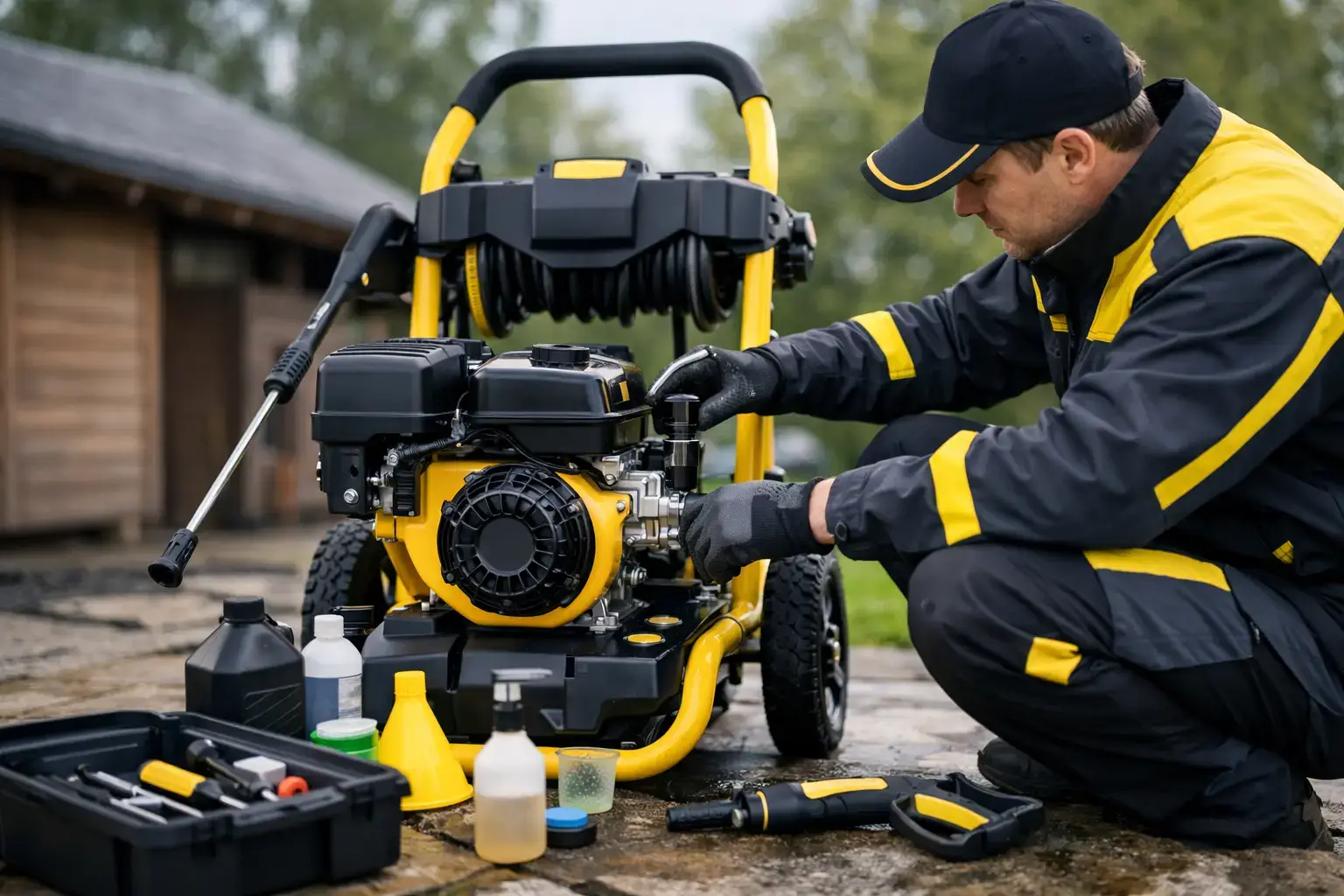
A pressure washer that loses pressure halfway through cleaning a driveway is usually not worn out. More often, it has a blocked nozzle, an air leak, stale fuel, or a pump that was stored with water inside. Knowing how to maintain pressure washer equipment keeps it ready for hard work around the home, farm, workshop, vehicle fleet, or jobsite.
Pressure washers operate under serious load. Water moves through a small pump at high pressure, while gas-powered units add an engine, fuel system, and oil service schedule to the equation. A few minutes of care after each use and proper seasonal storage can prevent expensive pump damage, poor cleaning performance, and no-start problems when the next job arrives.
Start Every Job With a Quick Inspection
Before connecting the water supply, inspect the machine where problems usually begin: the hose, inlet filter, fittings, spray gun, and nozzle. Look for cracked hose covers, flattened O-rings, loose quick-connect fittings, and leaks around the pump. A high-pressure hose with visible damage should be replaced, not taped or patched. Pressure can turn a small weak spot into a dangerous failure.
Check that the water inlet screen is clean and seated correctly. This small filter keeps sand, rust, and debris out of the pump. If it is blocked, the machine may pulse, lose pressure, or run hotter than it should. Rinse the screen with clean water and use a soft brush if needed. Do not operate the washer without it.
Inspect the nozzle orifice as well. A worn nozzle gradually opens up and reduces working pressure. A partially blocked nozzle causes an uneven spray pattern and can make the pump cycle or vibrate. Keep the correct nozzles together in a clean case so they do not collect dirt in a toolbox or vehicle compartment.
How to Maintain a Pressure Washer During Use
The pump needs a steady water supply. Connect the garden hose first, turn on the water fully, and squeeze the trigger until water flows smoothly from the wand. This purges air before the engine starts or the electric motor is switched on. Running a pressure washer dry, even briefly, can damage pump seals and internal components.
Use a supply hose that can deliver enough water for the washer’s rated flow. A long, narrow, kinked, or weak garden hose may restrict the supply. The result can be cavitation – small air bubbles collapsing inside the pump – which creates noise, vibration, pressure loss, and premature wear. If the machine sounds rough or the spray pulses, stop and check the water supply before continuing.
Avoid leaving the trigger released for long periods while the engine or motor is running. When the trigger is closed, the pump recirculates water through its bypass system. Most consumer units can handle this only for a limited time, often one to several minutes depending on the model. Extended bypass operation heats the water inside the pump and can damage seals. Shut the machine down if you need to move equipment, reposition ladders, or prepare the next cleaning area.
Choose detergent made for pressure washers and follow its dilution instructions. Household cleaners, bleach mixtures, and thick chemicals can damage seals, clog the detergent system, or leave deposits in the injector. If a cleaner is suitable for the surface but not for the machine, apply it separately with a pump sprayer and rinse with the pressure washer.
Flush the Detergent System After Cleaning
Detergent left in the pickup tube or injector can dry into a sticky blockage. At the end of any job that uses soap, place the detergent tube in clean water and run the low-pressure setting for one or two minutes. Continue until the water from the nozzle is clear and no foam remains.
This step is particularly useful after cleaning vehicles, equipment, siding, or greasy workshop floors, where stronger detergents are common. A clean detergent circuit means the next wash starts properly instead of wasting time diagnosing a system that is simply clogged with dried soap.
Care for the Pump, Hose, and Connections
After shutting off the engine or motor, turn off the water supply. Squeeze the spray gun trigger to release trapped pressure before disconnecting hoses. This protects the quick-connect fittings, makes removal easier, and reduces the chance of a pressurized hose whipping loose.
Drain water from the high-pressure hose, spray gun, and wand. Coil the hose in wide loops rather than tight bends. Tight coiling can damage the internal reinforcement and create permanent kinks. Keep the hose off sharp edges, hot engine parts, and areas where vehicles or heavy equipment can run over it.
Lubricate O-rings on quick-connect fittings with a small amount of silicone grease made for rubber seals. Do not use petroleum grease unless the washer manufacturer specifically approves it. Replace flattened, cut, or missing O-rings immediately. They are inexpensive parts, but a poor seal can cause leaks, air entry, and frustrating pressure problems.
Some pressure washer pumps have serviceable oil, while many compact axial pumps are sealed and do not require routine oil changes. Check the owner’s manual before opening anything. For pumps with an oil reservoir, inspect the level and condition at the recommended interval. Milky oil can indicate water contamination and should be addressed before the pump is put back into service.
Maintain the Engine on Gas-Powered Models
A gas pressure washer needs the same basic attention as any small engine. Check engine oil before each major job, especially when the unit works on uneven ground. Change the oil according to the engine schedule, using the correct oil grade for the operating temperature. In colder conditions, the right oil viscosity helps the engine start and lubricate properly.
Keep the air filter clean. Dusty yard work, gravel drives, timber areas, and renovation sites can load an air filter quickly. A dirty filter restricts airflow, reduces performance, and increases fuel use. Foam filters may be washable and lightly re-oiled, while paper filters generally need replacement when dirty. Follow the engine instructions rather than trying to clean a filter that is designed to be replaced.
Use fresh fuel and avoid storing gasoline for months in the tank. If the washer will sit for more than a few weeks, add fuel stabilizer or drain the fuel according to the engine manufacturer’s guidance. Stale fuel can block the carburetor, making a reliable machine difficult to start when you need it. Also inspect the spark plug seasonally and replace it if the electrode is worn, fouled, or corroded.
Protect Your Pressure Washer From Freezing
Freezing is one of the fastest ways to destroy a pressure washer pump. Water expands as it freezes, and even a small amount trapped in the pump head, hose, gun, or fittings can crack internal components. Draining the external hose is not always enough because water remains inside the pump passages.
For winter storage or any period when freezing temperatures are possible, run pump protector through the water inlet. This product displaces water, lubricates seals, and provides freeze protection inside the pump. Follow the product instructions and use enough to push water out of the system. Store the washer in a dry place whenever possible, but do not assume a shed or garage stays above freezing.
Electric pressure washers also need freeze protection. They may have fewer engine service requirements, but their pumps, hoses, and fittings are just as vulnerable to trapped water. For either type of machine, keep nozzles, detergent tubes, and small fittings in a sealed container where they will not disappear before spring.
Troubleshoot Pressure Loss Before Buying Parts
When pressure drops, start with the simplest checks. Confirm that the water supply is fully open, the inlet screen is clean, and the garden hose is not kinked. Then inspect the nozzle, O-rings, and high-pressure hose for blockage or leaks. These are more common causes than major pump failure.
If the spray pulses, air may be entering through a loose inlet fitting or restricted water supply. If detergent will not draw, use the low-pressure nozzle, confirm the tube is submerged, and flush the injector with clean water. If the engine surges or will not start after storage, old fuel and a dirty carburetor are likely suspects.
Keep a small maintenance kit on hand with spare O-rings, a nozzle-cleaning tool, pump protector, engine oil, fuel stabilizer, and a replacement spark plug if your model uses one. That is practical readiness, not unnecessary inventory. Small parts and fluids can keep a cleaning job moving instead of turning it into a repair day.
A pressure washer earns its place by being ready when mud, salt, algae, oil, and hard-use equipment need to come clean. Treat the pump and engine like working equipment, not seasonal clutter, and it will deliver the pressure you expect when the work cannot wait.
