







Blog
Inverter Generator Versus Power Station Compared

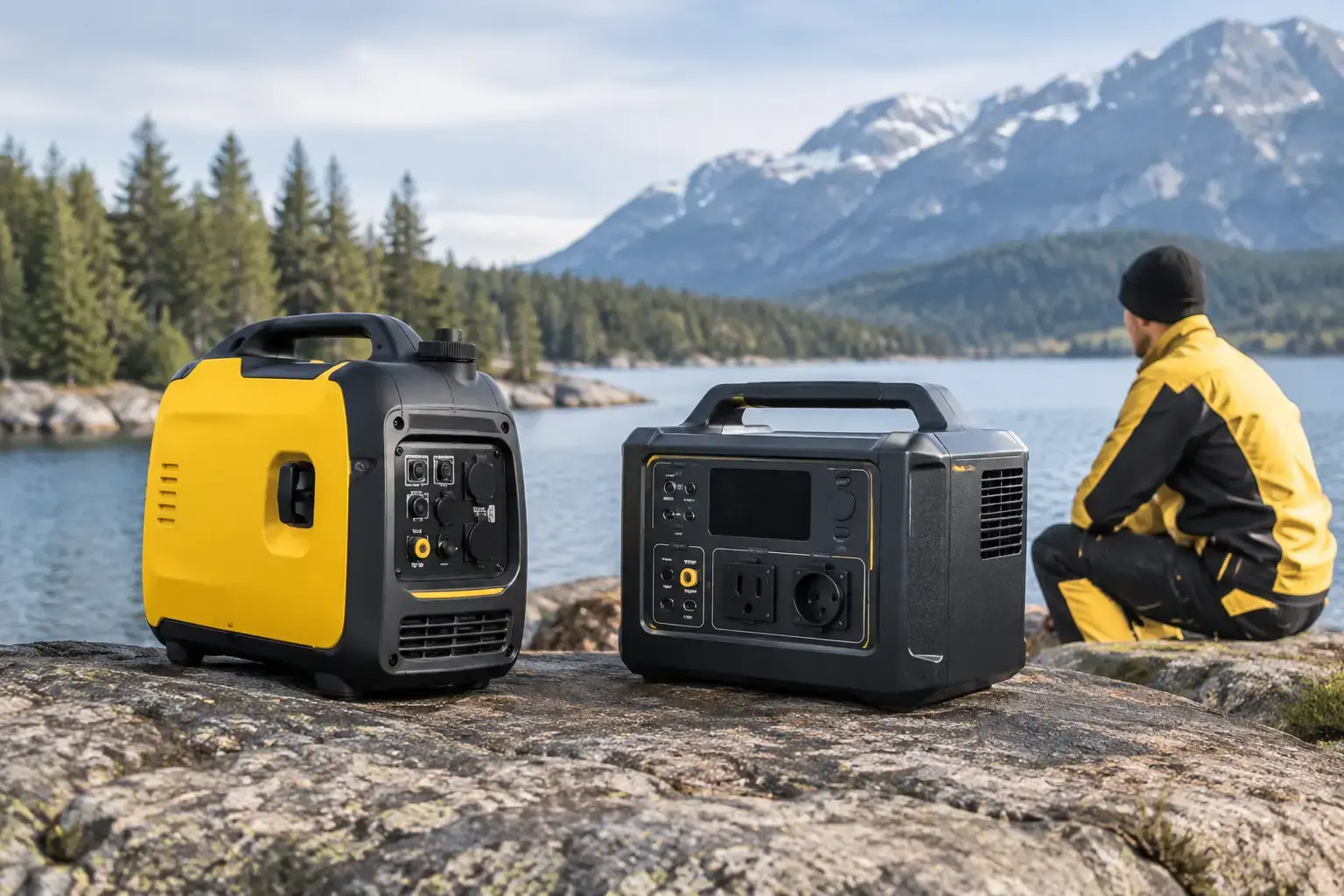
A dead battery bank at 2 a.m. and a fuel generator that will not start are both bad outcomes. The right choice in the inverter generator versus power station decision comes down to one hard question: how long must your equipment run when normal power is unavailable?
A portable power station is quiet, simple, and excellent for short-duration electronics. An inverter generator delivers longer runtime, higher sustained output, and fast refueling when the job, outage, or remote camp cannot wait for a battery to recharge. Neither is automatically better. Match the machine to the load, the location, and the consequences of running out of power.
Inverter Generator Versus Power Station: The Core Difference
An inverter generator makes electricity from an engine, usually fueled by gasoline or propane on dual-fuel models. Its inverter module converts engine output into clean, stable AC power suitable for sensitive electronics such as laptops, chargers, controls, and modern appliances. When the fuel tank is low, refuel it and keep working.
A power station stores electricity in an internal battery, commonly lithium-based. It has AC outlets, DC ports, and USB charging ports, but no engine. It produces no exhaust at the point of use and operates quietly. Once its stored energy is used, it must recharge from wall power, solar panels, a vehicle outlet, or, in some cases, a generator.
That difference shapes everything else. Generators are rated mainly by running watts and starting watts. Power stations need you to consider both inverter output in watts and battery capacity in watt-hours. A station may have enough watt-hours for a long time, but still be unable to start a tool or appliance that demands a high surge of power.
Compare Power Output Before Anything Else
Start with the equipment you actually need to run. A phone, radio, LED lights, and a laptop are light loads. A refrigerator, well pump, circular saw, compressor, sump pump, heater, or microwave changes the calculation quickly.
Motors draw extra power when they start. A refrigerator may run at a modest wattage but need a substantially higher surge for a moment when its compressor engages. The same applies to pumps, air tools, and many workshop machines. An inverter generator with enough starting capacity handles these changing loads well. A power station must have an inverter rated for the surge, not just the appliance’s normal running watts.
For serious household backup, field repairs, rural property work, or a jobsite, generator output is usually the more practical answer. A compact inverter generator can cover lighting, charging, refrigeration, and selected tools. Larger models can support more circuits or heavier equipment when sized correctly.
A power station makes more sense when the load is controlled and modest: communications equipment, cameras, a laptop, battery-tool chargers, a CPAP device, lights, or a small cooler. It can also be a useful indoor companion during an outage, provided you know exactly how much energy your devices consume.
Runtime Is Fuel Versus Stored Energy
Generator runtime is flexible. If you have fuel available, you can operate for days with normal refueling intervals and proper maintenance. This matters during extended outages, remote work, forestry use, and off-road trips where charging a large battery pack from the grid is not possible.
Power station runtime is fixed by battery capacity. To estimate it, divide usable watt-hours by the appliance load in watts, then allow for conversion losses. For example, a 1,000 watt-hour station powering a steady 100-watt load may run for roughly eight to nine hours, not a perfect ten. Higher loads drain it much faster.
Charging time is the limitation many buyers miss. A depleted power station may need hours on AC power. Solar charging can be valuable in a remote location, but actual charging speed depends on panel size, weather, season, angle, and available daylight. In northern winter conditions, solar should be treated as support, not guaranteed recovery power.
An inverter generator can also charge a power station. This combination works well for preparedness: use the station quietly overnight for small loads, then run the generator outdoors to recharge it and handle heavier loads during the day.
Noise, Exhaust, and Safe Placement
Power stations win on noise. They are usually almost silent apart from cooling fans, making them suited to bedrooms, tents, vehicles, and indoor rooms. They also produce no carbon monoxide while operating.
An inverter generator is quieter than a conventional open-frame generator, especially at low load, but it still has an engine. It must always operate outdoors, well away from doors, windows, vents, garages, sheds, tents, and occupied spaces. Never use a generator indoors or in an enclosed area. Carbon monoxide is odorless and dangerous.
The choice is not simply quiet versus loud. It is quiet, limited battery power versus engine-backed power that must be set up safely outdoors. For overnight medical devices or communication gear, a power station may offer a major comfort advantage. For a flooded basement pump or a long outage, safe outdoor generator operation is often the more capable option.
Cold Weather and Real-World Readiness
Cold weather exposes weak planning. Fuel-powered equipment needs fresh fuel, correct oil, a maintained spark plug, and an exercised engine. A quality inverter generator with reliable starting features is built for this kind of work, but it still needs routine attention before the storm arrives.
Battery power stations also lose effective capacity in low temperatures. More importantly, many lithium batteries should not be charged below freezing unless their battery management system specifically permits it. A station stored in an unheated vehicle or shed can become less useful exactly when winter conditions are at their worst.
For Baltic-region property owners, rural cabins, and crews working outdoors, fuel storage and battery storage both deserve a plan. Keep approved fuel containers rotated and protected. Store power stations dry, protected from hard freezing when possible, and charge them regularly according to the manufacturer’s instructions.
When an Inverter Generator Is the Better Tool
Choose an inverter generator when you need sustained power, fast refueling, or enough surge capacity for motor-driven equipment. It is the stronger choice for refrigerator backup over multiple days, sump pumps, well pumps, mobile workshop tools, field repairs, and remote locations without dependable charging access.
Dual-fuel capability can add another layer of readiness. Propane stores longer than gasoline and can be convenient for planned backup use, while gasoline may be easier to obtain for travel and active field work. The best fuel setup depends on what you can safely store and reliably access.
Generator ownership also means accepting maintenance. Check oil, run the unit periodically, inspect fuel lines, use fresh fuel, and keep basic service items available. That work is small compared with the cost of being unprepared when a pump, freezer, or heating control needs power.
When a Power Station Is the Better Tool
Choose a power station when silence, indoor use, and low-maintenance convenience matter more than unlimited runtime. It is a practical choice for apartment backup, mobile office equipment, camping electronics, drone and camera charging, or keeping essential communications running during a short outage.
It is also useful where generator operation is restricted by noise, access, or exhaust concerns. A station can sit near the equipment it powers, provided it has ventilation around its cooling vents and is kept dry. For small loads, the plug-and-play experience is hard to beat.
Do not buy based on battery capacity alone. Confirm the continuous AC output, surge rating, recharge options, operating-temperature limits, outlet types, and battery warranty. A large battery with an undersized inverter can still leave you unable to run the device that matters.
A Practical Way to Choose
Write down the loads you need to support, then separate them into essential and optional equipment. Add the running watts of equipment likely to operate at the same time, then account for the highest starting surge. Finally, decide how long the power must last without grid access.
If your answer includes pumps, refrigeration for several days, tools, or repeated heavy use, prioritize an inverter generator. If it includes electronics, lights, communication, and a few hours of quiet backup, a power station may be enough. If your situation includes both, do not force a single-tool solution. A compact power station paired with a properly sized inverter generator gives you quiet power when it matters and refuelable capacity when conditions turn serious.
Buy for the load you cannot afford to lose, not the easiest device to power in fair weather. That is how portable power stays useful when the work is real and the weather is not.
