





Blog
Water Pumps That Match the Job

A flooded basement, a full excavation trench, and a dry field all need water moved. But they do not need the same machine. The right water pumps move water fast, start reliably when conditions are poor, and handle the material actually present at the job site. The wrong pump can lose flow, clog repeatedly, or fail to lift water to where it needs to go.
For homeowners, landowners, contractors, and field crews, pump selection starts with the work. You need to know how much water must move, how far it must travel, how high it must be lifted, and whether that water is clean, dirty, or full of debris. Those details matter more than choosing the largest engine or the highest advertised flow rate.
What Water Pumps Are Built to Do
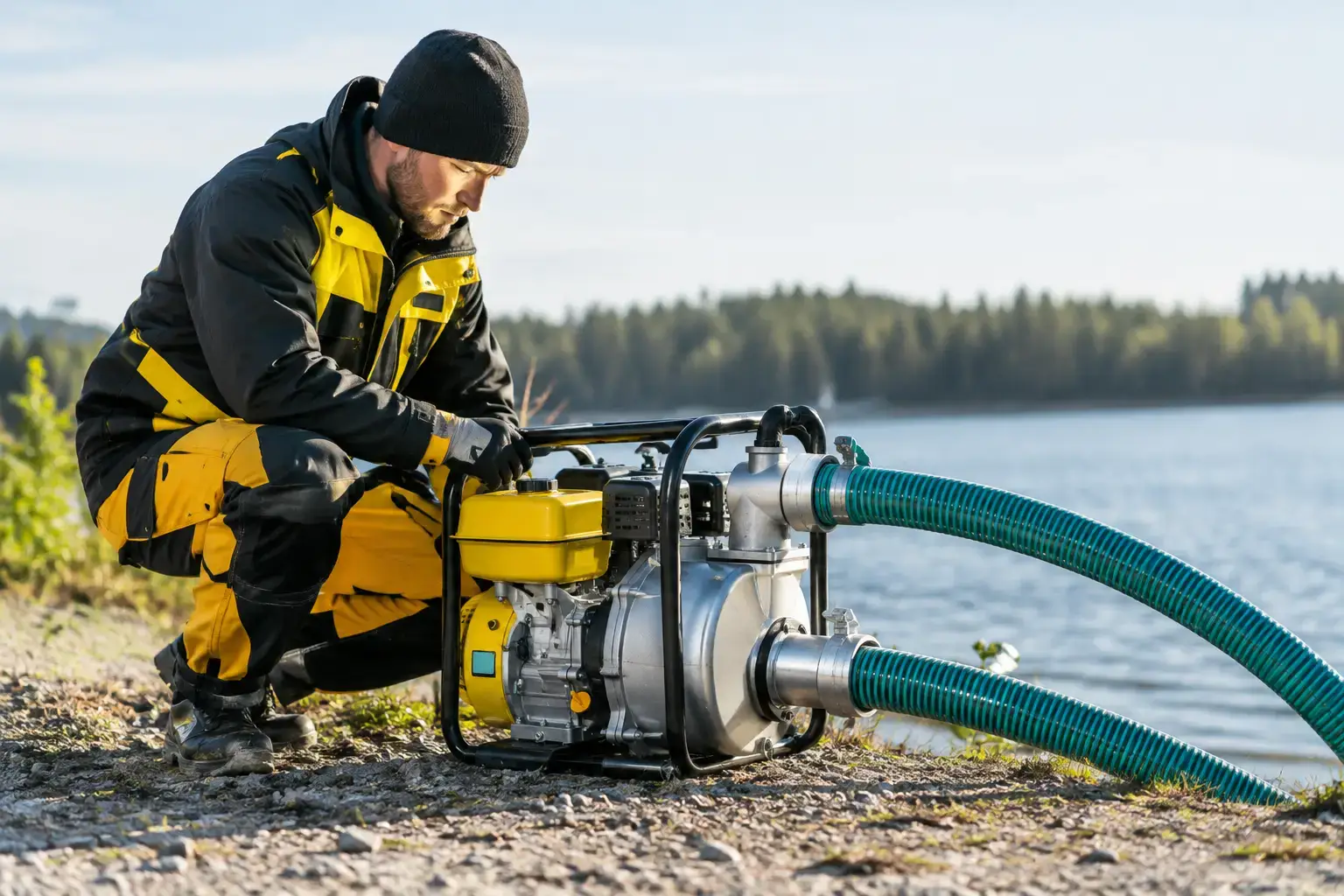
A portable water pump uses an engine-driven impeller to pull water through an intake hose and push it out through a discharge hose. This makes it a practical tool where grid power is unavailable, unreliable, or simply too far away. Petrol-powered pumps are especially useful around rural properties, construction sites, forests, farms, drainage areas, and emergency locations.
The most common jobs are removing standing water, draining trenches and foundations, transferring water between tanks, irrigating land, and supplying water for cleaning or fire-preparedness purposes. A pump can be a fast answer to a short-term problem, but it is also part of a well-prepared property setup. When heavy rain hits, waiting for a rental unit or a service crew is rarely the best plan.
A portable pump is not designed for every liquid or every environment. Standard water pumps should not be used with fuel, solvents, chemicals, saltwater, or sewage unless the pump is specifically rated for that purpose. Using the wrong equipment can damage seals and impellers, create a serious safety risk, and void warranty coverage.
Choose the Pump Type by Water Condition
The water itself decides which pump design is appropriate. This is the first decision to make because a clean-water pump and a trash pump may look similar from a distance while serving very different roles.
Clean-water pumps
Clean-water pumps are intended for relatively clear water with little or no abrasive material. They are a strong choice for moving water from storage tanks, wells, pools, rainwater collection systems, and irrigation sources. Their tighter internal clearances help deliver efficient flow, but those same clearances make them vulnerable to sand, leaves, gravel, and stringy debris.
Use a clean-water pump when the intake water is clear enough that you would not expect sediment to settle in a bucket. A suction strainer remains necessary. It keeps larger material out of the hose and protects the impeller from accidental damage.
Semi-trash and trash pumps
Semi-trash pumps are made for water containing small debris, sand, and silt. They suit many drainage tasks around a home, farm, or job site where the water is not truly clean but does not contain large solids. They offer a useful middle ground when runoff and shallow flooding are the main concern.
Trash pumps are built for tougher conditions. They have wider passages and stronger components to pass larger solids without clogging as easily. Choose this category for muddy ditches, construction dewatering, flooded excavation areas, storm runoff, or water carrying leaves and organic debris.
There is a trade-off. A trash pump can tolerate more contamination, but that does not mean it should be fed rocks, metal fragments, rags, or thick sludge. Check the maximum solids size in the specifications, and use a screen or strainer where practical. Preventing a blockage is faster than clearing one in cold water after dark.
Flow Rate and Head: The Numbers That Matter
Pump specifications can appear straightforward, but maximum flow figures do not tell the full story. A pump may be rated for a high number of gallons per minute, yet deliver considerably less once it has to lift water uphill or push it over a long distance.
Flow rate tells you how much water the pump can move over time. If you need to empty a flooded area quickly, higher flow matters. A large drainage job often benefits from a 3-inch pump because the wider hose can move substantially more water than a smaller unit. For simple tank transfer or light irrigation, a smaller pump may be easier to carry, consume less fuel, and still provide enough output.
Head refers to the vertical height and total resistance the pump must overcome. Static head is the vertical lift from the water source to the discharge point. Total head also accounts for friction inside hoses, fittings, bends, and nozzles. Long hoses and narrow discharge lines increase resistance and reduce real-world flow.
Before buying, measure the vertical lift and estimate the hose run. Then check the pump curve or operating specifications rather than relying only on the maximum flow figure. If your discharge point sits on a hill, a pump with good maximum head is more valuable than one that only performs well at ground level.
A simple rule helps: choose hose diameter to match the pump ports whenever possible. Reducing a 3-inch outlet to a much smaller hose restricts output and puts more load on the system. Keep hose runs direct, avoid unnecessary sharp bends, and use quality clamps to prevent air leaks on the suction side.
Set Up a Pump for Reliable Operation
Even a capable pump loses performance when the installation is poor. Most field problems come from air leaks, blocked strainers, collapsed suction hose, or incorrect priming rather than engine failure.
Place the pump on stable, level ground as close to the water source as possible. The pump pushes water much better than it pulls it, so keep the suction lift short. Use a reinforced suction hose that will not collapse under vacuum. A standard flat discharge hose is not suitable for the intake side.
Fit the suction strainer securely and keep it off the bottom of a pond, ditch, or flooded area. If it sits directly in silt, it can quickly draw in sediment and restrict flow. Suspending the strainer slightly above the bottom, or placing it on a clean flat surface, helps protect the pump.
Prime the pump casing with water before starting unless the manufacturer’s instructions state otherwise. Centrifugal pumps generally need this water in the housing to create suction. Running dry can damage mechanical seals and may cause overheating within minutes.
Start the engine outdoors in a well-ventilated area. Keep exhaust away from buildings, tents, vehicles, and enclosed work zones. Check engine oil before each use, use fresh fuel, and do not refuel a hot engine. These are basic steps, but they matter most during emergency work when people are tired and rushing.
Size the Pump for the Work, Not for the Shelf
A compact 1-inch or 2-inch pump is often enough for garden transfer, small tanks, and light drainage. It is easier to transport and store, which may make it the better choice for a homeowner who needs occasional use.
A 3-inch pump is a practical workhorse for higher-volume drainage, larger irrigation runs, and construction dewatering. It moves more water quickly, but it will also require larger hoses, more storage space, and more effort to move. Bigger is useful only when the job benefits from the added capacity.
For emergency drainage, think about the likely scenario rather than the ideal one. If your property has a low-lying garage, a drainage ditch that floods, or a basement access area prone to stormwater, calculate how much water could collect and where it can be discharged safely. A pump cannot solve the problem if there is nowhere lawful and practical for the water to go.
Engine quality and service access also deserve attention. A pump that starts easily in cool weather, has low-oil protection, and uses readily available maintenance items is a better long-term tool than a high-output unit that is difficult to support. Champion Baltics focuses on equipment ownership as well as the initial purchase, including the practical need for oil, accessories, and replacement parts over the life of the machine.
Maintenance Keeps a Pump Ready
Water pumps are often stored for months and expected to work immediately during a storm or site emergency. That makes routine preparation essential. After each use, flush out dirt and sediment, drain the pump housing where freezing is possible, and inspect the strainer, hoses, clamps, and seals.
Follow the engine service schedule for oil changes, air-filter inspection, and spark plug maintenance. If the pump will sit unused for an extended period, manage the fuel according to the engine manual. Old fuel is one of the most common reasons small engines refuse to start when they are needed.
Before the wet season, run the pump with clean water for several minutes. Confirm that it primes, holds suction, and delivers water without leaks. Replace damaged hoses before the next job, not during it.
The best pump is the one sized for your water, your hose run, and the conditions you actually face. Set it up correctly, keep it serviced, and it will be ready when a flooded trench, storm runoff, or remote water-transfer job cannot wait.