


Blog
Winch Snatch Block: Safer, Stronger Recovery

A stuck vehicle rarely sits in the perfect position for a straight pull. It may be angled toward a ditch, buried to the axles, or facing a tree that is useful but off to one side. A winch snatch block gives you options when a direct pull is not enough. Used correctly, it can redirect the winch line, increase available pulling force, and help keep a recovery controlled instead of improvised.
For off-road drivers, landowners, forestry users, and anyone moving equipment on uneven ground, this is one of the most useful winch accessories to keep with recovery gear. It is not a substitute for proper anchors, rated shackles, a recovery strap, or good judgment. It is the component that lets the rest of the system work harder and more safely.
What a Winch Snatch Block Does
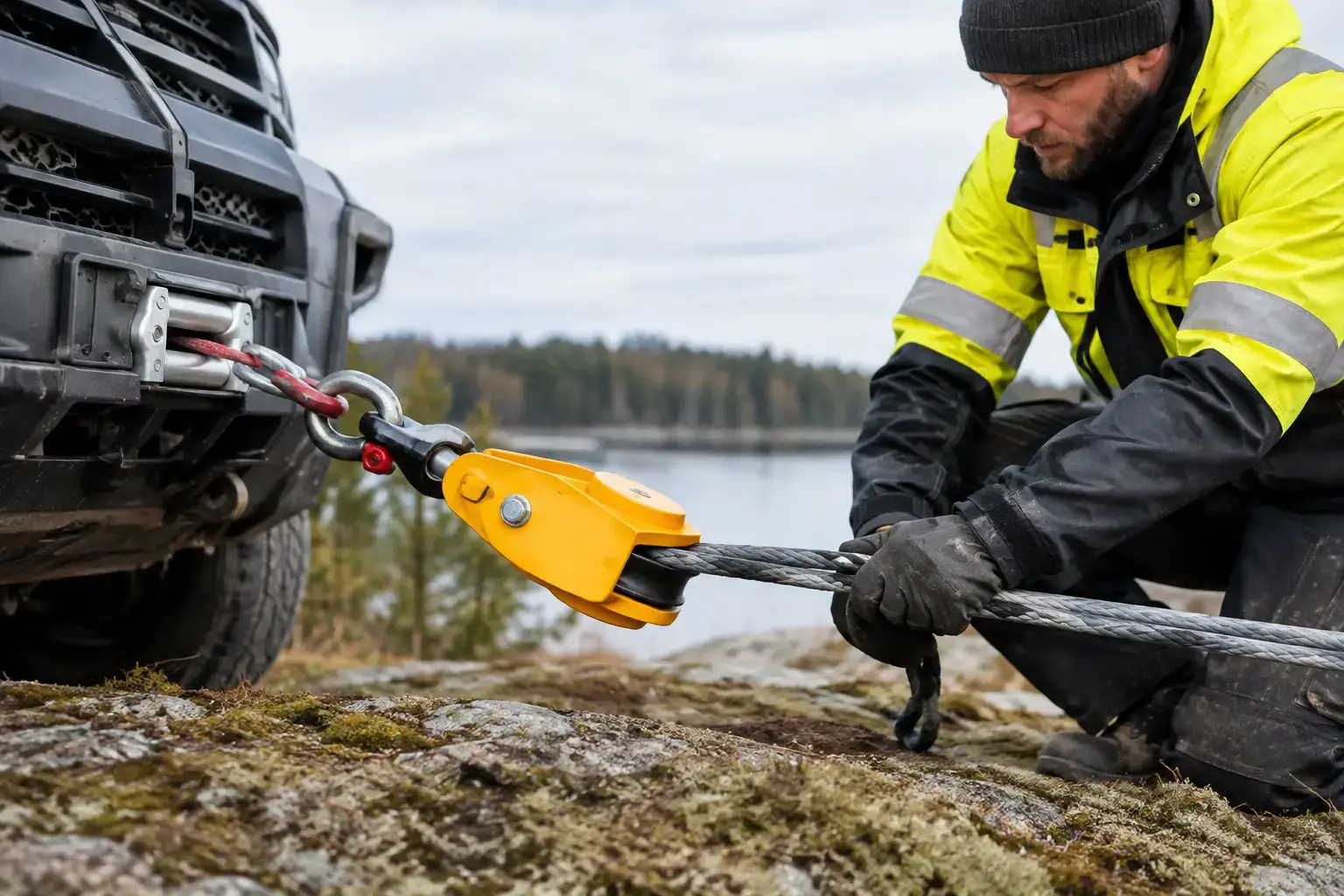
A snatch block is a heavy-duty pulley with a side plate that opens. Rather than feeding the entire winch rope through from one end, you open the block, place the rope around the sheave, and close it. That feature matters when your winch rope already has a hook or thimble fitted.
Its first job is to change the direction of pull. If the safest anchor point is not directly ahead, the block can guide the line toward it. This is especially useful on narrow forest tracks, around rocks, or when recovering a vehicle without steering it farther into trouble.
Its second job is to create a double-line pull. In this setup, the winch line runs from the vehicle to the snatch block at the anchor and then back to a rated recovery point on the vehicle. The load is shared across two sections of rope. In ideal conditions, this can nearly double the pulling force available at the vehicle while reducing the load carried by each line section.
The trade-off is speed. A double-line pull takes roughly twice as much rope and moves the vehicle at about half the line speed. That is usually a good exchange when traction is poor, the vehicle is heavily loaded, or the winch is working close to its rated capacity.
When to Use a Snatch Block
Use a snatch block when the pull needs to turn, when the vehicle is deeply stuck, or when you need more control and pulling force than a single-line setup can provide. It is also valuable when the winch drum is nearly full. Winches pull hardest on the first layer of rope around the drum and lose mechanical advantage as more layers build up. Pulling out more line and using a block can improve the winch’s effective performance.
A double-line pull is often the better choice for a vehicle sunk in mud, pulled uphill over an obstacle, or loaded with tools, cargo, or towing equipment. It reduces strain on the winch motor and gear train, though it does not make the system indestructible. If the vehicle is buried to the chassis, clear mud, snow, rocks, and branches from around the tires first. Reducing resistance is safer than relying on brute force.
For a simple directional pull, the block may only be used to guide the rope toward the required line of travel. In that case, carefully assess side loading. A winch line should pull in a controlled path, and the winch itself should not be forced to spool rope hard against one side of the drum.
Choose a Snatch Block That Matches Your Recovery System
The rating on the block is not a suggestion. It must suit the forces created by the setup, not merely the advertised pulling capacity of the winch. Check the manufacturer’s working load limit, or WLL, and distinguish it from minimum breaking strength. The working load limit is the figure used for normal, controlled operation.
In a double-line setup, the anchor-side block can see a force close to twice the tension in one rope section. That is why every part of the system needs proper capacity: the snatch block, tree saver or anchor strap, shackles, recovery points, and winch rope. The weakest rated component sets the safe limit.
When selecting a block, confirm these practical details:
- Rope compatibility: The sheave groove must suit the diameter and type of your steel cable or synthetic rope.
- Sheave size: A larger sheave is generally kinder to rope, particularly synthetic line, because it avoids an excessively tight bend.
- Side plate opening: It must open wide enough for your rope and close securely under load.
- Attachment fit: The block eye should work with the size and style of rated shackle used in your recovery kit.
- Corrosion protection: Coated steel, a quality pin, and a freely turning sheave matter in wet, muddy, and cold conditions.
Synthetic rope deserves extra attention. It is lighter and easier to handle than steel cable, but it can be damaged by abrasion, heat, sharp edges, and a poorly matched pulley groove. Use a block specifically approved for synthetic rope where required by the equipment manufacturer, and keep the line clean after muddy recoveries.
How to Rig a Double-Line Pull
Start by stopping and looking at the whole recovery path. Find a strong, stable anchor in line with the desired direction of travel. A living tree may be suitable when protected with a correctly rated tree saver strap placed low around the trunk. Never wrap a winch rope or chain directly around a tree.
Run the winch rope from the vehicle to the snatch block attached to the anchor. Open the block, seat the rope fully in the sheave groove, and close the side plate. Then return the rope to a rated recovery point on the vehicle. Use approved recovery points, not a tow ball, light bumper bracket, suspension part, or unknown tie-down point.
Before applying power, remove slack gradually. Check that the rope is not rubbing on sharp edges, the block pin is secured, and all shackles are properly installed. Position the line as straight as the terrain allows. If the rope must pass near a bumper, rock, or tree, protect it or change the setup.
Keep people clear of the recovery zone. Nobody should stand near the rope, the snatch block, the anchor, or in line with the pull. A weighted recovery damper placed on the winch line can help reduce recoil if a component fails, but it does not make an unsafe setup safe. Communicate clearly, use a spotter if visibility is limited, and winch slowly.
Common Errors That Create Risk
The most common mistake is treating a snatch block as a universal strength upgrade. It increases capability only when the full system is correctly rated and rigged. An undersized shackle, weak recovery point, damaged rope, or poor anchor can fail long before the winch reaches its limit.
Another error is side loading the block. The rope should enter and leave the sheave in the intended path. Severe angles can damage the block, force the rope against side plates, and make the load unpredictable.
Avoid shock loading as well. Do not drive against a tight winch line or jerk the vehicle while the system is under tension. Winching is a slow, deliberate operation. If progress stops, pause and reassess the resistance, anchor, and line path rather than increasing throttle or forcing the winch.
Finally, do not ignore heat and battery condition. Long pulls put demand on the winch motor and vehicle electrical system. Run the engine where appropriate and safe to support the battery, work in short controlled pulls if needed, and allow equipment to cool when it becomes hot.
Inspection and Care After Recovery
Mud, sand, and water shorten the life of recovery hardware if left in place. After use, rinse dirt from the snatch block, inspect the sheave groove and side plates, and make sure the wheel spins freely. Look for bent plates, cracks, pin damage, excessive play, or deep gouges. Retire damaged hardware rather than trying to straighten it.
Inspect the winch rope at the same time. Steel cable with broken wires, crushed sections, kinks, or rust needs attention. Synthetic rope should be checked for melted fibers, cuts, flattened sections, and embedded grit. Spool the line back onto the drum evenly under light tension so it is ready for the next job.
A snatch block takes little space in a recovery bag, but it changes what your winch can do when conditions turn difficult. Choose rated gear, rig it with patience, and let controlled pulling – not force or luck – get the job done.