


Blog
8 Best Home Backup Generators to Consider

When the power drops at 2 a.m. in freezing rain, the wrong generator choice shows up fast. The best home backup generators are not just about big wattage on paper. They need to start reliably, carry the right household loads, run safely, and keep working when weather and conditions are against you.
For most homeowners, the real question is not which generator looks strongest in a product grid. It is which one fits the way your home actually uses power. A small suburban house with gas heat needs a very different backup setup than a rural property running a well pump, freezer, garage tools, and outdoor lighting.
What makes the best home backup generators
A good backup generator does three jobs well. It starts when utility power fails, it delivers stable power to the circuits that matter, and it does not create new problems with fuel handling, noise, or overloads.
That is why shopping by peak wattage alone usually leads to mistakes. Starting watts matter for motors and compressors, but running watts determine what the unit can carry over time. If your refrigerator, sump pump, well pump, furnace blower, and a few lights all need to run together, you need enough continuous output to keep those loads from tripping the system.
Fuel type also changes the picture. Gasoline units are common and easy to source in an emergency, but long-term fuel storage takes planning. Dual fuel models add flexibility, which is valuable when one fuel is hard to get. Diesel can make sense for heavy-duty use and long runtime, though these units are often louder, heavier, and less convenient for the average homeowner.
Then there is portability. Some homes need a unit that stays in one place and feeds a transfer switch. Others need a machine that can move between the house, workshop, and field use. For that kind of buyer, wheel kits, handle design, frame strength, and cold-start reliability matter just as much as the spec sheet.
Start with your load, not the generator
Before comparing models, calculate what you actually need to power during an outage. This step saves money and prevents disappointment.
A basic emergency setup often includes a refrigerator, freezer, internet router, a few lights, phone charging, and maybe a gas furnace blower. That can often be handled by a mid-sized inverter or conventional generator if loads are managed carefully. A larger backup plan might include a sump pump, well pump, microwave, electric gates, garage door opener, and workshop circuits. That pushes you into higher-output territory quickly.
The tricky part is startup demand. Motors draw more power when they first kick on. A generator that looks large enough on running watts can still struggle when a pump and compressor start at the same time. That is why experienced buyers leave headroom instead of sizing right to the limit.
As a practical rule, if you want stress-free operation, build in extra capacity. Not because bigger is always better, but because real outages are messy. People add loads, temperatures drop, and equipment works harder.
Best home backup generators by type
Inverter generators for quiet, cleaner power
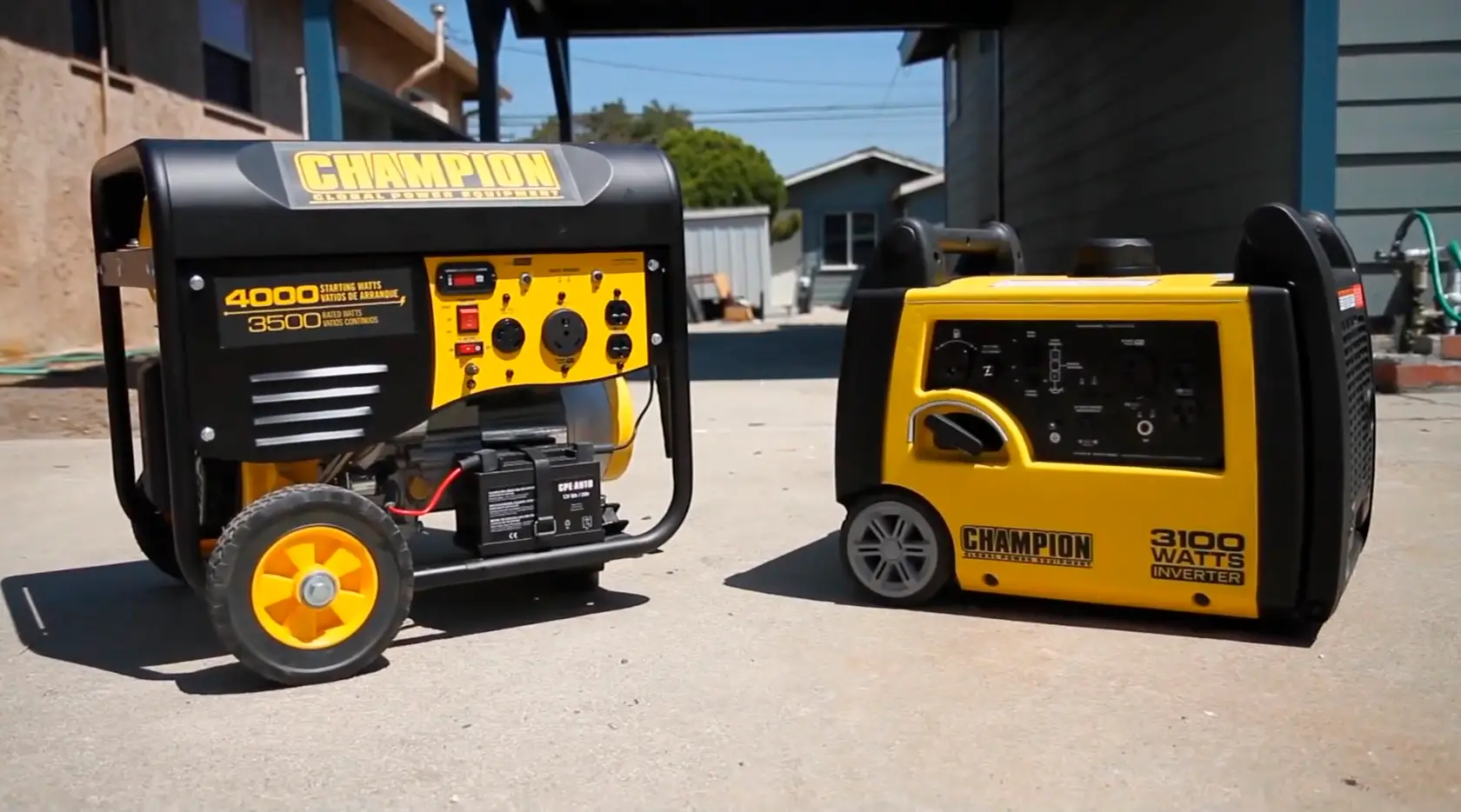
If your priority is quiet operation, fuel efficiency, and stable power for electronics, inverter generators are often the best fit. They are especially useful for smaller homes, townhomes, and backup setups focused on essentials rather than whole-house coverage.
The biggest advantage is power quality. Sensitive electronics, routers, laptops, battery chargers, and modern control boards generally run better on inverter output. Noise is another strong point. If neighbors are close or you do not want a generator roaring outside your bedroom window all night, inverter models are easier to live with.
The trade-off is output and cost. Inverter generators often cost more per watt than conventional units, and smaller models will not carry large electric heating loads, deep well pumps, or multiple motor-driven appliances at once. They are best when efficiency and quiet matter more than brute force.
Dual fuel generators for flexibility in an outage
For many homeowners, dual fuel generators hit the best balance. They let you run on gasoline or propane, which gives you options when supply gets tight or storage is a concern.
Propane stores longer and burns cleaner, which appeals to preparedness-minded buyers. Gasoline is still useful because it is widely available and often easier to refill quickly after storms. Having both options reduces risk. If one fuel becomes inconvenient, you are not stuck.
The trade-off is that performance can vary slightly by fuel type, and propane usually delivers a bit less power than gasoline. That means your sizing should account for the fuel you expect to use most often. If your load plan is already tight, that difference matters.
Conventional portable generators for higher output
If your goal is to run more of the house, including pumps, tools, and larger appliance loads, a conventional portable generator is often the stronger choice. These units typically offer more output for the money and are built for hard use.
They make sense for rural homes, larger properties, and anyone who wants backup power to cover both household needs and outside work. They are also a solid fit for users who already understand load management and want straightforward, proven equipment.
The downside is noise, weight, and fuel consumption. These are not the units you buy if quiet nighttime operation is your top priority. You buy them because they work hard and carry serious loads.
Features that matter more than marketing
When comparing the best home backup generators, a few features deserve real attention.
Electric start is worth having on anything beyond a compact unit. During bad weather or a nighttime outage, pull-start convenience gets old fast. Low-oil shutoff is another must-have because it protects the engine from avoidable damage.
Cold-weather starting matters more than many buyers expect. A generator that behaves well in mild conditions can become stubborn when temperatures drop. If you live where winter outages are a real risk, look for models built with dependable starting systems and practical engine design rather than just flashy numbers.
Outlet configuration also matters. A generator may have plenty of total output but the wrong receptacles for your transfer setup or extension cord plan. Check the actual outlets before you buy, not after.
Runtime at partial load gives a better picture than maximum runtime claims. Most people do not run generators at one simple, fixed draw. Household loads cycle. Refrigerators turn on and off. Pumps surge. Lights stay on. A unit with decent tank capacity and reasonable fuel use at half load is usually more useful than a model with inflated runtime claims based on very light use.
How to avoid buying too much or too little
Oversizing sounds safe, but it can waste money, fuel, and storage space. If you only need essentials, a massive generator may cost more upfront and be less pleasant to use. Undersizing is worse because overloads and forced load juggling make outages harder than they need to be.
A smart middle ground is to decide whether you want survival power or comfort power. Survival power keeps food cold, heating controls working, water moving, and devices charged. Comfort power adds convenience loads like microwaves, more rooms, garage access, and selected workshop circuits.
That distinction keeps the purchase grounded in real use. It also helps if you plan to upgrade later. Many homeowners start with a generator sized for essentials and then refine their backup setup with better transfer access, fuel storage, or a second application for the same unit.
Safety is part of the buying decision
The best generator is still the wrong generator if it is used unsafely. Carbon monoxide risk is serious, so outdoor placement with proper distance from doors, windows, and vents is non-negotiable. Backfeeding a house without the correct transfer equipment is also dangerous and should never be treated as a shortcut.
From a buying standpoint, this means your generator choice should match your intended setup. If you plan to connect through a transfer switch or inlet box, confirm compatibility before purchase. If you will run extension cords directly, make sure the outlet mix and cord planning are realistic.
Noise should also be treated as a safety and usability issue. A loud generator can be acceptable during daytime emergencies, but it becomes a problem during overnight operation or in tighter neighborhoods. If long runtimes are likely, quieter equipment is often worth the premium.
Which generator is best for your home
There is no single answer for every property. For essential backup in a typical home, a quality inverter or smaller dual fuel generator is often enough. For homes with pumps, larger appliances, and more demanding outage plans, a higher-output dual fuel or conventional portable unit usually makes more sense. For rural users who expect a generator to support both the house and outside work, durability and load capacity should come first.
That is the real filter. Buy for your loads, your fuel reality, and your weather. A generator is not just an emergency purchase. It is a piece of equipment you are trusting when conditions are at their worst.
If you take the time to size it properly and choose features that matter in the field, you will end up with backup power that feels less like a gamble and more like a plan.
