







Blog
Cold Weather Generator Starting Tips

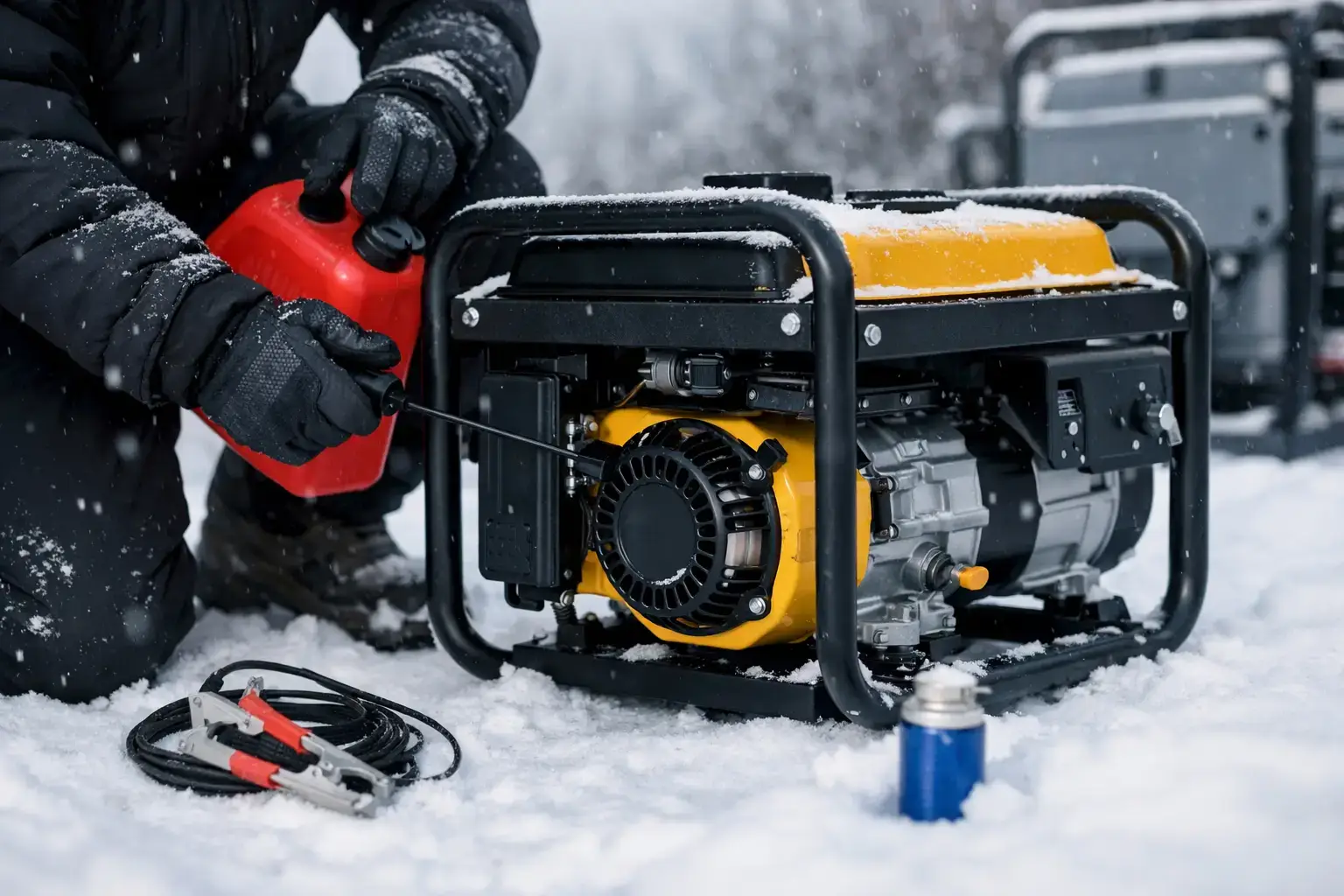
A generator that starts fine in October can turn stubborn fast when the temperature drops below freezing. Cold weather generator starting is usually less about one major failure and more about a few small problems stacking up – thick oil, weak battery output, stale fuel, moisture, and a machine that was put away without a winter plan.
If you rely on portable power for backup, jobsite use, field work, or remote property tasks, winter starting is not something to leave to chance. The good news is that most cold-start issues are preventable. A little preparation goes further than forcing repeated pull-start attempts or draining a battery when you need power most.
Why cold weather generator starting gets harder
Engines do not like cold starts. When temperatures fall, engine oil thickens and creates more resistance during cranking. Batteries lose available power, so electric start models may turn over slower or not at all. Fuel also becomes less cooperative. Gasoline can lose volatility over time, and diesel introduces its own challenge with gelling or waxing in very low temperatures.
Then there is simple condensation. A generator stored in an unheated shed, trailer, or outbuilding can collect moisture in the fuel system, around electrical connections, or on metal surfaces. None of that helps a machine start cleanly. Even a well-built unit can struggle if it has old fuel, the wrong oil viscosity, and a battery that has been ignored for months.
This is why winter reliability is mostly a maintenance issue, not just a product issue. Good equipment matters, but setup matters too.
Start with the basics before the cold hits
The best time to fix winter starting is before winter. If you wait until a blackout or an early-morning job in freezing weather, you are already behind.
Fuel is the first place to look. For gasoline generators, fresh fuel matters. Old fuel can make starting difficult in any season, but cold weather exposes weak fuel quality faster. If the generator sits for long periods, use fuel stabilizer and rotate stored gasoline on a schedule. For dual fuel units, propane can be a practical cold-weather option because it stores cleanly and avoids many gasoline storage issues. That does not mean propane is always better in every condition, but it can reduce fuel-related starting headaches for standby and intermittent use.
Oil is next. The wrong oil weight can make an engine feel glued together on a cold morning. Check the manufacturer guidance for temperature range and viscosity. In many cases, a winter-appropriate multigrade oil gives noticeably easier starts than a heavier oil that works fine in warmer months. This is one of the simplest upgrades you can make.
Battery care is just as important on electric start models. Cold weather reduces battery performance, and a battery that was marginal in mild weather often fails outright in winter. Keep terminals clean, make sure connections are tight, and charge the battery regularly during storage. A maintenance charger is often worth it for owners who want true readiness instead of wishful thinking.
Cold weather generator starting checklist
Before you assume something is broken, check the common causes in order. Most no-start situations come from basic setup errors or neglected maintenance.
Check fuel quality and fuel delivery
If the fuel smells stale, has been sitting too long, or may have water contamination, deal with that first. For gasoline units, open the fuel valve if equipped and confirm fuel is actually reaching the carburetor. For propane operation, make sure the tank has fuel, the valve is fully open, and the hose connection is secure.
With diesel generators, winter fuel handling becomes critical. In very low temperatures, untreated diesel can thicken enough to restrict flow. If you operate diesel equipment in severe cold, use the correct seasonal fuel and follow cold-weather fuel treatment practices.
Confirm the oil is right for the season
If the engine is hard to pull or the starter sounds strained, thick oil may be part of the problem. This is especially common when a generator has been serviced for summer use and then expected to perform through winter without an oil change.
Inspect the battery and starting system
A weak crank is a warning sign. If the starter turns slowly, clicks, or stops after a short attempt, test and charge the battery before doing anything else. Repeated failed start attempts only make the battery situation worse.
Use the choke correctly
Many cold starts fail because the choke is used incorrectly. A cold engine often needs full choke at startup, but leaving it engaged too long after ignition can cause rough running or stalling. The exact technique depends on the model, so operator familiarity matters.
Look for simple airflow or ignition issues
A dirty air filter, loose spark plug connection, or fouled spark plug can become more obvious in freezing conditions. These are basic service items, but they have an outsized effect when the engine is already under cold-start stress.
Smart starting habits in freezing temperatures
Once the generator is mechanically ready, your operating routine matters. Cold equipment responds better to a controlled start than to repeated rushed attempts.
Set the generator on a stable, ventilated surface and clear away snow, slush, or packed ice around the unit. Never run a generator indoors, in a garage, or in an enclosed space. Winter outages tempt people to cut corners, but carbon monoxide risk does not care about temperature.
If the unit has electric start, give it a deliberate start attempt instead of several rapid ones. If it does not fire, pause and reassess rather than grinding away at the starter. On recoil-start models, use firm, consistent pulls. Jerking at the cord with poor technique usually adds frustration, not results.
After startup, let the generator warm up before applying full load. This is especially important in cold weather because oil circulation, engine speed stability, and fuel metering all improve after a short warm-up period. How long depends on the machine and the conditions, but loading a generator immediately at full demand is asking more from a cold engine than necessary.
There is a trade-off here. You do not want to idle endlessly with no purpose, but you also do not want to shock a cold engine and alternator with instant heavy demand. A brief warm-up, followed by staged loading, is the sensible middle ground.
Fuel type makes a difference
Not all generators behave the same in winter, and fuel type plays a real role.
Gasoline generators are common, practical, and widely understood, but they are sensitive to storage quality. If gasoline sits too long, cold-start performance often suffers first. Carbureted engines can also be less forgiving when temperatures are very low.
Dual fuel generators offer flexibility that makes sense for emergency planning and seasonal use. If one fuel source becomes inconvenient, expensive, or harder to manage in cold weather, having another option helps. Propane storage is clean and convenient, though output and performance can vary depending on temperature and setup.
Diesel generators are known for durability and long-run efficiency, but extreme cold requires more attention to fuel management and starting support. For some users, especially those running equipment regularly and maintaining it properly, diesel remains a strong choice. For occasional residential backup, a gasoline or dual fuel unit may be simpler to live with.
That is the real point – the best winter generator is the one that matches how you actually use it, not just the one with the biggest numbers on paper.
Storage mistakes that cause winter no-starts
A lot of cold-start trouble begins in the off-season. A generator stored with old fuel, a neglected battery, and no exercise routine is much more likely to fail when temperatures drop.
Run the generator periodically, not just once a year. This helps keep fuel moving, lets you spot weak starting behavior early, and gives you a chance to confirm the machine still carries load properly. Owners who treat a generator like emergency-only equipment often skip this step, then find out too late that the battery is dead or the fuel has gone bad.
Storage location matters too. A dry, covered space is better than a damp corner of a shed. You do not need a heated room in every case, but you do need protection from standing moisture, blowing snow, and temperature swings that encourage condensation.
If the generator will sit for a long period, think beyond the machine itself. Keep the oil, spark plug, air filter, pull cord, battery charger, and any maintenance parts on hand. Reliability is not just about the engine. It is about being able to service the engine without wasting days looking for basic items.
When repeated starting attempts are the wrong move
If a generator will not start after a few proper attempts, stop and troubleshoot. Repeated cranking can flood a gasoline engine, flatten a battery, or hide the original issue under a new one. A no-start in cold weather is usually telling you something useful.
Maybe the fuel has aged out. Maybe the battery was already weak. Maybe the oil is too heavy for the conditions. Maybe the generator simply has not been exercised in months. In any case, force is rarely the fix.
For buyers who need dependable winter performance, this is where product choice and support matter. Equipment built for real outdoor use, backed by available service parts and straightforward maintenance items, is easier to keep ready when conditions are working against you.
Cold weather does not have to beat your generator. Treat winter starting as part of ownership, not an afterthought, and the machine is far more likely to answer when the lights go out.
