






Blog
Choosing a Pressure Washer for Firefighters

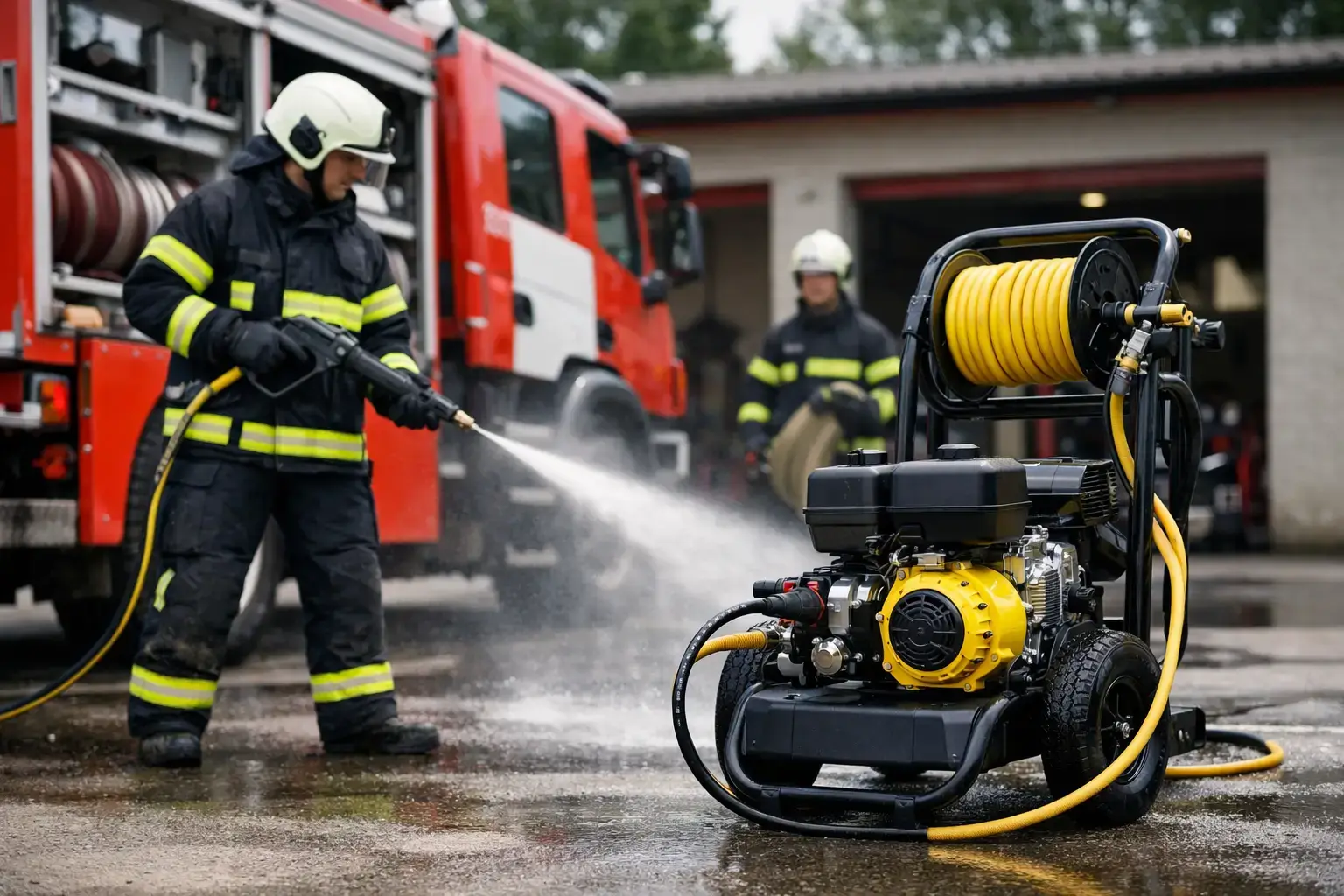
Mud, soot, foam residue, and road grime do not wait for ideal conditions. When equipment comes back from a call, cleanup needs to happen fast, and the right pressure washer for firefighters can cut hours of labor while helping protect vehicles, tools, PPE support gear, and station surfaces from buildup that shortens service life.
This is not the same buying decision as picking a light-duty washer for a driveway. Fire service cleanup puts different demands on a machine. You need enough cleaning force to remove stubborn contamination, enough water flow to rinse efficiently, and enough reliability that the unit starts and works when the shift is already stacked with other jobs.
What a pressure washer for firefighters actually needs to do
A fire department or field response team typically asks one machine to cover several jobs. It may be used to wash down trucks and off-road support vehicles, clean station floors, remove mud from pumps and hose handling equipment, rinse contaminated exterior surfaces, and support post-incident cleanup around tools and hard gear.
That means performance has to be judged by more than peak PSI on a spec sheet. High pressure matters, but water flow matters just as much. A unit with strong GPM can rinse large surfaces faster and move debris more effectively, which is often what saves time in real use. For firefighting support work, speed matters because cleanup is rarely the only task on the schedule.
Mobility also matters more than many buyers expect. A washer that is technically powerful but hard to move across gravel, snow, uneven ground, or around apparatus bays becomes a nuisance. Large wheels, a stable frame, and a layout that makes hose handling easy are practical advantages, not nice extras.
PSI and GPM for firefighter cleanup tasks
If you are comparing machines, start with PSI and GPM together rather than treating them separately. PSI gives you impact at the surface. GPM gives you rinsing volume. For firefighters, a balanced setup is usually more useful than chasing the highest pressure number available.
For vehicle washing, exterior equipment cleanup, and station concrete, a mid-to-heavy-duty range often makes the most sense. Too little pressure and the machine wastes time on soot, grease, and baked-on grime. Too much pressure, especially with the wrong nozzle, can damage paint, strip markings, force water into electrical areas, or wear down sensitive surfaces.
That is where nozzle choice becomes part of the machine decision. A good pressure washer is only as controlled as its spray setup. Wider fan patterns are better for general washing and safer on painted surfaces. Narrower streams are useful for targeted heavy buildup, but they need disciplined use. In a fire service environment, equipment value is high and replacement cycles are expensive. Cleaning power should be strong, but controllable.
Gas vs electric pressure washer for firefighters
The right power source depends on where and how the unit will be used. For outdoor fleet washing, rural sites, training grounds, and locations where power access is limited, a gas-powered machine usually makes more sense. It gives you mobility and strong output without depending on shore power.
That advantage becomes even more important in field-use scenarios. If a washer needs to travel with support equipment or be used away from the station, gas power keeps the setup simple. You are not hunting for outlets or managing long extension runs in wet working areas.
Electric units still have a place. If the machine will mostly live inside a station bay, be used for lighter-duty cleaning, and noise reduction is a high priority, electric can be practical. They are often easier to start, generally lower-maintenance in some respects, and suitable for routine washdown jobs. The trade-off is that many electric models do not offer the same combination of mobility and output that heavier outdoor cleaning demands.
For buyers in colder climates, cold-start behavior should not be treated as a small detail. Equipment that sits between uses and then needs to run in low temperatures has to be chosen with real operating conditions in mind. That is one reason many professional users lean toward proven, work-ready machines instead of consumer-grade units with attractive labels but limited durability.
Hot water or cold water?
This is one of the most important forks in the road. A cold-water pressure washer can handle many firefighter cleaning tasks well, especially mud, dirt, loose soot, and routine washdown. It is often the more affordable and straightforward option.
But if the machine will regularly deal with grease, oily residue, heavy road film, and stubborn contamination on apparatus or shop floors, hot water has clear advantages. Heat helps break down residue faster and can reduce chemical dependence. For maintenance-heavy environments, that can improve productivity and make hard cleaning jobs less frustrating.
The trade-off is cost, complexity, and machine size. Hot-water units are heavier, more expensive, and typically more demanding to maintain. Not every crew needs one. If the main role is vehicle rinsing, general bay cleanup, and occasional heavy-duty washing, a strong cold-water unit may be the better value. If the washer is expected to tackle oily shop conditions and serious contamination day after day, hot water starts to justify itself.
Features that matter more than marketing
A dependable pressure washer for firefighters should be easy to run, easy to move, and built for repeated use. A heavy-duty frame is worth paying for because these machines get dragged, loaded, unloaded, and stored in less-than-perfect conditions. Hose quality matters too. Cheap hose becomes a problem fast when it kinks, cracks, or fights the operator.
Pump design is another point to watch. Better pump components generally mean longer service life and better repair potential. For professional or semi-professional use, it is smart to think beyond the first season. Access to replacement parts, maintenance items, and support has real value once the machine is in service.
Engine reliability is just as important. A washer can have impressive pressure numbers, but if it is hard to start or inconsistent under load, it becomes dead weight. For buyers who value readiness, proven engine performance and straightforward maintenance should carry more weight than flashy branding.
Detergent capability can also be useful, especially for fleet care and station maintenance. The key is controlled use. Chemicals should support cleaning, not replace proper pressure, flow, and technique.
Matching the machine to real firefighter use cases
Not every department, contractor, or support crew needs the same machine. If the washer will mostly clean apparatus exteriors, station aprons, and utility trailers, a cold-water gas unit with strong PSI and solid GPM is often the practical sweet spot. It gives you range, speed, and field-ready mobility.
If the work includes frequent cleaning of maintenance areas, oil-stained concrete, and stubborn residue on mechanical equipment, stepping up to hot water may save labor over time. The machine costs more, but it can earn that back in faster cleaning and less scrubbing.
If the unit will be used by multiple operators, simplicity matters. Straightforward controls, durable accessories, and predictable startup are not minor conveniences. They reduce downtime and make it easier for the whole crew to use the machine correctly.
Common buying mistakes
The biggest mistake is buying on PSI alone. High pressure looks impressive in a product listing, but without enough flow, cleaning can still be slow. The second mistake is underestimating duty cycle. A machine that is fine for occasional residential cleaning may not hold up to repeated firefighter support work.
Another common issue is ignoring transport and storage. Think about where the washer lives, how it gets moved, and whether it will operate on rough ground or in cold weather. A good spec sheet does not fix poor real-world usability.
Support and parts availability also deserve attention. Pressure washers are working equipment. Hoses wear out, pumps need service, and maintenance is part of ownership. Buying a machine without a clear path for upkeep often costs more later.
How to choose with confidence
Start with the jobs that happen most often, not the rarest extreme case. If 80 percent of use is vehicle washing and general cleanup, buy for that workload first. Then make sure the unit has enough reserve capability for the tougher days.
Look at output, engine or motor type, frame strength, pump quality, hose setup, and serviceability as one package. That is how you separate a machine that works on paper from one that keeps working in the yard, at the station, or out in the field. Champion Baltics focuses on exactly that kind of equipment decision – practical machinery that is built to be used, not babied.
When the job is dirty, time is short, and the cleanup still has to get done right, the best pressure washer is the one that starts easily, cleans fast, and stands up to hard use without drama. Buy for real conditions, not showroom numbers, and the machine will earn its place every time it rolls out.
