




Blog
How to Size Backup Generator Right

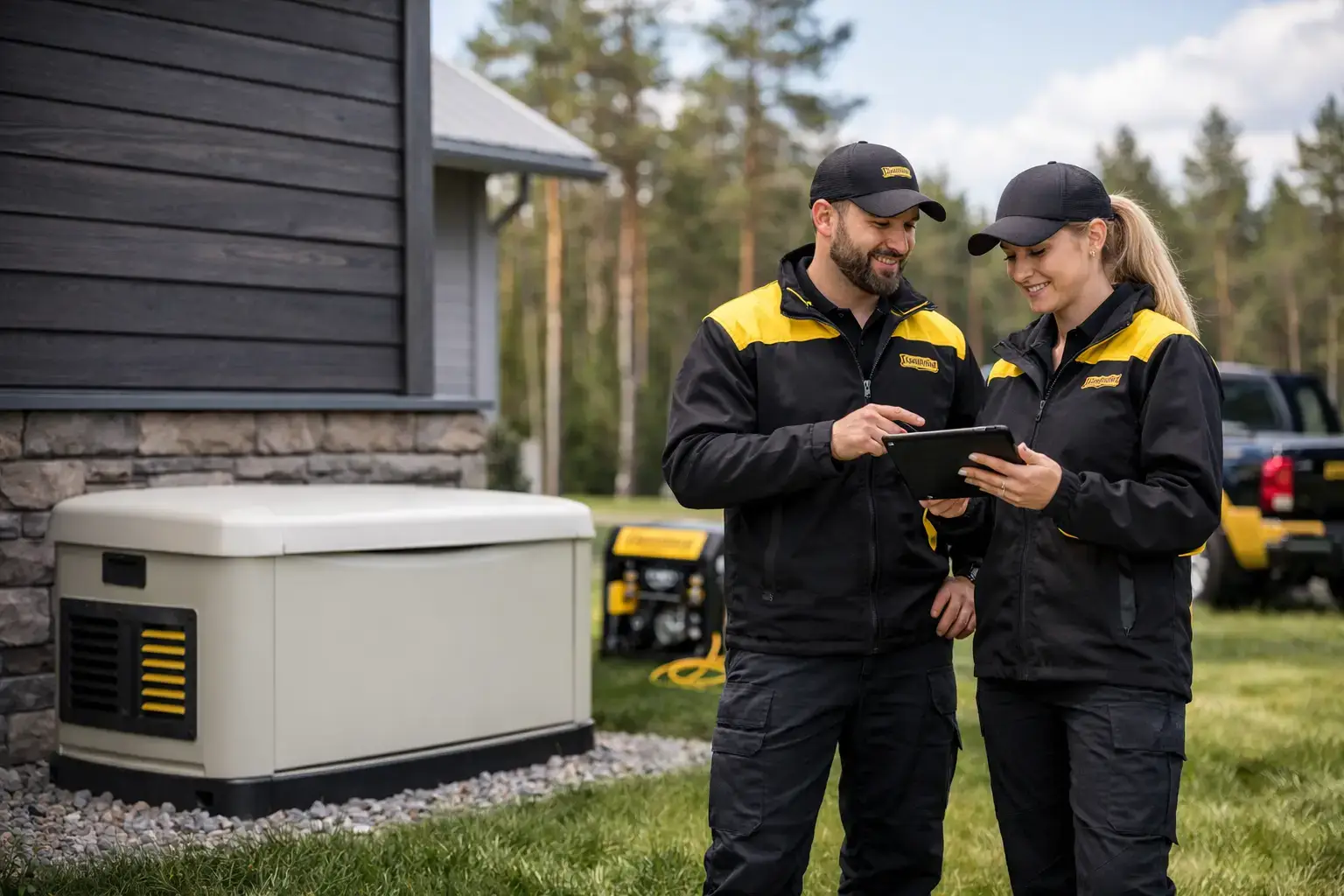
When the power drops in the middle of a freeze, a storm, or a long rural outage, guesswork is the fastest way to buy the wrong machine. If you are trying to figure out how to size backup generator capacity for your home, workshop, or property, the job comes down to one thing – knowing what must run, what can wait, and how much startup power your equipment really needs.
A generator that is too small will trip breakers, struggle on motor loads, and force hard compromises when you need power most. A generator that is too large can cost more upfront, burn more fuel than necessary, and add weight you may not want if portability matters. The right size sits in the middle: enough output for real-world loads, enough headroom for startup surges, and enough practicality for the way you actually use it.
How to size backup generator output without guessing
Start with your critical loads, not your entire building. Most people do not need to run every circuit during an outage. They need to keep food cold, heat moving, lights on, devices charged, maybe a well pump running, and in some cases a sump pump, garage door, or workshop essentials available.
That means you should build your generator size around two numbers: running watts and starting watts. Running watts are what an appliance needs to keep operating. Starting watts are the extra surge required when motors kick on. Resistive loads such as lights, heaters, and toasters usually do not have much startup surge. Motor-driven equipment such as refrigerators, freezers, pumps, compressors, and some power tools absolutely do.
If you size only for running watts, the generator may look fine on paper and still fail when the refrigerator compressor and well pump start at the same time. This is where many buyers get caught out.
Step 1: Make a real load list
Walk through the property and write down the equipment you actually want to power in an outage. Keep it honest. Emergency backup is different from whole-house comfort.
A practical home backup list often includes a refrigerator, freezer, a few LED lights, Wi-Fi, phone chargers, a microwave, a boiler or furnace fan, and maybe a sump pump or well pump. A rural property might also include gate controls, battery chargers, or water system equipment. A small workshop backup setup might focus on lights, chargers, one compressor, and a few essential tools rather than every machine on the floor.
Check each item for wattage on the data plate, owner manual, or power label. If the label shows amps instead of watts, use a simple formula: watts = volts x amps. For example, a 120V tool drawing 10 amps uses about 1,200 watts.
Step 2: Separate running watts from starting watts
Now mark which loads have electric motors. These are the loads that need extra startup power. Refrigerators may run at a few hundred watts but need much more for a second or two at startup. The same goes for freezers, pumps, air compressors, and some HVAC equipment.
As a rough working rule, many motor-driven appliances need 2 to 3 times their running watts to start, though some loads can be higher. If you have exact specs from the manufacturer, use those. If not, be conservative. It is better to allow margin than size too tight.
What size backup generator do most people need?
There is no single answer, but there are common ranges.
For basic emergency home essentials, many users land in the 3,000 to 5,000 running watt range. That often covers refrigeration, lights, internet, chargers, and a few small household loads.
For a larger backup plan that includes a well pump, sump pump, heating system blower, or more simultaneous appliance use, many setups move into the 6,000 to 8,500 running watt range.
If you want broader whole-home coverage, central air components, or higher-demand workshop loads, you may need 9,000 watts and up, depending on how much starts at once. At that point, transfer switch planning, outlet type, and fuel runtime become just as important as raw wattage.
The key point is this: size by your actual use case, not by a generic label like home backup or jobsite power.
A simple example of how to size backup generator capacity
Let’s say you want to power the following during an outage:
A refrigerator at 700 running watts with 2,100 starting watts, a freezer at 500 running watts with 1,500 starting watts, ten LED lights totaling 100 watts, a boiler fan at 600 running watts with 1,200 starting watts, a microwave at 1,000 watts, and device charging plus Wi-Fi at 150 watts.
Your total running load is 3,050 watts.
Now look at startup. The highest surge event matters most, especially if multiple motor loads may start together. If the refrigerator and boiler fan overlap at startup, or a freezer cycles on while another motor is already running, the generator needs enough headroom to absorb that demand without sagging.
In this case, a unit around 4,500 to 5,500 running watts would usually be a safer fit than a 3,500 watt class machine. You are not just covering the math. You are building in breathing room for cold weather starts, extension cord losses, and the fact that real outages are rarely tidy.
Why headroom matters
A generator should not live at maximum output all the time. Running near the limit continuously can increase wear, reduce fuel efficiency, and leave no reserve for surprise loads. In harsh conditions, extra margin is even more valuable.
A good rule is to leave some capacity above your expected running load. Around 15 to 25 percent headroom is often a smart target for backup use, especially when motor loads are involved.
Fuel type, portability, and runtime change the decision
Knowing how to size backup generator wattage is only half the job. You also need a machine that fits your operating conditions.
Portable inverter generators are a strong choice for quieter operation, cleaner power for electronics, and easy transport. They are ideal when your loads are moderate and you want lower noise around the house, cabin, or mobile setup.
Conventional portable generators often make more sense when you need higher output for pumps, tools, or broader home backup at a stronger price-to-power ratio. If you expect rougher field use or heavier startup loads, this category is often where the real work gets done.
Dual fuel models give you flexibility. That matters when gasoline availability changes or long storage is part of your emergency plan. Diesel can be attractive for certain heavy-duty and long-runtime applications, but machine weight, noise, and cold-weather behavior should be part of the decision.
It depends on how you plan to use the generator. A compact inverter unit can be perfect for a controlled essentials-only backup plan. It can also be the wrong tool if you need to start a deep well pump and keep a workshop alive at the same time.
Watch the 120V and 240V question
This is one of the most expensive mistakes in generator buying. Some users focus on wattage and forget voltage requirements.
If your critical equipment includes a well pump, certain compressors, larger power tools, or transfer-switch-fed home circuits, you may need 240V output. A generator with enough total wattage but only 120V capability will still not run the loads you care about.
Before buying, check not only how much power you need, but what kind of power your equipment requires.
Common sizing mistakes that cause trouble later
The first mistake is counting every appliance in the building instead of defining essential loads. That usually leads to overspending.
The second is ignoring startup watts. This leads to under-sizing, especially with pumps and refrigeration.
The third is forgetting extension cord and connection losses, particularly on long runs or outdoor setups. The fourth is buying right to the limit with no reserve. And the fifth is overlooking runtime. A generator that can technically handle the load but empties its tank too fast may not fit overnight outage use.
Noise, maintenance access, and storage also matter more than people expect. If a generator is too heavy to move, too loud for the location, or awkward to service, ownership gets old fast.
Choosing the right size for your situation
For homeowners, the safest approach is to decide whether you want essentials-only backup or near full-home convenience. For landowners and rural users, pumps, outbuildings, and water systems usually push sizing upward. For tradespeople and workshop operators, the conversation shifts toward startup loads, outlet types, and whether multiple tools will run together.
That is why the best sizing process starts on paper, then gets tested against how you live and work. Not your best-case day, but your worst one – cold weather, low light, wet ground, and equipment that has to start now.
If you want a generator that earns its keep, size it for the loads that matter, add sensible headroom, and make sure the machine matches your voltage, fuel, and runtime needs. The right unit should feel ready, not barely enough. When the outage hits, that difference is everything.
