






Blog
Generator Spare Parts Guide for Reliable Power

A generator that starts on the first pull in freezing weather usually has one thing behind it – proper maintenance and the right replacement parts on hand. This generator spare parts guide is built for owners who rely on portable power for backup, field work, rural property use, and off-grid jobs where downtime is not an option.
If you use your generator only a few times a year, it is easy to assume spare parts can wait. That logic works right up until a storm hits, the carburetor gums up, or a worn spark plug turns an easy start into a long afternoon. Spare parts are not just about repairs. They are about readiness.
What this generator spare parts guide should help you decide
Most generator owners do not need a shelf full of components. They need the right parts, in the right order of priority, matched to the way the machine is used. A homeowner running backup power during outages will not stock the same items as a contractor using a generator every week, and neither will match the needs of someone relying on equipment in cold forest or field conditions.
The practical question is simple: which parts actually wear out, which parts fail unexpectedly, and which ones are worth keeping in reserve? Once you answer that, buying spare parts becomes a lot more efficient.
The spare parts worth knowing first
Start with wear items. These are the parts most likely to need replacement during normal ownership, and they solve most common running issues.
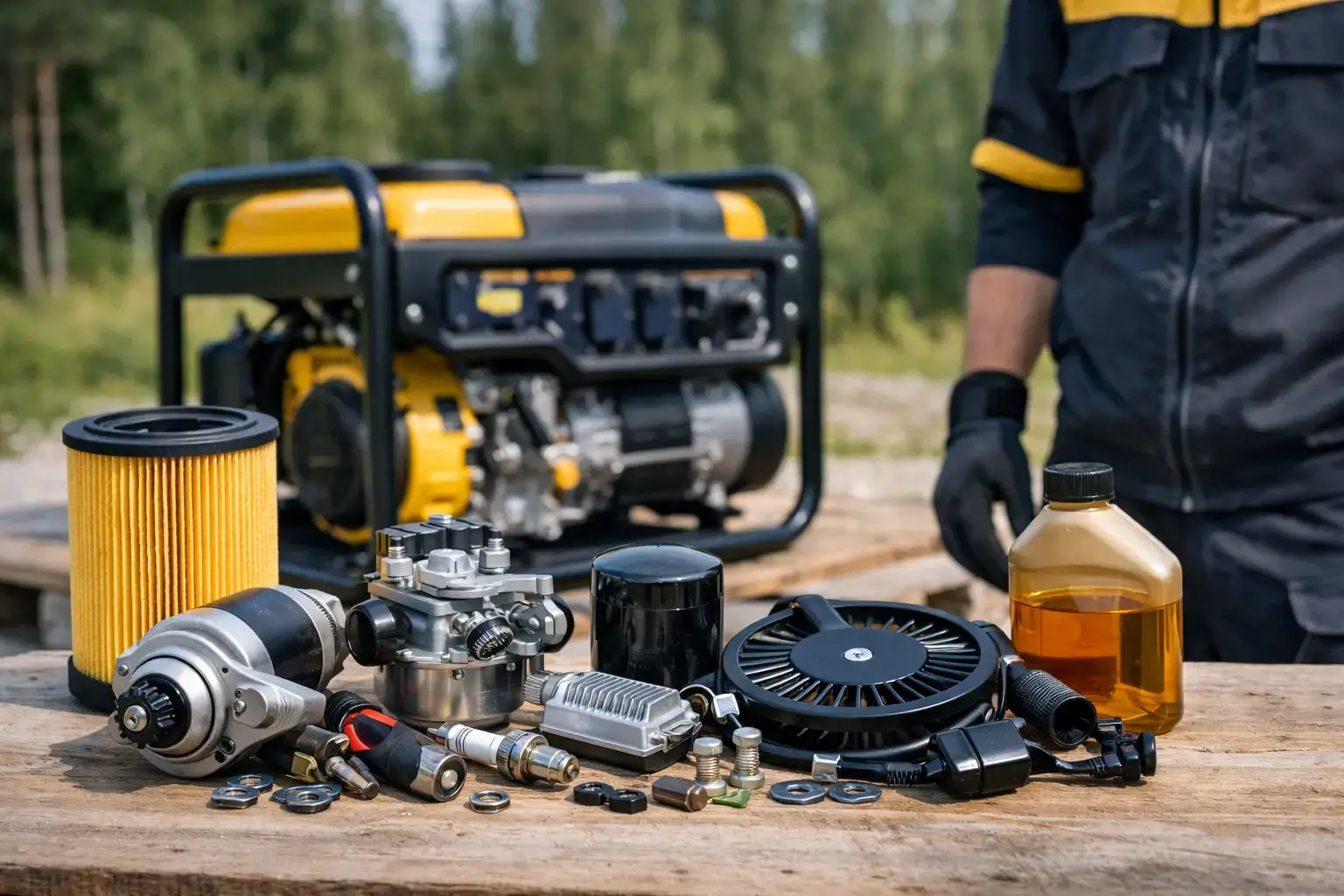
Air filters, spark plugs, and oil-related parts
Air filters are cheap, easy to replace, and easy to ignore. In dusty work areas or seasonal outdoor use, they clog faster than many owners expect. A dirty filter restricts airflow, makes starting harder, and can reduce engine performance. If your generator sees construction dust, dry yard work, or storage in less-than-clean conditions, keeping a spare air filter makes sense.
Spark plugs are another basic item that can stop a generator cold. Even if a plug still fires, wear, carbon buildup, or poor fuel conditions can lead to rough running, misfires, and hard starts. Replacing a spark plug is one of the fastest fixes for a generator that suddenly feels unreliable.
Oil filters matter on models equipped with them, especially larger engines and some heavy-duty units. If you already change oil on schedule, keeping the filter on hand is the smart move. Waiting to order one after service is due usually means the machine runs longer than it should on old oil.
Fuel system parts that cause the most trouble
Fuel causes a large share of generator problems, especially when the machine sits unused between seasons. Carburetors, fuel filters, fuel lines, and shut-off valves all deserve attention.
A carburetor can become the problem part everyone blames, but often the real issue starts with stale fuel, varnish buildup, or debris moving through the system. In some cases, cleaning is enough. In others, replacement is faster and more reliable. For generators stored with fuel left inside, carburetor-related failures are common enough that many owners keep related parts in mind before they fail.
Fuel filters are inexpensive insurance. If your machine starts starving under load, surges, or struggles to run consistently, a clogged filter is one of the first things to check. Fuel lines also age over time. Cracks, stiffness, and leaks become more likely in machines exposed to temperature swings, vibration, or long storage periods.
Batteries and starting components
Electric-start generators are convenient, but they add another point of failure. A battery that sits discharged through winter may not be there for you when the power goes out. If your generator uses electric start, battery condition should be part of your regular readiness check.
Starter switches, charging components, and recoil assemblies can also wear over time. These are not the first parts every owner needs to stock, but if the generator is mission-critical, starting-system parts deserve more attention than they usually get.
Parts that fail less often but matter more when they do
Some components are not regular service items, but when they fail, the generator can be completely unusable.
AVR units, ignition coils, control panels, breakers, and sockets fall into this category. They are more model-specific, and diagnosis matters more before replacement. If your generator produces unstable voltage, loses output while the engine still runs, or trips protection unexpectedly, the problem may be electrical rather than mechanical.
This is where generic buying gets risky. A spark plug can often be matched by specification. An AVR or control module usually cannot be guessed. Fitment needs to be exact, and using the wrong part can create bigger problems than the original fault.
How to know which generator spare parts to keep in stock
Usage pattern should drive your buying decisions. If your generator is emergency backup for the home, keep the parts that solve no-start and poor-running issues first. That usually means spark plugs, air filters, fuel filters, and the right oil service items. Add a battery if the model uses electric start and you cannot afford a failed start during an outage.
If the generator supports regular jobsite or field use, your parts strategy should be more aggressive. Downtime costs time, fuel, and sometimes a lost workday. In that case, a spare recoil starter, fuel line, carburetor service parts, and common electrical protection parts may be justified.
For occasional users, stocking every possible component is usually unnecessary. For heavy users, not stocking known wear items is the expensive choice.
Fitment matters more than price
A cheap part that almost fits is not a bargain. Generator components need to match the correct model, engine type, and sometimes even production version. The same product family can include small differences in connectors, mounting points, fuel system layout, or output hardware.
That matters most with carburetors, ignition parts, recoil assemblies, regulators, and control components. Even filters and spark plugs should be checked against the correct spec instead of assuming one small-engine part is the same as another.
When buying, look for exact model compatibility first. After that, think about operating conditions. Nordic and Baltic users often deal with cold starts, moisture, long storage intervals, and rough transport. In that kind of use, parts quality is not a minor detail. It is directly tied to whether the generator works when needed.
Signs a part should be replaced before it fails
A good maintenance habit is replacing parts on condition, not only after a complete breakdown. Most generators give warning signs.
Hard starting, rough idle, surging under load, reduced power, fuel smell, visible hose cracking, excessive vibration, and repeated breaker trips all point toward parts that need inspection. So does a generator that runs fine unloaded but struggles once equipment is connected. Sometimes the issue is fuel delivery. Sometimes it is ignition. Sometimes it is simply overdue service.
The key is not to wait for certainty. If a low-cost wear part is visibly tired or linked to a common symptom, replacing it early is often the practical move.
The case for routine service kits
For many owners, the easiest approach is to think in service intervals rather than individual failures. A basic service kit built around oil, filters, and spark plugs covers the items most likely to affect starting and engine health. That keeps maintenance simple and reduces the chance that one missing low-cost part delays the whole job.
This approach also helps if you manage multiple machines. Instead of reacting to problems one by one, you keep a small, organized stock of the parts that move fastest. For homeowners, that means less stress before storm season. For workshop and field users, it means more uptime.
When to repair and when to replace more than one part
It depends on age, use hours, and the type of failure. If a generator has been stored poorly with old fuel, replacing only one fuel-system part may not solve the full problem. A new carburetor fitted to old cracked fuel lines and a dirty filter is not much of a fix.
The same goes for ignition and maintenance items. If the spark plug is worn, the air filter is dirty, and the engine oil is overdue, doing one item at a time can waste effort. Basic systems work together. Fixing the whole service issue at once is often cheaper than repeated troubleshooting.
For older machines, there is also a point where major electrical component replacement may not be the best value. If several high-cost parts are failing at once, compare the repair total to the value and reliability of the generator itself.
A smarter way to buy spare parts
Buy before peak demand, not during it. The worst time to search for generator parts is after a storm warning or during a cold-weather failure. Check your model, review the service schedule, inspect the machine, and build a short list of parts based on real use.
For most owners, that list is not long. It is just focused. Start with service items and common failure points. Add higher-priority backup parts if the generator supports critical loads or regular work. If you need support matching components, a specialized supplier such as Champion Baltics can make that process much easier than sorting through generic listings.
A generator does not need much to stay dependable, but it does need the right attention at the right time. Keep the parts that protect starting, fuel delivery, and routine service, and your machine has a much better chance of being ready when the lights go out or the workday starts.
