







Blog
Can a Generator Power a Refrigerator?

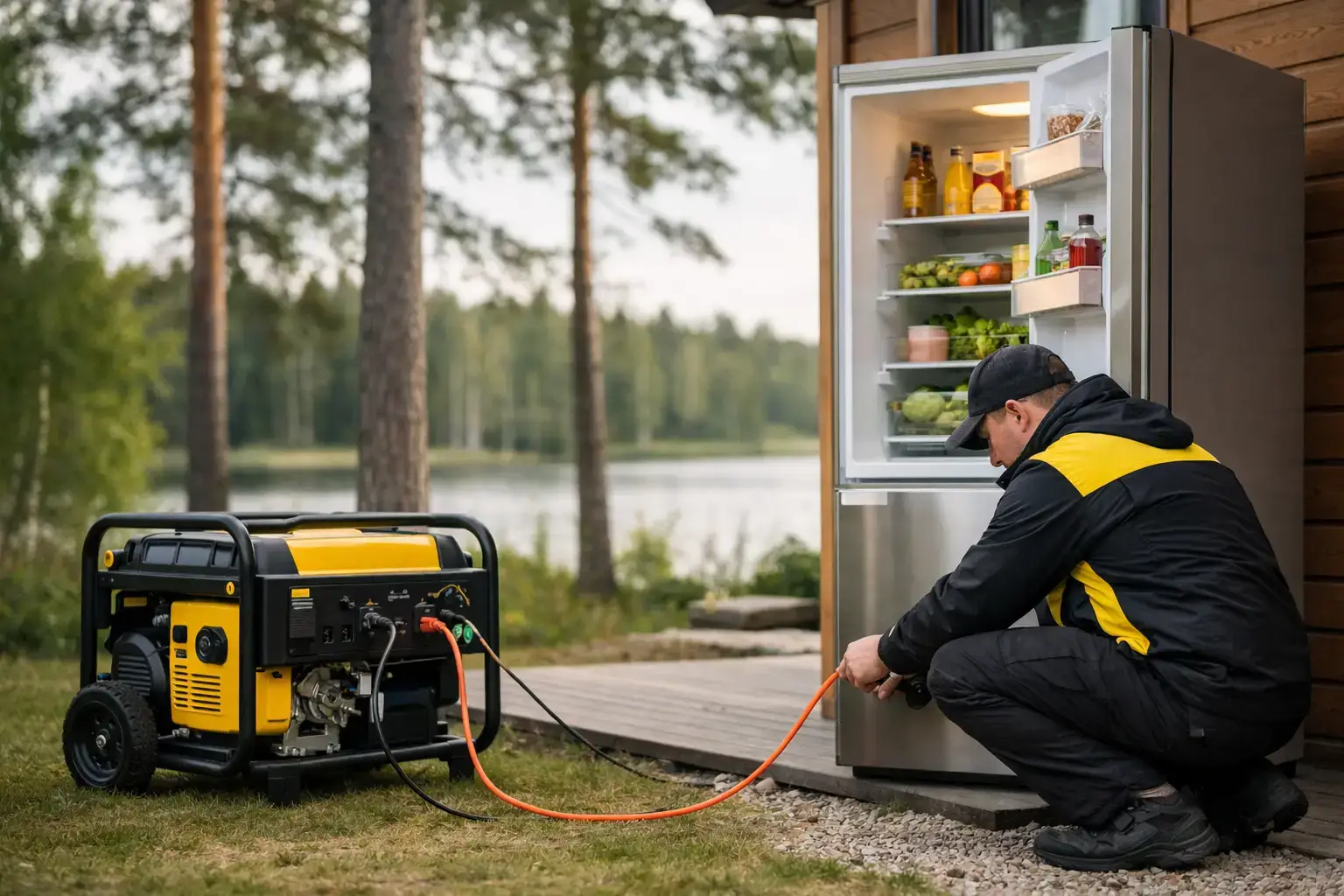
The food in your fridge does not care that the power outage was only supposed to last an hour. Once the temperature starts climbing, you need a backup plan that works, not guesswork. So, can a generator power refrigerator loads safely? Yes – if the generator is sized correctly, delivers clean enough power for the appliance, and is used the right way.
A refrigerator is one of the most common reasons people buy a portable generator. It protects food, medicine, and daily routine during outages. But a fridge is not just a simple constant load. It has a compressor, and that compressor needs a short burst of extra power every time it starts. That startup demand is where people get into trouble.
Can a generator power refrigerator loads without damage?
In most cases, yes. A generator can run a refrigerator without damage when the unit provides enough running wattage, enough starting wattage, and stable output. The key is understanding that the label on the fridge does not always tell the full story.
Most household refrigerators use somewhere around 100 to 800 running watts, depending on size, age, and type. A modern top-freezer unit may run on the lower end. A larger side-by-side model, garage fridge, or older unit can pull more. The bigger issue is startup surge. When the compressor kicks on, the fridge may need 2 to 3 times its running wattage for a brief moment.
That means a refrigerator drawing 200 running watts might need 600 watts or more to start. A larger unit drawing 700 running watts could briefly demand well over 1,500 watts. If your generator cannot handle that surge, the fridge may fail to start, trip the overload protection, or cycle badly.
What size generator do you need for a refrigerator?
For a single refrigerator, a generator in the 2,000 to 2,500 starting watt range is often enough. That gives you a practical buffer for compressor startup and helps avoid running the generator at its limit. If you also want to power a freezer, a few lights, a router, or a boiler control, step up from there.
A lot depends on what kind of refrigerator you own and what else is connected at the same time. Small inverter generators are often a strong fit for fridge duty because they deliver stable power, run quieter, and use fuel efficiently at partial loads. That matters in a long outage when fuel storage, nighttime noise, and runtime all become real concerns.
If you are planning for whole-home essentials rather than just one appliance, do the math before you buy. Add the running watts of everything you want to operate, then account for the largest startup surge. Do not size a generator right on the edge. Real-world conditions, extension cord losses, and cold starts all favor extra headroom.
A quick real-world sizing example
Say your refrigerator uses 300 running watts and about 900 starting watts. On paper, even a small portable generator could handle it. But if you add a chest freezer at 250 running watts with a similar startup spike, plus a few lights and a phone charger, your margin disappears fast.
That is why practical buyers usually size for the job they will actually face during an outage, not the best-case test result. If your backup plan includes more than one cooling appliance, choose a generator with room to spare.
Why inverter generators are often the better choice
Not every refrigerator is sensitive, but many modern models include electronic control boards, digital displays, and variable-speed components. These parts generally prefer stable, low-distortion power. That is where inverter generators stand out.
An inverter generator adjusts engine speed to demand and produces cleaner electricity than many conventional open-frame units. For a refrigerator, that can mean smoother operation and less risk with modern electronics. You also get quieter performance, which is useful around a house, cabin, or campsite.
Conventional generators still have a place. They can be a strong value when you need more total output for pumps, heaters, tools, or multiple appliances. But if your main goal is reliable backup power for household essentials, an inverter model is often the cleaner and more efficient answer.
Can a generator power refrigerator and freezer at the same time?
Yes, but size matters even more. A refrigerator and freezer may not start at exactly the same moment every time, but you have to plan for that possibility. If both compressors kick on together, the surge can be high enough to overload an undersized unit.
This is where people often underestimate the load. Running watts may look modest, but startup demand changes the picture. If you want to power both safely, use the nameplate data if available, check the manual, or measure actual draw with a watt meter. Then choose a generator with enough surge capacity to absorb those starts without strain.
If you are running multiple cold-storage appliances, avoid plugging in unnecessary loads on the same circuit. Coffee makers, kettles, microwaves, and portable heaters can quickly push a manageable setup into overload.
Safe setup matters as much as generator size
A correctly sized generator is only part of the job. Safe operation is what keeps the equipment working and the people around it safe.
Run the generator outdoors only, well away from doors, windows, vents, and garages. Carbon monoxide is not a small risk. It is a deadly one. Keep the unit dry, level, and protected from direct rain with proper open-air sheltering.
Use a heavy-duty extension cord rated for the load, or connect through a proper transfer switch if the generator is supporting home circuits. Never backfeed a house through an outlet. That puts utility workers, your wiring, and your equipment at serious risk.
Fuel planning matters too. A refrigerator may need to run for many hours or days in an extended outage. A generator that sips fuel at low load can be a better choice than a larger unit that burns more than the job requires. Dual fuel models add flexibility, especially when gasoline supply is uncertain.
Cold weather changes the equation
If you live where outages often come with freezing temperatures, do not ignore cold-weather performance. Engines can be harder to start, fuel behavior changes, and extension cords become stiffer and less forgiving. Equipment designed for real outdoor use has an advantage here.
A generator with reliable cold-start capability, solid maintenance support, and easy access to oil and spare parts is not just a nice feature. It is part of preparedness. When the grid drops in bad weather, you want a machine that starts now, not after a long troubleshooting session in the dark.
Common mistakes when using a generator for a fridge
The first mistake is buying too small. Many people look at running watts only and ignore startup surge. The second is plugging in too many extra items because the generator seems to be handling the fridge fine at first. The third is poor maintenance.
A neglected generator may still start, but unstable performance under load is where problems show up. Old fuel, low oil, dirty air filters, and worn spark plugs all reduce reliability. If the generator is for emergency use, test it before you need it. Let it run under load and confirm that the refrigerator cycles normally.
Another mistake is assuming every appliance behaves the same. A compact dorm fridge is not the same as a large French-door model with ice maker and smart controls. If you are not sure, give yourself more capacity rather than less.
When a larger generator makes sense
If your goal is only to keep one kitchen refrigerator cold, a compact inverter generator may be enough. But many buyers are not planning for one appliance. They want power for the refrigerator, sump pump, freezer, lights, battery chargers, and maybe a few essential outlets. In that case, moving up in output is the smarter call.
A larger generator also tends to run less stressed when handling compressor starts. That can mean better long-term durability, especially in repeated outage use. The trade-off is weight, fuel use, and sometimes more noise. There is no perfect answer for every setup. The right choice depends on whether you are covering one appliance, a few essentials, or a broader backup plan.
Champion Baltics focuses on that real-world difference – not just whether a generator can run on paper, but whether it will keep working when conditions are cold, the outage stretches on, and the load changes through the day.
So, can a generator power refrigerator use reliably?
Yes, absolutely – if you choose the right generator and use it properly. For most homes, the safe answer is to size for compressor startup, not just running watts, and leave enough headroom for the rest of your essentials. If the refrigerator is protecting food, medicine, or daily operations, this is one place where buying enough generator the first time pays off.
When the lights go out, backup power should be simple: start the machine, connect the load, and keep the cold chain intact. That is the kind of reliability worth planning for before the next outage hits.
