




Blog
Best Water Pump for Drainage: What to Buy

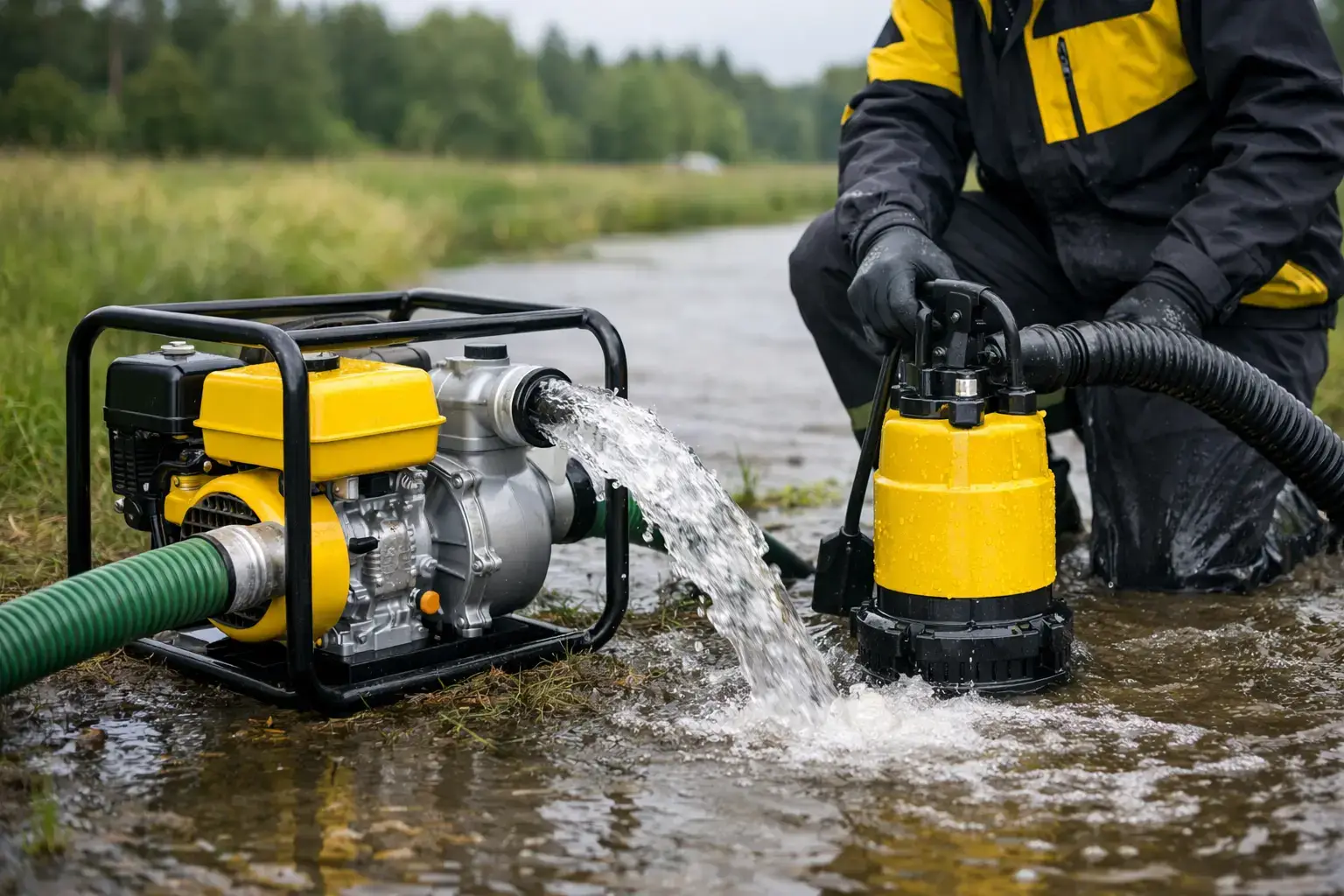
A flooded basement, a waterlogged trench, or a ditch that will not clear itself usually turns into the same question fast – what is the best water pump for drainage that will actually move water without wasting time, fuel, or effort? The right answer depends less on brand hype and more on what kind of water you need to move, how fast you need it gone, and how rough the jobsite really is.
Drainage work sounds simple until the pump chokes on grit, loses prime, or cannot lift water from the depth you are dealing with. That is where a lot of buyers get stuck. They compare engine sizes or outlet diameters, but the real buying decision comes down to matching pump type to the job.
What makes the best water pump for drainage?
The best drainage pump is not always the biggest one. It is the one that can handle your water conditions, run reliably for the length of the job, and deliver enough flow at the lift and distance you need.
If you are clearing relatively clean water from a basement, tank, or rain-filled low spot, a clean water pump is often enough. These pumps are built for faster water transfer when debris is minimal. They are efficient, straightforward, and usually a smart fit for homeowners and workshop users dealing with stormwater or accidental flooding.
If the water contains sand, sludge, leaves, or small stones, you are in trash pump territory. That is common with trenches, construction pits, ponds, ditches, and rural drainage work. A clean water pump may move water quickly at first, but if solids are present, it can clog, wear out faster, or stop when you need it most.
This is the first trade-off that matters. Clean water pumps are typically lighter, simpler, and ideal for clear water. Trash pumps are tougher and more forgiving, but they are often heavier and built for harsher conditions. If your drainage problem is messy, toughness matters more than theoretical maximum flow.
Start with the water, not the pump
Before you look at specs, look at the water itself. Clear rainwater in a flooded garage is one thing. Muddy runoff from a ditch or excavation is another.
Clean water pumps are best when the water is mostly free of debris. They are a practical choice for swimming pools, storage tanks, shallow flooding, and general transfer jobs around the property. They usually offer strong flow for their size and are easier to maintain when the water source is not abrasive.
Trash pumps are built for more demanding drainage. If the water carries suspended solids, organic matter, or grit, a trash pump is the safer bet. Rural properties, farmyards, forestry access roads, and work sites often create exactly these conditions. In those cases, buying too light a pump is a false economy.
Submersible pumps also deserve a mention. They sit directly in the water and are useful for indoor flooding, tight pits, and situations where quiet electric operation makes sense. But they depend on power access, and for remote or field conditions, a portable engine-driven pump is often the better tool.
Flow rate matters, but only with head height
A lot of buyers focus on gallons per minute and stop there. Flow rate is important, but it never tells the full story on its own. A pump may advertise impressive output, yet that number usually drops once you add suction lift and discharge height.
Head height is the resistance the pump has to work against. If you are pulling water from a low trench and sending it uphill to a safe discharge point, your real performance can be much lower than the headline spec. The longer the hose and the more elevation change involved, the harder the pump has to work.
That is why the best water pump for drainage is usually one with balanced performance, not just a big number on a product page. For shallow transfers over short distances, moderate flow may be enough. For fast flood response or bigger outdoor drainage jobs, higher output starts to pay for itself.
If you need the water gone quickly, especially after storms or during construction, step up in capacity. If the job is occasional and smaller in scale, overspending on output you will never use does not make much sense.
Suction lift and priming can make or break the job
Most portable surface pumps need to be primed before use. That means filling the pump housing with water so it can start drawing from the source. In real-world use, especially when time matters, easy priming is not a small detail. It affects setup speed and reliability.
You also need to respect suction lift limits. Surface pumps can only pull water from so deep below the pump location. If the source is too far down, performance drops or the pump will not work properly at all. This catches people out when draining deeper pits, sumps, or embankments.
For drainage jobs, keeping the pump close to the water source usually improves results. Shorter suction hose runs help. Good hose quality helps too, because a collapsing or leaking suction hose can kill performance even when the pump itself is capable.
Gas, diesel, or electric?
For home backup use and remote drainage, gas-powered pumps are often the most practical option. They are portable, independent of grid power, and quick to deploy when weather turns bad. For many property owners, that flexibility is the reason to own one in the first place.
Diesel pumps can make sense for heavier-duty commercial or agricultural use where fuel commonality, runtime, and engine durability are priorities. They tend to be more work-oriented than convenience-oriented.
Electric pumps are clean and simple when power is available and the environment suits them. They are useful indoors or in situations where fumes and noise are concerns. The trade-off is dependence on an outlet or generator, which may not be ideal during storm-related flooding.
For many users, the answer comes down to this: if you need true go-anywhere drainage capability, an engine-driven portable pump gives you more freedom.
Size and portability are not secondary concerns
A larger pump can save time on big jobs, but weight and handling matter. If you need to move the pump between buildings, fields, ditches, and vehicles, portability affects how often you will actually use it.
A compact frame, solid carry points, and stable footing matter more than they seem on paper. The same goes for cold-start reliability. In harsh weather, a machine that starts cleanly and runs without drama is worth more than a slightly better flow figure that only exists in ideal conditions.
This is where practical equipment buyers tend to make better long-term decisions. They do not just buy for the biggest emergency. They buy for the jobs they will face repeatedly.
Choosing the best water pump for drainage by use case
If you are a homeowner dealing with occasional flooding, a portable clean water pump is often the right fit. It handles rainwater, basement water, and tank emptying well, provided debris is limited. Look for a model that is easy to prime, easy to carry, and sized for quick response rather than industrial-scale pumping.
If you manage land, outbuildings, or unpaved access routes, conditions are often rougher. Mud, organic debris, and shallow solids are common. A trash pump is usually the safer investment because it gives you more margin when the water is not clean.
For tradespeople and site users, downtime is expensive. You want a pump that can move enough volume to keep the work area operational and stand up to repeated use. Serviceability matters here. Access to maintenance items and replacement parts is part of the ownership equation, not an afterthought.
If your work shifts between clean and dirty water, lean toward the tougher machine unless portability is your top concern. It is usually better to have extra solids-handling capacity than too little.
What buyers often get wrong
One common mistake is buying by outlet size alone. A larger outlet often supports higher flow, but it does not guarantee better real-world performance for your setup. Engine power, impeller design, head capability, and water quality all matter.
Another mistake is ignoring hose quality and layout. Even a strong pump can disappoint with long, narrow, kinked, or poorly sealed hoses. The pump and hose setup need to work as one system.
The third mistake is underestimating debris. Water that looks manageable can still carry enough sand or waste to punish a clean water pump. If you are unsure, buy with more tolerance for solids.
A smart way to buy
The best pump is the one that matches your worst likely job, not your easiest one. If most of your drainage work is clean and close to home, a clean water pump will serve you well. If your property, jobsite, or field conditions are unpredictable, a trash pump gives you more working confidence.
Buy for reliability, realistic performance, and service support. Specifications matter, but so does whether the machine starts when the ditch is full, the trench is flooding, or the storm has already hit. That is the kind of equipment decision you only need to get right once.
If you are choosing a drainage pump for the season ahead, think less about the biggest sales pitch and more about the water in front of you. The right pump should feel ready for work before you even pull the starter cord.
