







Blog
Electric or Hydraulic Military Winch for Recovery?

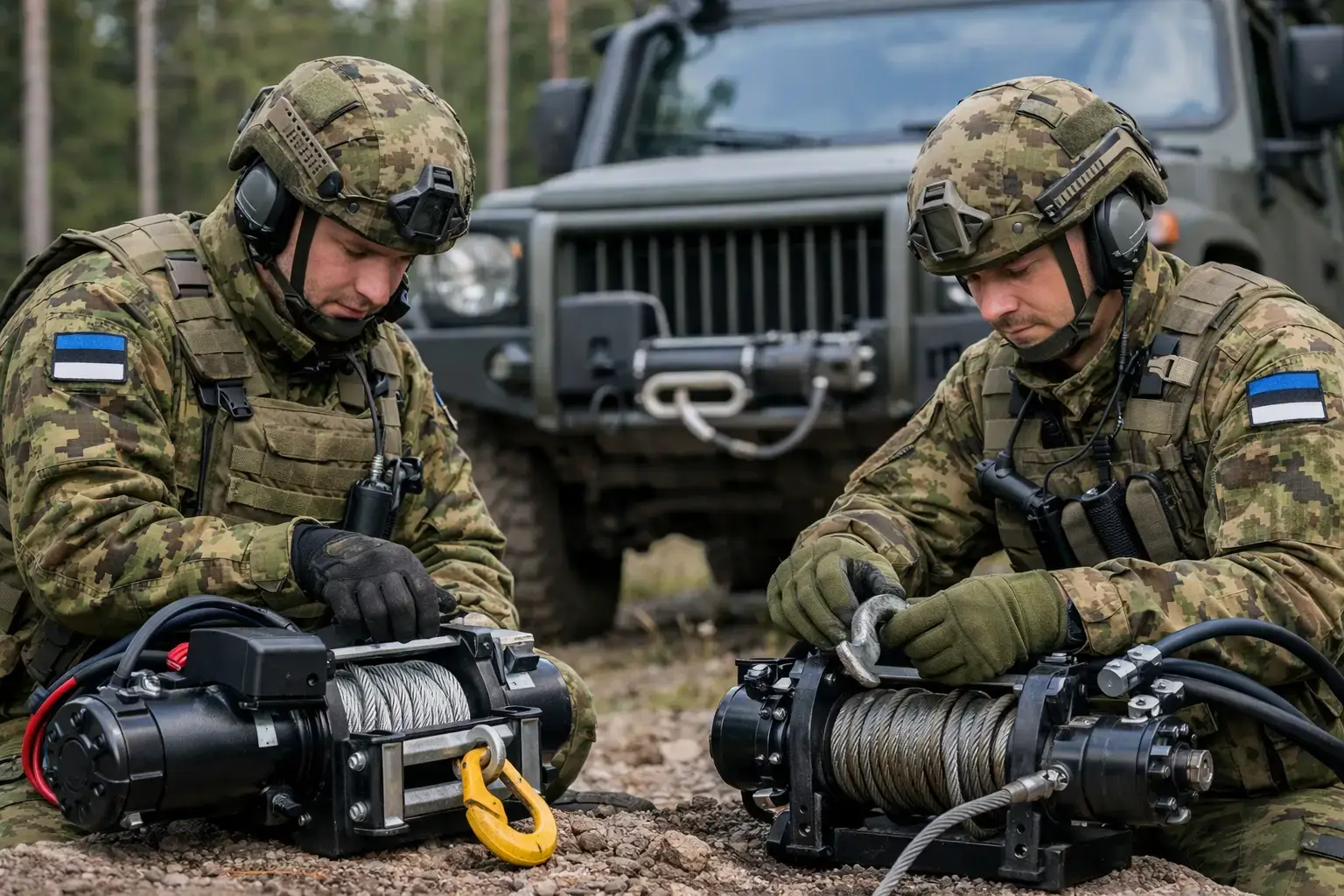
A stuck vehicle does not care whether the recovery point is on a forest track, a worksite, or a remote training area. It needs controlled pulling power, a secure rigging setup, and equipment that will keep working when the ground is soft and the weather turns. So, electric or hydraulic military winch? The right answer depends less on the label and more on how often the vehicle recovers loads, how long each pull lasts, and what power source is available.
An electric winch is usually the practical choice for occasional recovery and simpler installation. A hydraulic winch earns its place on vehicles that work hard, pull frequently, and already have a properly sized hydraulic system. Both can be serious recovery tools. Choosing the wrong one can leave a capable vehicle waiting for a winch to cool down, recharge, or build hydraulic pressure.
Electric or Hydraulic Military Winch: The Core Difference
Electric winches use a high-torque DC motor powered by the vehicle battery and charging system. They are self-contained units: mount the winch, install the control box, run correctly sized cables, fit circuit protection where specified, and connect to a sound battery system. This makes them adaptable to many 4x4s, utility vehicles, trailers, and field support trucks.
Hydraulic winches are driven by hydraulic fluid from a power steering pump, PTO-driven pump, or dedicated hydraulic circuit. Their pulling ability is tied to flow, pressure, motor size, gearing, and engine speed. They need hoses, fittings, a control valve, filtration, and a hydraulic system that is designed for the additional load.
The key distinction is duty cycle. An electric motor creates heat during a long hard pull. A hydraulic winch can generally operate for much longer because the vehicle engine and hydraulic oil system support the work. That advantage matters when recovery is not a single short pull but a repeated job involving heavy vehicles, deep mud, steep gradients, or equipment positioning.
When an Electric Winch Makes More Sense
For many recovery vehicles, an electric winch offers the best balance of installation effort, cost, and readiness. It is available even when the engine is not running, provided the battery has enough charge. That can be useful during a stall, a mechanical failure, or a situation where starting the engine is not immediately possible.
Electric models also fit a wide range of setups without modifying the vehicle hydraulics. A properly matched unit on a rated mounting plate can deliver strong pulling power for a pickup, SUV, ATV, or utility trailer. For users who need recovery support a few times per month rather than all day, this is often the sensible route.
Cold weather deserves attention. Battery capacity drops as temperatures fall, while thick mud, snow, and frozen tires increase the load. A winch that works well in mild conditions can become slow when the battery is weak or undersized. Use a healthy battery with enough reserve capacity, clean terminal connections, heavy-gauge cables, and an alternator that can recover the battery after use.
Electric winches also require realistic expectations. Rated line pull is measured on the first wrap of rope or cable around the drum. Pulling force drops as additional layers build up. A recovery rated at 12,000 pounds is not automatically a 12,000-pound pull at every point in the line. A snatch block can increase mechanical advantage and reduce winch strain, but it also slows the recovery and requires more rigging discipline.
Electric winch limits to plan for
An electric winch is not designed for endless full-load pulling. Long pulls should be broken into controlled intervals, with time to check motor temperature, cables, rope condition, and battery voltage. Keep the engine running when safe to do so, so the charging system supports the battery.
If the job regularly involves dragging loaded equipment, recovering multiple vehicles, or holding a steady pull for many minutes, an electric unit may spend too much time near its heat limit. That is the point where hydraulic power starts to justify its additional complexity.
When a Hydraulic Winch Is the Better Tool
A hydraulic military winch is built for sustained work. With adequate hydraulic flow and pressure, it can pull for extended periods without the heat buildup that restricts an electric motor. It is a strong fit for heavy utility trucks, recovery platforms, forestry vehicles, and specialized field vehicles with a known hydraulic capacity.
This does not mean hydraulic is automatically stronger. Winch performance depends on the full system. A hydraulic winch connected to an undersized pump or restrictive hose setup will not deliver its intended line speed or pull. The vehicle must provide enough flow at working engine speed, enough pressure for the hydraulic motor, and enough cooling to keep the oil within a safe temperature range.
Hydraulic units generally need the engine running. That is their major trade-off. If the engine has failed, the primary winch power source may be unavailable. Some applications use auxiliary hydraulic systems, but that adds cost and maintenance requirements. For a vehicle that must self-recover after engine trouble, a hydraulic-only setup needs careful planning.
Installation is another consideration. Hoses must be routed away from exhaust heat, moving parts, and abrasion points. Fittings must be clean and correctly torqued. A leak is not just a maintenance issue – it can disable the winch, contaminate the work area, and create a slipping hazard. Hydraulic systems reward professional installation and scheduled inspection.
Hydraulic power is best for repeat recovery
Choose hydraulic when the vehicle is a working platform, not simply a vehicle that carries a winch. If recovery and pulling are regular parts of the job, the higher installation cost can pay back through longer operating time, stable performance, and reduced electrical strain.
A hydraulic winch also suits applications where the vehicle engine is expected to stay running throughout the task. For example, a support truck repositioning equipment or a heavy off-road vehicle assisting repeated recoveries can benefit from a system that keeps pulling as long as fuel, engine cooling, and hydraulic oil temperature remain under control.
Match Pull Rating to the Actual Vehicle and Load
Do not select a winch only by the vehicle’s curb weight. Add cargo, tools, passengers, trailer influence, rolling resistance, slope, mud suction, and the possibility that the vehicle is buried to the axles. A common starting point for vehicle recovery is a winch rated at around 1.5 times the gross vehicle weight, but difficult terrain can demand more planning than a larger number on the winch label.
For heavy military-style or field-support vehicles, verify the recovery points, bumper structure, mounting system, and chassis attachment before increasing winch capacity. A powerful winch on an unproven mount is a hazard, not an upgrade. The entire recovery path must be rated for the load: winch mount, fairlead, rope or cable, hooks, shackles, straps, anchors, and recovery points.
Synthetic rope is lighter and easier to handle than steel cable, which can be useful during frequent field work. It needs protection from abrasion, sharp edges, UV exposure, and chemical contamination. Steel cable tolerates rough contact well but can develop broken wires and stored energy hazards. Whichever line you use, inspect it before every serious pull.
Build a Recovery System, Not Just a Winch Setup
The winch is only one part of a safe recovery operation. Carry a suitable tree saver strap, rated shackles or soft shackles, a recovery damper, gloves, and a snatch block or pulley block matched to the expected load. Choose anchor points carefully. A weak tree, damaged tow ball, or improvised attachment can fail without warning.
Before pulling, clear people from the line path and the area around the anchor. Keep the pull as straight as possible to avoid side-loading the fairlead and piling rope unevenly on one side of the drum. Use low, steady tension rather than sudden shock loads. Stop if the rope bunches, the anchor shifts, the vehicle moves unpredictably, or the winch sound changes.
Maintenance keeps recovery equipment ready. Check electrical connections for corrosion, especially after wet or salty use. On hydraulic systems, inspect hose condition, fluid level, leaks, filter condition, and operating temperature. After a muddy recovery, clean the rope, fairlead, and control connector before storing the vehicle.
For most owners, Champion Baltics recommends starting with the work your vehicle actually does, not the hardest recovery video you have seen. An electric winch is a capable, flexible tool for intermittent recovery. A hydraulic winch is the better investment when sustained pulling is part of the vehicle’s regular job. Choose the system you can mount correctly, power reliably, inspect easily, and trust when the track disappears under water, snow, or mud.
