





Blog
How to Choose the Right Generator for Sump Pump

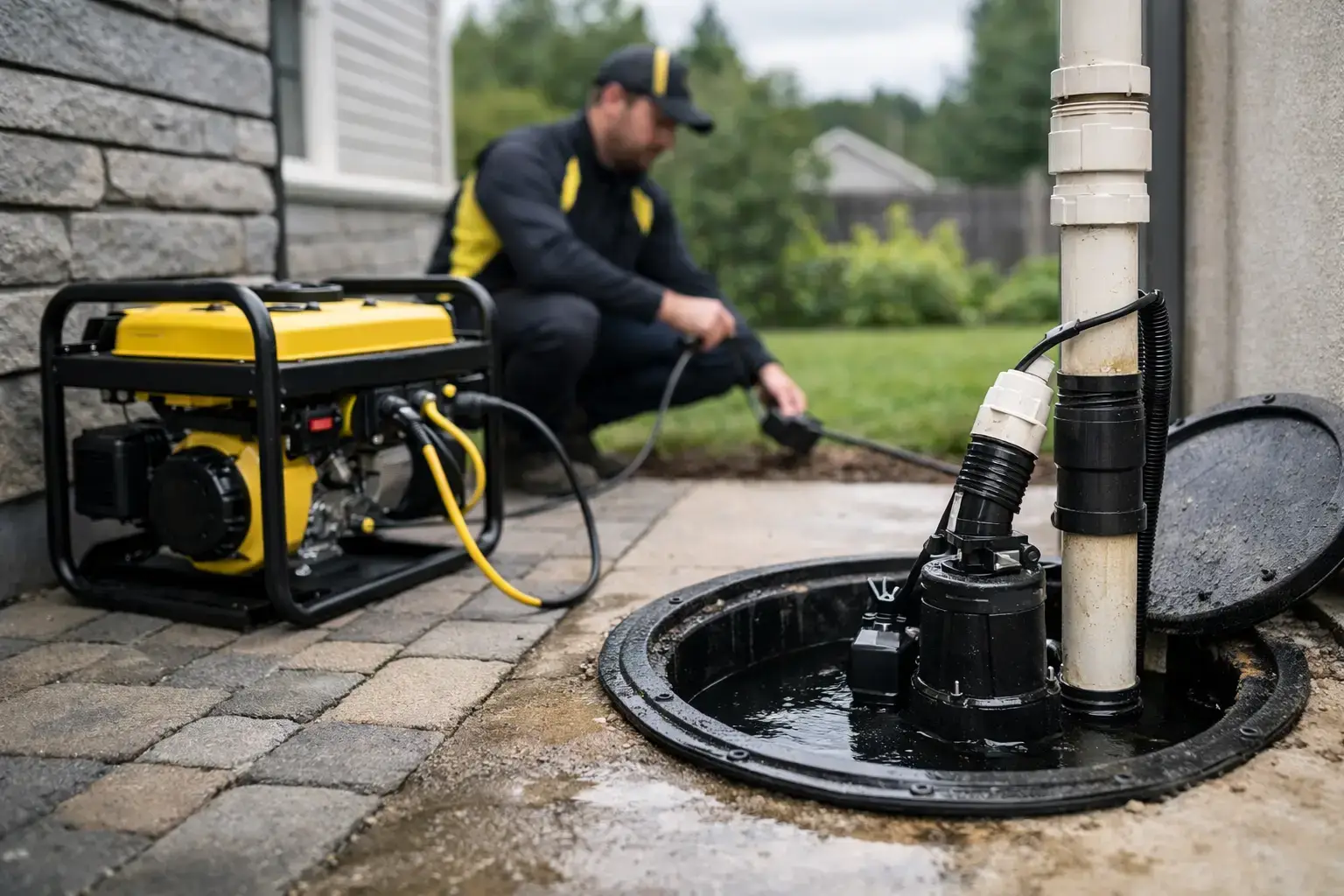
A flooded basement often starts with one simple failure: the power goes out while groundwater is rising. A properly sized generator for sump pump backup keeps the pump running when the utility supply cannot. But buying by generator wattage alone is a costly mistake. You need enough starting power, a safe way to connect the pump, practical fuel runtime, and equipment that will start when conditions are cold and wet.
For homeowners, rural properties, workshops, and buildings with drainage concerns, this is backup power with a clear job to do. Choose it like working equipment, not a convenience item.
How Much Power Does a Generator for Sump Pump Need?
A sump pump uses more electricity when its motor starts than when it is already running. This surge is called starting wattage. The generator must handle that brief demand without tripping its overload protection or causing a voltage drop that can strain the motor.
Many common 1/3-horsepower sump pumps run at roughly 800 to 1,050 watts and may need 1,800 to 2,200 watts to start. A 1/2-horsepower pump may run around 1,050 to 1,500 watts, with starting demand often reaching 2,500 to 3,000 watts. Larger 3/4-horsepower pumps, sewage ejector pumps, and older motors can require substantially more.
The pump nameplate is the place to begin. Look for volts and amps, then multiply them to estimate running watts. For example, a 120-volt pump rated at 9 amps uses about 1,080 running watts. If the label lists horsepower but not starting watts, use the manufacturer specification when available. Do not assume every pump of the same horsepower has identical startup demand.
A good rule is to select a generator with at least 25 to 50 percent more starting capacity than the pump requires. That reserve gives the generator room to respond to motor startup, changing loads, cold weather, and normal performance differences between machines. It also prevents you from operating at the edge of the generator’s limits every time the float switch activates.
A compact generator rated around 2,000 starting watts may be enough for a small, efficient sump pump and nothing else. For dependable backup with useful capacity left over, a generator in the 3,000 to 4,500 starting-watt range is often the more practical choice. It can run the pump while also supporting essentials such as a refrigerator, a few LED lights, a modem, or a furnace blower – provided you calculate the combined startup loads correctly.
Do Not Add Running Watts Only
The biggest sizing error happens when several appliances are connected and their running watts are simply added together. Motors do not all start at the same moment in a perfect schedule. A refrigerator compressor may cycle on just as the sump pump starts. A freezer, well pump, furnace blower, or garage-door opener can create the same problem.
Build your calculation around the largest motor startup load, then add the running watts of the other equipment. If two major motors could start at once, allow for both. A little extra generator capacity costs less than a flooded basement, damaged pump, or generator that repeatedly shuts down on overload.
Check the Pump Before You Buy Backup Power
A generator cannot make a worn-out pump reliable. Test the sump system before storm season by lifting the float or adding water to the pit, following the pump manufacturer’s instructions. Confirm that the pump starts quickly, the discharge line carries water away from the foundation, and the check valve works properly.
Pay close attention to the outlet. Most residential sump pumps use a standard 120-volt grounded plug, making generator operation straightforward with an appropriately rated outdoor extension cord. If the pump is hardwired, connected through a dedicated circuit, or supplied through a control panel, the setup requires more planning. In many cases, a qualified electrician should install a transfer switch or generator inlet so the circuit can be powered safely.
Also inspect the discharge route. A generator can keep a pump running, but it cannot help if the discharge hose is frozen, blocked, or dumping water close enough to flow back toward the house. In freezing conditions, an above-ground discharge line may need a different routing plan than it uses in summer.
Safe Connection Matters as Much as Wattage
Never connect a portable generator to a home outlet or panel with a homemade double-male cord. This backfeeding method can energize utility lines, seriously endanger utility crews, damage equipment, and create a fire risk. Use either a direct plug connection to the pump or a properly installed transfer switch and inlet connection.
When using an extension cord, choose a heavy-duty outdoor-rated cord with a ground pin and a wire gauge suited to the load and length. Long, thin cords cause voltage drop. That can make a motor run hotter and struggle to start. Keep the cord as short as practical, protect its connections from standing water, and inspect it for cuts, loose plugs, or damaged insulation.
The generator itself must operate outdoors, well away from doors, windows, vents, and enclosed work areas. Carbon monoxide is odorless and dangerous. A garage with the door open is not a safe operating location. Position the machine on firm, dry ground where exhaust cannot enter the building, and install working carbon monoxide alarms inside the home.
Rain creates another challenge. Do not run a portable generator uncovered in heavy rain or place it where water can pool around the electrical outlets. Use a purpose-built generator cover or shelter that protects the unit while maintaining full ventilation and safe exhaust clearance. Never wrap a running generator in a tarp.
Inverter, Conventional, Gasoline, or Dual Fuel?
The right generator type depends on what else must stay powered during an outage. If the sump pump is the only critical load, a conventional open-frame generator can be a practical, cost-effective choice. It delivers straightforward power and typically offers strong output for the money.
An inverter generator makes more sense when you also need quieter operation, easier transport, lower fuel use at lighter loads, or cleaner power for electronics. A quiet inverter unit is especially useful in residential areas where a pump may need to cycle through the night and you want to keep a refrigerator, internet equipment, and phone chargers operating.
Fuel choice affects readiness. Gasoline is widely available and works well for portable emergency equipment, but it should be stored correctly and rotated. Old fuel causes starting and carburetor problems. A dual-fuel generator adds flexibility by allowing gasoline or propane operation. Propane stores longer than gasoline and can be a strong backup option for property owners who maintain cylinders on site. Its available power may be slightly lower than gasoline, so account for that when sizing the generator.
For cold-weather use, look beyond the headline wattage. Electric start, reliable recoil backup, low-oil shutdown, overload protection, and a battery that is maintained during the off-season all matter. Champion Baltics focuses on portable power equipment built for demanding conditions because emergency power only counts if the machine starts when it is needed.
Plan Runtime for a Long Outage
A sump pump does not usually run continuously. During heavy rain, snowmelt, or a high water table, though, it may cycle frequently for many hours. Generator runtime depends on fuel tank size, load level, engine efficiency, and temperature. The published runtime is commonly measured at a partial load, not with every outlet working hard.
Think through the full outage, not only the first hour. Keep enough stabilized fuel or propane available for the expected duration, following local storage rules. Refuel only after shutting the generator down and allowing hot engine components to cool. Spilled fuel near a hot muffler is a preventable hazard.
If your sump system is essential and outages are common, consider layers of protection. A battery-powered backup sump pump can cover short interruptions, while a portable generator handles longer outages. A water alarm provides another early warning. No single device replaces maintenance, but a layered setup gives you more time to act when weather turns bad.
Run a Real Test Before the Storm
Do not wait for a flooded pit and a dark house to find out whether your generator can start the pump. Run a controlled test several times a year. Start the generator outdoors, connect the pump using the planned cord or transfer setup, and cycle the pump under load. Watch for overload warnings, slow motor starts, flickering lights, or cords that feel warm.
Keep the generator maintained with fresh fuel, correct engine oil, a clean air filter, and a charged starting battery if equipped. Store the manual, spare oil, extension cord, and fuel plan together. A backup system that is scattered across a garage is not ready.
The best time to choose a generator is when the basement is dry, the weather is calm, and you can test every part of the setup without pressure. Get the size right, connect it safely, and give your sump pump the power it needs to keep water moving away from the building.
