





Blog
Winch Cable vs Synthetic Rope

A winch line usually gets attention only when something is stuck, buried, or not moving when it needs to. That is exactly why the winch cable vs synthetic rope question matters. The line on your winch affects safety, handling, recovery speed, maintenance, and how confidently you can work in mud, snow, rock, and cold weather.
If you use a winch for off-road recovery, trailer loading, forestry work, or property maintenance, the right choice is not just about pulling power. It is about how the line behaves under load, what happens if it gets damaged, and how much effort it takes to use day after day. Steel cable and synthetic rope can both do the job, but they do not do it the same way.
Winch cable vs synthetic rope: the core difference
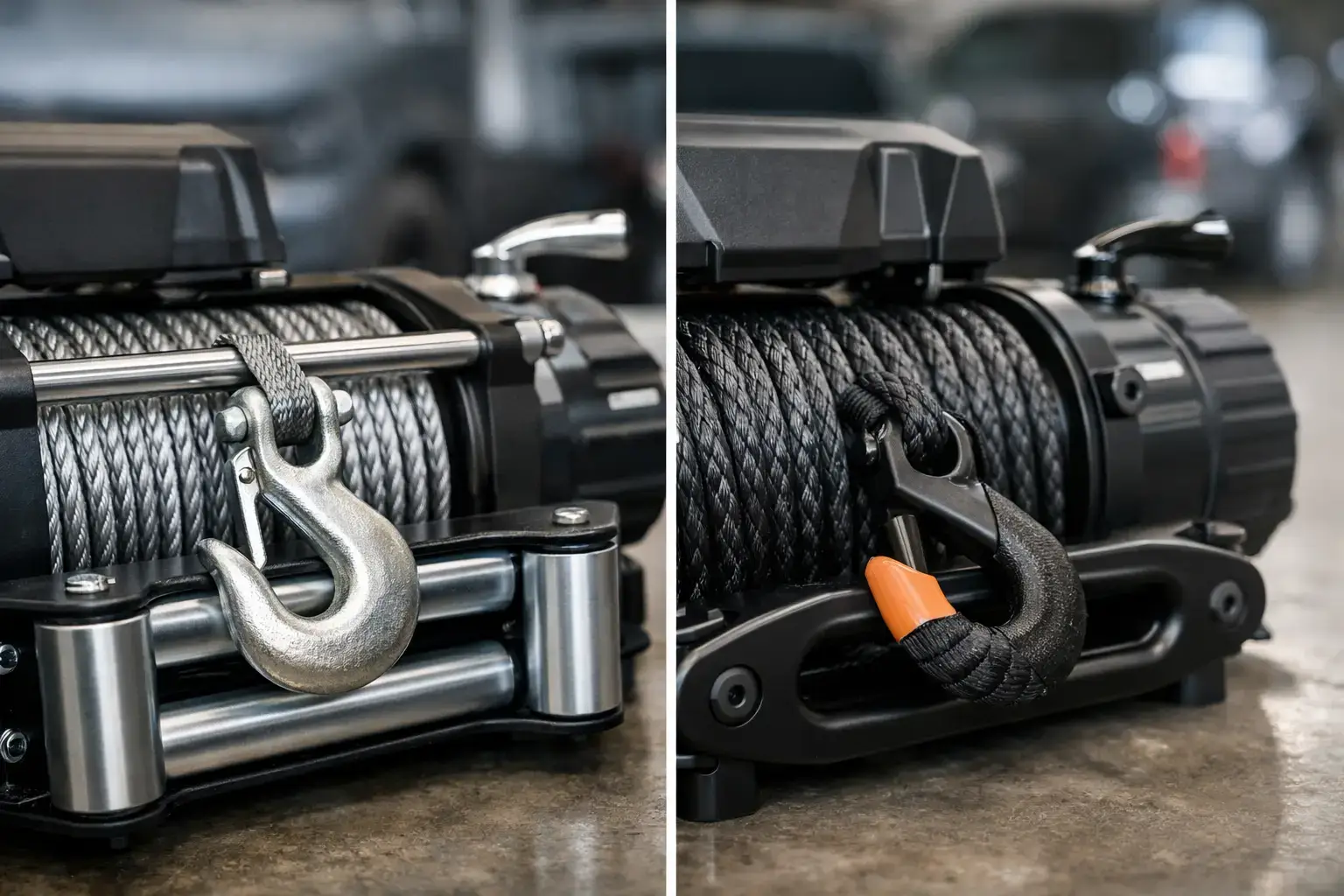
Steel winch cable is the traditional option. It is made from braided steel strands, handles abrasion well, and has a reputation for toughness. Synthetic rope is typically made from high-strength fibers designed to deliver serious pulling strength with much less weight.
On paper, both can be strong enough for demanding recovery work. In real use, the difference shows up in handling and risk. Steel cable is heavier, harder on hands, and stores more energy under load. Synthetic rope is lighter, easier to manage, and generally safer if it fails, but it needs more attention around sharp edges, heat, and contamination.
That is why there is no automatic winner. The better line depends on where you use the winch, how often you use it, and how much maintenance you are willing to do.
When steel winch cable makes more sense
Steel cable still earns its place on work equipment. If your machine sees frequent abrasion, rough contact with rocks, or dragging across hard ground, steel can tolerate that abuse better than most synthetic rope. It also handles heat from the winch drum and braking system more comfortably, which matters on some setups and long pulls.
For utility work, older recovery systems, and buyers who want a familiar setup with lower upfront cost, steel is often the practical pick. It can sit on a vehicle or trailer winch for long periods without some of the same concerns synthetic rope has about UV exposure, grit worked deep into fibers, or moisture retention in dirty conditions.
There is a trade-off, though. Steel cable is less forgiving to handle. It can develop burrs and broken strands that cut gloves and hands. It is also heavier on the drum, heavier to carry as a spare, and more difficult to manage in the field when conditions are bad and time matters.
When synthetic rope has the advantage
Synthetic rope has become popular for good reason. The first thing most users notice is the weight. It is much lighter than steel cable, which makes it easier to pull out, respool, and manage during recovery. On front-mounted vehicle winches, that lower weight also helps reduce extra load on the suspension.
The second advantage is safety. If synthetic rope breaks under load, it generally releases less stored energy than steel cable. That means less violent snapback. Safe recovery practice still matters every time, but the failure behavior is one of the biggest reasons many off-road users and recovery-focused buyers prefer synthetic.
It is also easier on hands and easier to work with in cold weather. If you are winching in snow, slush, or freezing wind, handling a lighter line that does not fight you can make the whole job faster and cleaner.
The weakness is durability against abuse. Synthetic rope does not like sharp edges, heavy abrasion, or dirty neglect. If it gets dragged through mud, sand, and rock without cleaning and inspection, lifespan drops fast.
Safety matters more than specs
In a straight product comparison, people often jump to breaking strength numbers first. That matters, but recovery safety is broader than one figure on a label.
Steel cable can be extremely durable, but when it fails, the recoil risk is serious. A damaged steel line can also hide problems until broken strands become obvious. Synthetic rope tends to show wear in a more visible way, such as fraying or abrasion, and many operators consider it the safer line to work around in recovery situations.
That does not mean synthetic rope is safe by default. A worn rope wrapped around a sharp recovery point is still dangerous. The right dampers, gloves, shackles, tree savers, and anchor practices still matter. A good winch setup is a system, not just a line on a drum.
Weight and handling in real-world use
This is where synthetic rope often wins quickly. If you have ever pulled a steel cable through mud or over a snowy shoulder while trying to line up a clean recovery angle, you know the weight adds up. It is not just about comfort. Easier handling means faster setup and, in many cases, fewer mistakes.
For homeowners, landowners, and occasional users, that can be a deciding factor. Equipment that is easier to use tends to get used properly. The same applies to anyone loading vehicles, moving equipment, or doing solo recovery work where simple handling is a real benefit.
Steel cable is manageable, but it asks more from the operator. Gloves are a must. Careful spooling matters. If the cable starts to kink, flatten, or bird-nest, performance and safety suffer.
Durability, weather, and maintenance
If your equipment works in rough Nordic-style conditions, weather is part of the buying decision. Snow, freezing rain, road salt, mud, and long off-seasons all affect line performance.
Steel cable is vulnerable to corrosion if neglected. Moisture and salt can shorten its life, especially if the cable is stored wet or left dirty on the drum. It also needs inspection for broken wires, kinks, and crushed sections. The upside is that it generally stands up well to scraping and abrasion.
Synthetic rope does not rust, which is a clear advantage in wet and salty environments. But it can absorb water, hold dirt in the fibers, and wear down faster if grit is not cleaned out. It also needs protection from UV over time and from heat near the drum on certain winch designs. If you choose synthetic, regular inspection and cleaning are part of ownership.
Neither option is maintenance-free. Steel asks you to watch for corrosion and wire damage. Synthetic asks you to protect the fibers and keep the rope clean enough to stay strong.
Cost now versus cost over time
Steel cable usually costs less upfront. For buyers focused on budget or replacing a worn line on a work winch, that matters. If the winch is used in rough, abrasive environments and maximum convenience is not the priority, steel can be the better value at the point of purchase.
Synthetic rope often costs more initially, but the value shows up in day-to-day use. It is easier to handle, often safer in recovery, and can make a winch feel more practical to use regularly. For many off-road users, that convenience is worth paying for.
The real cost question is how the line will be treated. A steel cable that rusts on the drum or gets kinked early is not cheap in the long run. A synthetic rope dragged repeatedly over sharp rock without protection will not be cheap either.
Winch cable vs synthetic rope for different jobs
For heavy utility work, equipment hauling, and environments where abrasion is constant, steel cable often remains the hard-use choice. It is proven, durable against rubbing damage, and usually easier on the budget.
For off-road recovery, overlanding, lighter utility use, and situations where handling and safety matter most, synthetic rope is often the smarter setup. It is especially appealing for users who pull line frequently and want faster, cleaner operation.
If your use is mixed, think about the condition that causes the most risk or frustration. If that is sharp terrain and hard abrasion, steel may fit better. If that is repeated field handling, cold-weather recovery, and solo use, synthetic usually has the edge.
What to check before you choose
Start with your winch rating and make sure the line is matched correctly for capacity and intended use. Then check whether your fairlead, drum, and recovery accessories are suited to the line type. Synthetic rope, for example, typically works best with the right fairlead surface and benefits from proper heat awareness on the winch system.
Also be honest about maintenance habits. If you know your gear gets used hard and put away wet, that should shape the decision. The best line on paper is the wrong one if it does not match how you actually work.
For buyers building a dependable recovery setup, the goal is not to follow trends. It is to choose a line that works when conditions get ugly and the pull has to happen safely the first time.
If you want the shortest practical answer, steel cable suits abuse and budget, while synthetic rope suits handling and recovery-focused safety. Pick the one you will inspect, maintain, and trust when the vehicle is buried to the axle or the load has to move before the weather gets worse.
