







Blog
Generator Maintenance Checklist for Winter

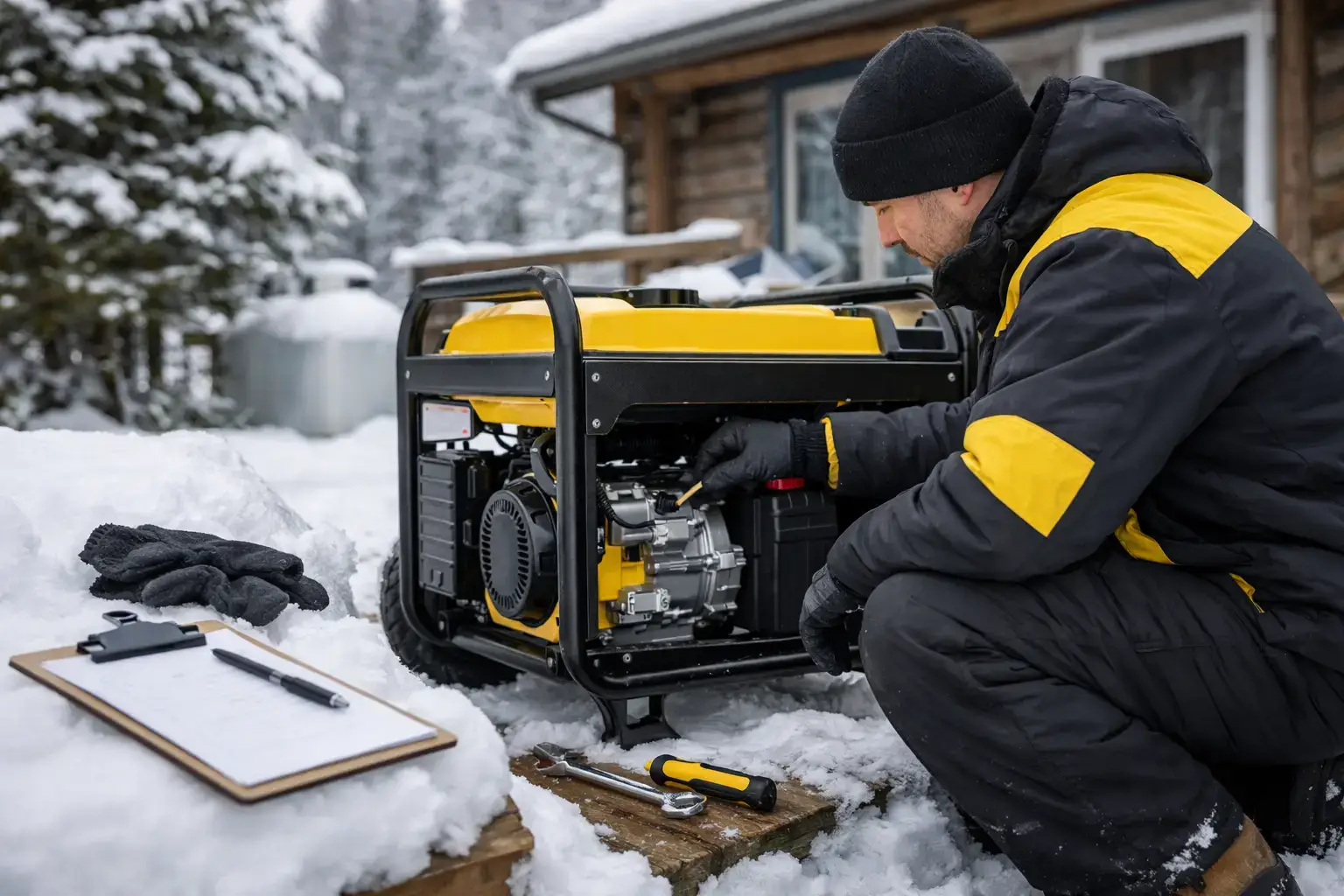
A generator that started easily in September can become a dead weight when the first hard freeze arrives. Cold thickens oil, weakens batteries, exposes stale fuel, and makes small maintenance problems show up at exactly the wrong time. This generator maintenance checklist for winter helps you prepare portable power for a home outage, workshop, rural property, jobsite, or field operation before conditions turn demanding.
Winter readiness is not about running a generator once and hoping for the best. It means checking the systems that affect starting, safe operation, fuel delivery, and usable power. A few focused tasks now can prevent a no-start situation during a storm.
Start With a Clean, Dry Generator
Before checking parts and fluids, inspect the generator itself. Remove dirt, leaves, grass, mud, and oil residue from the engine cover, cooling openings, control panel, and frame. Debris restricts airflow and can trap moisture around electrical connections. In freezing weather, moisture can become ice where you do not want it.
Check for loose fasteners, cracked covers, damaged rubber mounts, worn handles, and bent frame sections. If your unit is moved between a shed, vehicle, trailer, and work area, pay close attention to the fuel tank, wheel kit, and transport brackets. Cold plastic and rubber are less forgiving of impacts.
Store the generator under cover in a dry, ventilated location. Do not seal it in a damp corner under a tarp where condensation can build up. Keep it ready to move outside quickly, but never plan to run it in a garage, shed, basement, tent, or enclosed work area. Carbon monoxide is odorless and can be fatal.
Generator Maintenance Checklist for Winter Storage and Use
Work through these checks before winter, then repeat the run test regularly through the season. The exact service interval in your operator’s manual always takes priority, especially for oil type, spark plug gap, and valve-clearance requirements.
- Check the engine oil level and condition. Low oil can activate protection systems or cause engine damage. Oil that is very dark, contaminated, or overdue for replacement should be changed before cold weather. Use the viscosity specified for your generator and expected temperatures. A lighter multigrade oil may improve cold starting where the manufacturer allows it.
- Inspect the air filter. A dirty foam or paper element restricts airflow, causes rough running, and can increase fuel use. Replace a damaged paper filter. Wash and fully dry a reusable foam filter only if the manual permits it, then oil it correctly if required.
- Test the battery and terminals on electric-start models. Clean corrosion from terminals, confirm cable connections are tight, and charge the battery with a compatible maintainer if the generator will sit for extended periods. A battery can show enough voltage at rest yet fail under starting load, so test it before an outage.
- Examine the spark plug and ignition lead. A fouled, worn, or incorrectly gapped plug makes cold starting harder. Replace it if the electrode is worn, the insulator is cracked, or service is due. Make sure the plug cap fits firmly.
- Look over fuel lines, the fuel valve, and the tank cap. Cracked lines, loose clamps, and a damaged cap seal can cause leaks or poor fuel delivery. Address fuel smells immediately. Never try to start or operate a generator with an active fuel leak.
- Inspect the recoil starter, switches, outlets, and breaker. Pull the recoil handle slowly to feel for smooth movement. Check that the start switch, fuel selector, choke, overload protection, and AC outlets operate correctly. On inverter generators, inspect the control panel for moisture, damage, or loose covers.
- Run the generator under a realistic load. Starting it with no load is useful, but it does not prove the unit can support your equipment. Connect a suitable load, such as work lights, a heater rated within the generator’s capacity, or other non-critical equipment. Let it reach operating temperature and confirm stable output without hunting, surging, warning lights, or breaker trips.
- Inspect extension cords and connection equipment. Winter power problems are often cord problems. Replace cords with cracked insulation, bent prongs, loose sockets, or signs of overheating. Use outdoor-rated cords with enough wire gauge for the distance and load. Undersized cords waste power and can overheat.
Fuel Preparation Depends on Your Generator
Fuel is often the deciding factor between a fast start and a long troubleshooting session. Gasoline begins degrading over time, particularly when it contains ethanol and sits in a partially filled tank. For a generator that will be used regularly, use fresh fuel and add a quality fuel stabilizer according to its directions. Run the engine long enough for treated fuel to reach the carburetor.
If the generator will be stored for a long period, follow the manufacturer’s storage procedure. Depending on the model, that may mean draining the tank and carburetor bowl, or storing it with stabilized fuel. There is no one-rule answer. Draining is often sensible for seasonal storage, while a regularly exercised emergency generator may be better kept fueled with stabilized gasoline that is monitored and replaced on schedule.
Dual-fuel generators add useful winter flexibility. Propane does not become stale like gasoline, but cold temperatures reduce vapor pressure. A small cylinder may struggle to supply enough vapor in severe cold or under a high electrical load. Keep cylinders upright, use the correct regulator and hose, and plan for adequate cylinder capacity. Do not attempt to warm a propane cylinder with an open flame, heater, or improvised method.
Diesel generators require a different approach. Diesel fuel can thicken or gel in low temperatures, restricting flow through filters and lines. Use fuel suited to expected winter temperatures and follow the engine maker’s guidance on approved winter additives. Drain water from the fuel-water separator if fitted, because water contamination can freeze and block the system.
Protect the Battery, Starting System, and Oil
Cold cranking is hard work. Engine oil resists movement, battery output drops, and a marginal starter system quickly reaches its limit. If your generator has electric start, keep the battery charged and inspect it more often than you would in summer. A compact battery maintainer can be worthwhile for standby equipment stored where power is available.
For recoil-start models, practice the starting procedure while the weather is still manageable. Know the correct position for the fuel valve, choke, engine switch, and economy mode. Some inverter generators require a specific sequence after storage or when a low-oil sensor has stopped the engine. That is not the moment to search for the manual by flashlight.
Use only manufacturer-approved oil grades and do not overfill. Too much oil can cause smoking, fouled plugs, or engine damage; too little may trigger low-oil shutdown. Check the level with the generator on level ground, following the dipstick procedure for your model.
Test Capacity Before You Need It
A winter outage often brings high-demand loads. A furnace blower, well pump, refrigerator, sump pump, lights, battery chargers, and tools may all need power at once. Your generator must handle both running watts and the higher starting watts required by motors and compressors.
Create a simple priority plan. Decide what must run first, what can wait, and which loads should never be connected to a portable generator. Avoid powering a house through a wall outlet or improvised cable. A correctly installed transfer switch or interlock arrangement is the safe way to connect backup power to building circuits.
During your test run, add loads one at a time and watch for overload indicators, voltage instability, unusual engine noise, or repeated breaker trips. If the generator is close to its maximum output during a test, it has little reserve for cold-start surges. A larger generator, load management, or a second power source may be the better answer.
Keep a Winter-Ready Kit With the Generator
The generator is only one part of an emergency power setup. Keep the operator’s manual, correct engine oil, a spare spark plug, approved fuel treatment, clean rags, a funnel, basic hand tools, and a flashlight together in a weather-protected box. Add suitable extension cords and, where appropriate, a battery maintainer or jump-start option.
For field work and rural properties, keep fuel handling separate and safe. Use approved containers, label gasoline and diesel clearly, and inspect containers for damaged caps or leaks. Store fuel away from ignition sources and never refuel a hot generator. Shut it down, let it cool, and wipe up any spill before restarting.
A prepared generator does not have to be complicated. It has fresh fuel, clean airflow, the right oil, a charged battery if equipped, safe cables, and a proven load test behind it. Complete the checks before the temperature drops, then run the unit on a schedule through winter. When the lights go out or work cannot stop, readiness is what turns portable power into dependable power.
