







Blog
How to Clean Tractor Equipment Without Damage

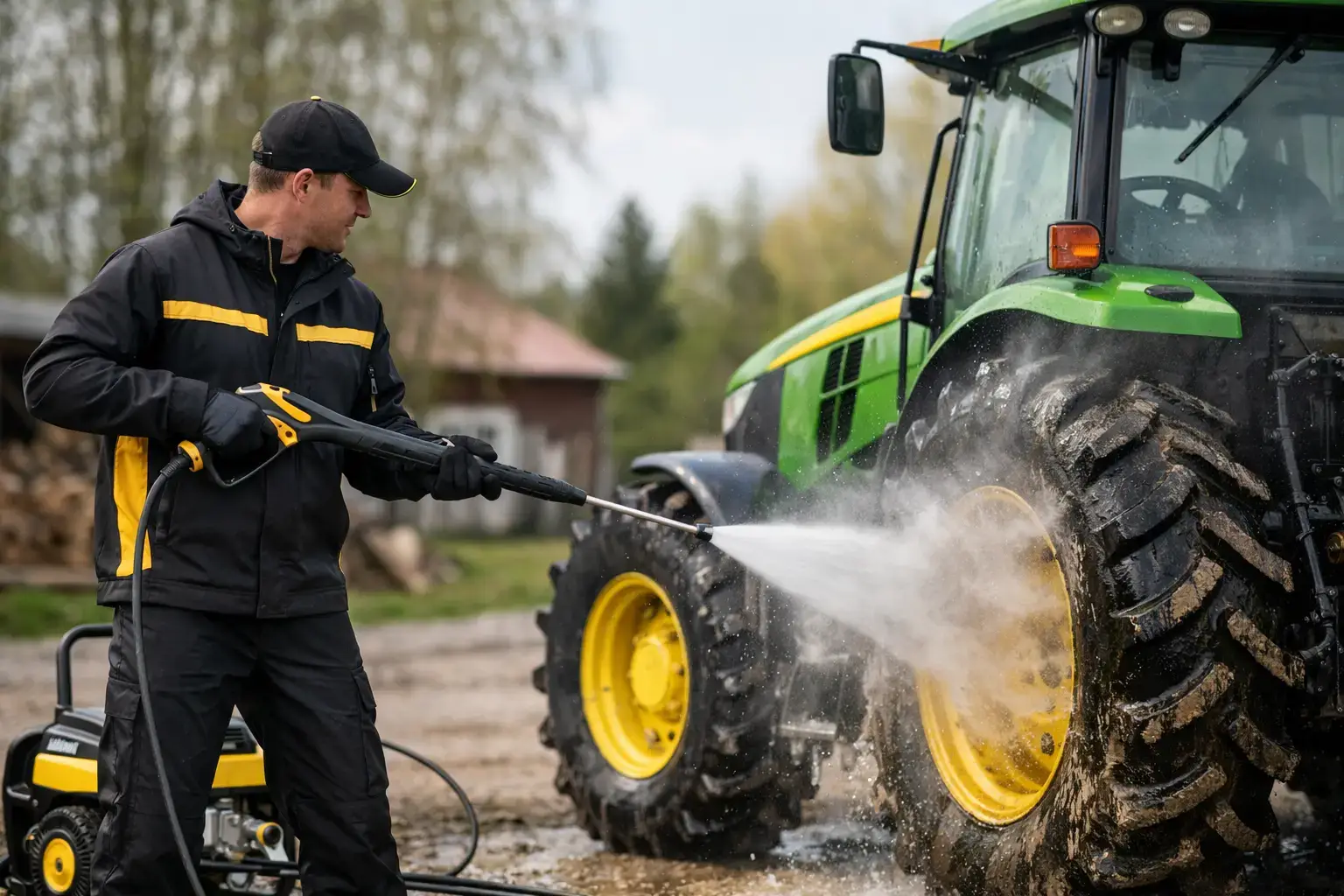
A tractor that comes back from the field covered in wet soil is not just untidy. Packed mud holds moisture against metal, hides oil leaks, loads up radiators, and makes the next maintenance job slower. Knowing how to clean tractor equipment properly protects the machine you rely on for mowing, hauling, tilling, plowing, and property work.
The goal is not to make every surface shine like a showroom model. The goal is to remove the dirt that causes wear while keeping high-pressure water away from places where it can do real damage. A good wash routine also gives you a clear view of your tractor before a small problem becomes a day lost to repairs.
Start With a Safe Wash Area
Park the tractor on firm, level ground where runoff will not enter a stream, drain, or water source. Let the engine, exhaust, hydraulic components, and brakes cool before you start. Spraying cold water onto very hot metal can stress components, while hot exhaust parts can turn cleaners or oily residue into a hazard.
Lower any mounted implement to the ground, place the transmission in park or neutral as specified by the manufacturer, set the parking brake, and shut down the engine. Remove the key. If the machine has an exposed battery disconnect, use it when carrying out a thorough wash.
Before water touches the tractor, take a minute to clear loose debris by hand. Remove twine, grass, branches, and crop residue from the axle areas, drawbar, loader frame, three-point hitch, PTO shield, and around the exhaust. Use gloves. A pressure washer can throw hidden wire, stones, or metal fragments at high speed.
What You Need to Clean Tractor Equipment
For most farm, property, and workshop machines, a pressure washer, hose, stiff brush, soft detailing brush, bucket, mild vehicle or equipment detergent, degreaser, and clean rags are enough. A pressure washer saves serious time when dried clay is packed into tires, implements, and chassis corners, but it is a tool that needs control.
Choose a wide fan tip rather than a narrow cutting jet. A narrow, concentrated stream can strip decals and paint, force water through seals, and damage soft surfaces. Keep the nozzle moving and stay back from the machine. Start farther away, then move closer only when needed.
Hot-water cleaning is effective for greasy loader arms, hitch points, and engine bay residue, but it is not always necessary. Cold water and a quality degreaser handle most routine work. For regular tractor cleaning, the safer choice is usually moderate pressure, a suitable detergent, and enough time for it to work.
How to Clean Tractor Equipment Step by Step
Remove dry mud before soaking everything
Start at the top and work downward. Blow or brush off loose dust, dry dirt, leaves, and chaff first. If you immediately soak thick dry soil, it can turn into a heavy slurry that fills every crevice and makes cleanup harder.
Pay close attention to the radiator screen, grille, air intake area, front axle, wheel hubs, steps, and the underside of fenders. On compact tractors, mowing decks and loader mounts often collect more debris than expected. On larger agricultural tractors, inspect the rear linkage, hydraulic couplers, and areas around the cab steps.
Pre-rinse with controlled pressure
Use a broad spray pattern to loosen mud from tires, chassis rails, wheel wells, and implements. Spray at an angle instead of driving water directly into joints and openings. Let stubborn soil soften for a few minutes before attacking it again.
Do not stand close to tire sidewalls, rubber hoses, wiring looms, decals, or plastic lamp housings. High pressure can cut weakened rubber and lift labels that contain useful service information. Avoid blasting directly at grease seals on pivot points and wheel bearings.
Apply detergent where it earns its place
Use detergent on painted bodywork, loader arms, hydraulic oil residue, greasy hitch components, and fuel-stained areas. Apply it from the bottom upward if the product instructions allow. This helps prevent dirty streaks from running down clean panels.
Give the cleaner time to dwell, but do not let it dry on the surface. A soft brush works well around badges, instrument surrounds, cab glass, lights, and painted panels. Use a stiffer brush only on durable metal surfaces and heavy buildup around the implement frame.
If you find fresh hydraulic oil, fuel, coolant, or engine oil during washing, do not simply rinse it away. Identify the source, clean the area carefully, and plan the repair before putting the tractor back under load. A clean machine makes leaks easier to trace.
Treat the radiator and cooling screens carefully
Blocked cooling fins are one of the fastest routes to overheating during heavy work. Remove the outer screen and clear it according to the tractor manual. Blow dust and chaff out gently from the engine side toward the front where possible, using low-pressure air or water.
Never use a close, high-pressure jet on radiator fins. Bent fins reduce airflow, and forced dirt can pack deeper into the core. If the radiator is heavily contaminated with oil and dust, use a radiator-safe cleaner and rinse gently.
Clean implements separately
A tractor may be clean while the attachment is still carrying wet soil, fertilizer residue, grass, or plant material. Wash mower decks, tillers, blades, trailers, loaders, snow equipment, and post-hole attachments after use, especially before storage.
Fertilizer, road salt, and wet grass deserve fast attention because they accelerate corrosion. For a mower deck, remove compacted grass from underneath once the machine is secure and the blades cannot move. For soil-working tools, wash the frame, tines, discs, and connection points so you can inspect them for cracks, loose fasteners, and worn pins.
Areas You Should Not Pressure Wash Directly
Water belongs on the exterior surfaces, not inside protected systems. Avoid direct pressure on electrical connectors, fuse boxes, alternators, starter motors, instrument panels, ignition components, air intakes, exhaust openings, breather vents, and battery terminals.
Also keep the spray away from bearing seals, PTO shaft seals, hydraulic couplers, cylinder rod seals, grease nipples, and cab door seals. A tractor is built for rain, mud, and field conditions, but concentrated pressure can push water past barriers that normal weather will not defeat.
If you need to clean an engine bay, use minimal water. Wipe oily surfaces with degreaser and a rag, brush loose dirt away, then rinse lightly from a safe distance. Cover sensitive electrical parts if necessary. It takes longer than blasting the compartment, but it reduces the chance of starting trouble or corrosion later.
Dry, Inspect, and Lubricate Before the Next Job
After rinsing, let the tractor drain and dry. Open the hood and cab doors if conditions allow. Wipe the seat, controls, step treads, mirrors, lights, and cab glass. Water left on steps can freeze in cold conditions, creating a slip hazard when you need the machine most.
Once dry, grease the service points listed in the operator’s manual. Washing can remove old grease and expose pivot points to moisture. Check hydraulic hoses for rub marks, inspect pins and clips, look at tire condition and pressure, and confirm that safety guards are secure.
This is also the right moment to check engine oil, coolant, hydraulic fluid, fuel level, and the air filter restriction indicator. Do not reinstall a wet or damaged air filter. If the filter housing was exposed to heavy dust, inspect its seals before the next work cycle.
Set a Cleaning Schedule That Matches the Work
How often you clean depends on the job. A tractor used for light hauling on dry ground may only need a quick rinse and inspection every few uses. A machine cutting grass, moving manure, working wet soil, spreading fertilizer, or clearing snow should be cleaned far more often.
After every demanding job, remove material that can trap moisture or block airflow. After every wash, inspect and grease critical points. A deeper clean before winter storage, seasonal maintenance, or long periods of inactivity is worth the time because it exposes corrosion, leaks, and wear while repairs are still manageable.
A dependable tractor does not need cosmetic attention every day. It needs dirt cleared from the places that affect cooling, movement, safety, and service access. Clean it with control, inspect it while the evidence is visible, and it will be ready when the next hard job cannot wait.
