






Blog
Generator Backup for Rural Home Power Needs

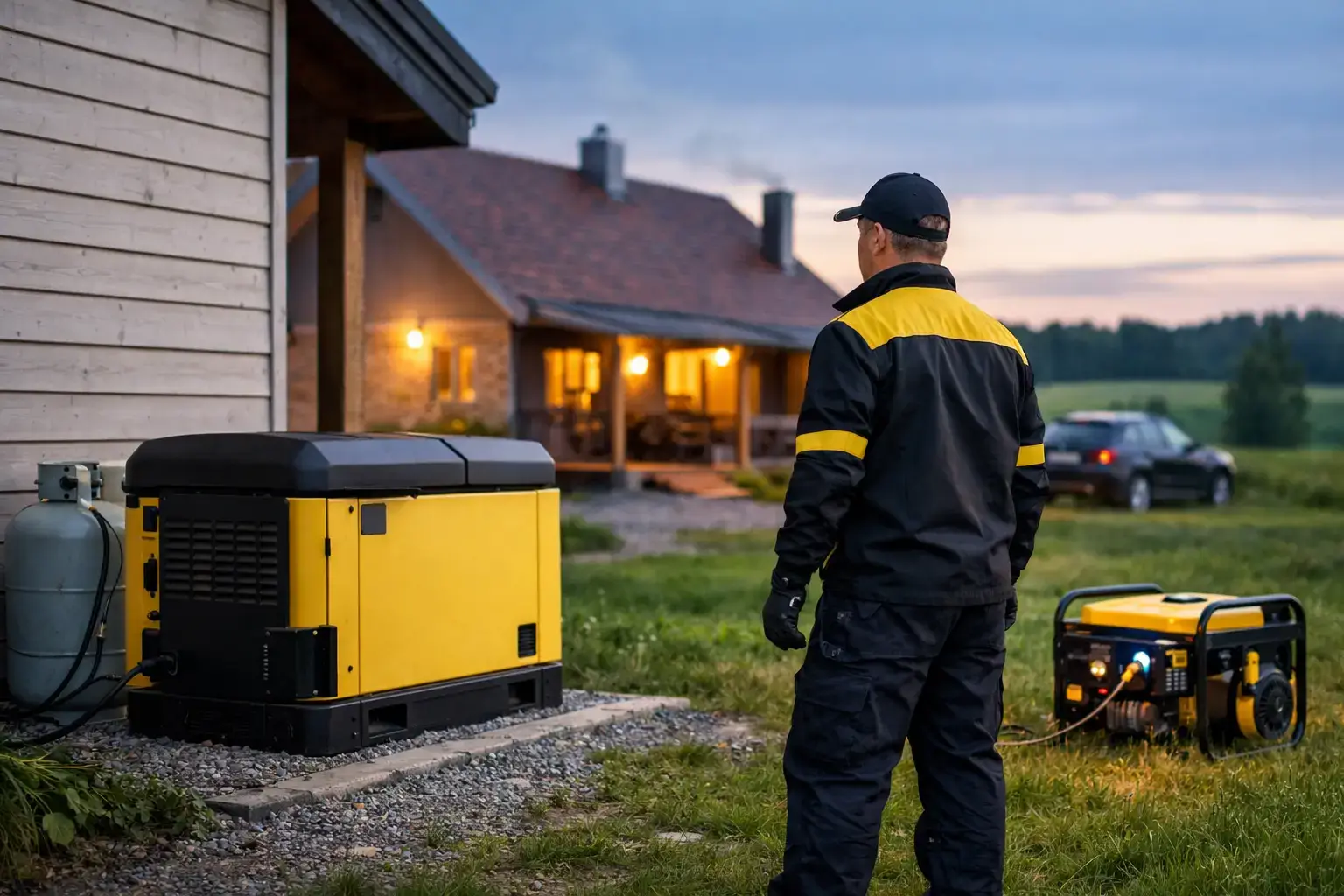
A rural outage is rarely a short inconvenience. It can mean a dark well house, a cold boiler, a freezer full of food at risk, and no way to charge tools or communications. A properly planned generator backup for rural home use keeps the systems that matter running without guessing, overloaded extension cords, or a last-minute trip for fuel.
The right generator is not always the biggest one. It is the unit that starts reliably in cold weather, carries your real loads, has fuel you can store and manage, and connects to the home safely. Start with what must stay powered, then build the backup system around that list.
Start With the Loads That Keep the Property Running
Most rural homes do not need to power every appliance during an outage. Trying to run electric heat, a range, a clothes dryer, a deep well pump, workshop tools, and the whole house from one portable generator quickly pushes the required output and fuel use far beyond what is practical.
Instead, separate essential loads from convenience loads. Essential loads often include a well or pressure pump, refrigerator and freezer, heating controls and circulation pumps, a septic pump, a few lights, internet equipment, and phone charging. If the property relies on an electric gate, security system, or a small livestock water system, include those as well.
A typical refrigerator may use 150 to 300 running watts but need much more for a moment when its compressor starts. A sump pump or well pump can be the deciding load because motors demand a high starting surge. A 1/2-horsepower well pump may run around 1,000 watts yet need 2,000 watts or more to start. Check the equipment label or manual whenever possible rather than relying only on estimates.
Running Watts and Starting Watts Are Not the Same
Generator sizing depends on two numbers. Running watts are the power an appliance needs while operating. Starting watts, also called surge watts, are the temporary extra power required when a motor starts.
Add the running watts for everything likely to operate at once, then add the largest starting surge. Do not add every surge value together unless those motors will actually start at the same time. A practical target is to choose a generator with enough rated running output to cover normal demand and enough peak output to start the heaviest motor without bogging down.
For many homes with a well pump and basic heating controls, a generator in the 5,000 to 8,000 running-watt range is a useful starting point. A smaller home without a pump may work well with 2,000 to 4,000 watts. A larger property with multiple pumps, larger heating equipment, or a planned whole-home connection may require 8,000 watts or more. The load calculation decides it.
Choose the Right Generator Type for Rural Backup
Fuel, noise, portability, and power quality all affect the best choice. There is no single correct generator for every property.
An inverter generator produces stable power suited to electronics, modern boiler controls, routers, battery chargers, and sensitive appliances. It is typically quieter and more fuel-efficient at lighter loads because the engine speed can adjust to demand. For essential-load backup and overnight operation close to the house, lower noise can make a real difference.
Conventional open-frame generators are often the practical choice when high wattage and demanding motor loads matter most. They are well suited to pumps, tools, outbuildings, and heavier emergency loads. They are generally louder than inverter models, so placement and operating hours deserve more attention.
Dual-fuel generators add useful flexibility. Gasoline is easy to find and delivers strong performance, while propane stores longer and avoids many of the fuel degradation problems associated with gasoline. A property with a properly sized propane supply can keep a dual-fuel unit ready for seasonal outages. The trade-off is that propane operation usually delivers slightly less maximum output, and cold weather can reduce vaporization from smaller cylinders.
Diesel generators are worth considering for high-use applications, larger equipment loads, and owners already maintaining diesel machinery. They can be fuel-efficient and durable, but they need attention to winter fuel treatment, battery condition, and cold-start procedures.
Champion Baltics focuses on portable power equipment built for demanding use, but the same rule applies to every purchase: match the machine to the loads, fuel plan, and operating conditions on your property.
A Generator Backup for Rural Home Use Needs Safe Connection
The generator itself is only one part of the system. How power enters the house is just as important.
Never plug a generator into a wall outlet to feed the home. This dangerous practice, often called backfeeding, can energize utility lines and put line workers at risk. It can also damage equipment when utility power returns.
For a home backup setup, have a qualified electrician install a manual transfer switch or an interlock kit with an outdoor power inlet. A transfer switch lets you select dedicated circuits, such as the well pump, refrigerator, heating system, lights, and outlets. An interlock can allow the generator to supply the panel through a correctly sized breaker while physically preventing the main utility breaker and generator breaker from being on together.
The best option depends on the electrical panel, the number of circuits you need, local code requirements, and whether you want to manage individual circuits or broader house loads. This is not the place to cut corners. A safe connection makes outage operation faster and protects both the home and the utility network.
Plan for Fuel Before the Storm Arrives
A generator with no fuel is just extra weight in the shed. Runtime depends on generator size, load, fuel tank capacity, and temperature. Manufacturers usually list runtime at 25%, 50%, and sometimes 75% load. Expect consumption to rise sharply as load increases.
Gasoline is convenient but should be treated as a rotating supply, not a fuel to forget for two years. Use approved containers, store fuel away from living spaces and ignition sources, and follow local storage limits. Fuel stabilizer helps, but it does not make gasoline permanent. Rotate it through vehicles or equipment on a schedule.
Propane can be better for long-term readiness because it does not degrade in storage like gasoline. However, a small grill cylinder may run a large generator for only a few hours under meaningful load. If propane is part of the plan, calculate runtime with the actual generator and arrange enough capacity for the outage duration you expect.
Keep engine oil, a spare air filter, a spark plug where applicable, and a quality extension cord or generator cable with the unit. During a multi-day outage, basic maintenance supplies are as valuable as extra fuel.
Cold Weather Setup Matters More Than Advertised Wattage
For northern climates, cold-start readiness is not a marketing detail. It is a requirement. Store the generator where it stays dry and can be accessed after snow, but never operate it in a garage, barn, basement, or enclosed porch. Carbon monoxide can build up quickly and is deadly.
Run the generator outdoors on stable, level ground. Keep it well away from doors, windows, vents, and air intakes. Follow the manufacturer’s minimum clearance requirements, and make sure exhaust cannot drift toward the house. A battery-powered carbon monoxide detector inside the home is a smart extra layer of protection.
Use the correct oil viscosity for expected temperatures, maintain the battery on electric-start models, and test the unit before winter. Start it under load, not just at idle. Running a refrigerator, pump, or load bank confirms that the generator, cords, inlet, and transfer equipment work together when it counts.
Snow and rain protection must preserve ventilation. Do not wrap a running generator in a tarp or place it inside a tightly enclosed box. Use a purpose-built, ventilated shelter only if it is designed for generator operation and exhaust clearance.
Test the System Like You Expect to Use It
A backup plan fails when nobody has practiced it. At least twice a year, simulate an outage. Turn off utility power at the transfer equipment, start the generator, connect the inlet, and bring loads on one at a time. Watch for overloaded circuits, pump starting issues, loose connections, and unexpected loads.
This test also teaches everyone in the household the correct sequence: move the generator outside, check oil and fuel, start it, connect it, switch to generator power, then add essential circuits gradually. When utility power returns, remove loads, transfer back to utility power, allow the generator to cool, and store it correctly.
A rural property does not need a complicated backup plan. It needs a generator that can start, a safe way to connect it, enough fuel, and a tested list of priorities. Build that system before the weather turns, and the next outage becomes a controlled job instead of a long night of improvising.
