






Blog
Portable Generator Fuel Storage Guide for Safety

A generator that starts on the first pull or electric start is only half the backup-power plan. The other half is fuel that is clean, safe, and available when the lights go out or work needs to continue. This portable generator fuel storage guide covers the practical decisions that protect your equipment, your property, and your readiness.
Fuel is not a spare part you can ignore until an emergency. Gasoline can degrade, diesel can collect water and microbial growth, and propane needs correct cylinder handling. Store the right fuel the right way, rotate it on schedule, and your generator is far more likely to deliver power when it matters.
Start With Your Generator’s Fuel Type
Check the fuel type shown in your generator manual and on the fuel cap before buying containers or building a storage plan. Petrol generators require fresh unleaded gasoline. Diesel generators require clean diesel fuel. Dual-fuel generators may run on gasoline and propane, giving you two practical fuel options when one supply is limited.
Do not assume fuels are interchangeable. Putting gasoline into a diesel generator can cause severe fuel-system damage. Diesel in a gasoline engine will also stop the unit from running correctly and may require draining and service. Keep every container clearly labeled, especially where several machines share the same shed, garage, or work vehicle.
For many homeowners, a dual-fuel generator offers an advantage during extended outages. Gasoline is easy to obtain and works well for portable use, while propane does not go stale like gasoline. The trade-off is that propane output can drop in very cold weather, particularly with small cylinders under heavy load. Plan for the conditions where you will actually operate.
Portable Generator Fuel Storage Guide: Choose the Right Container
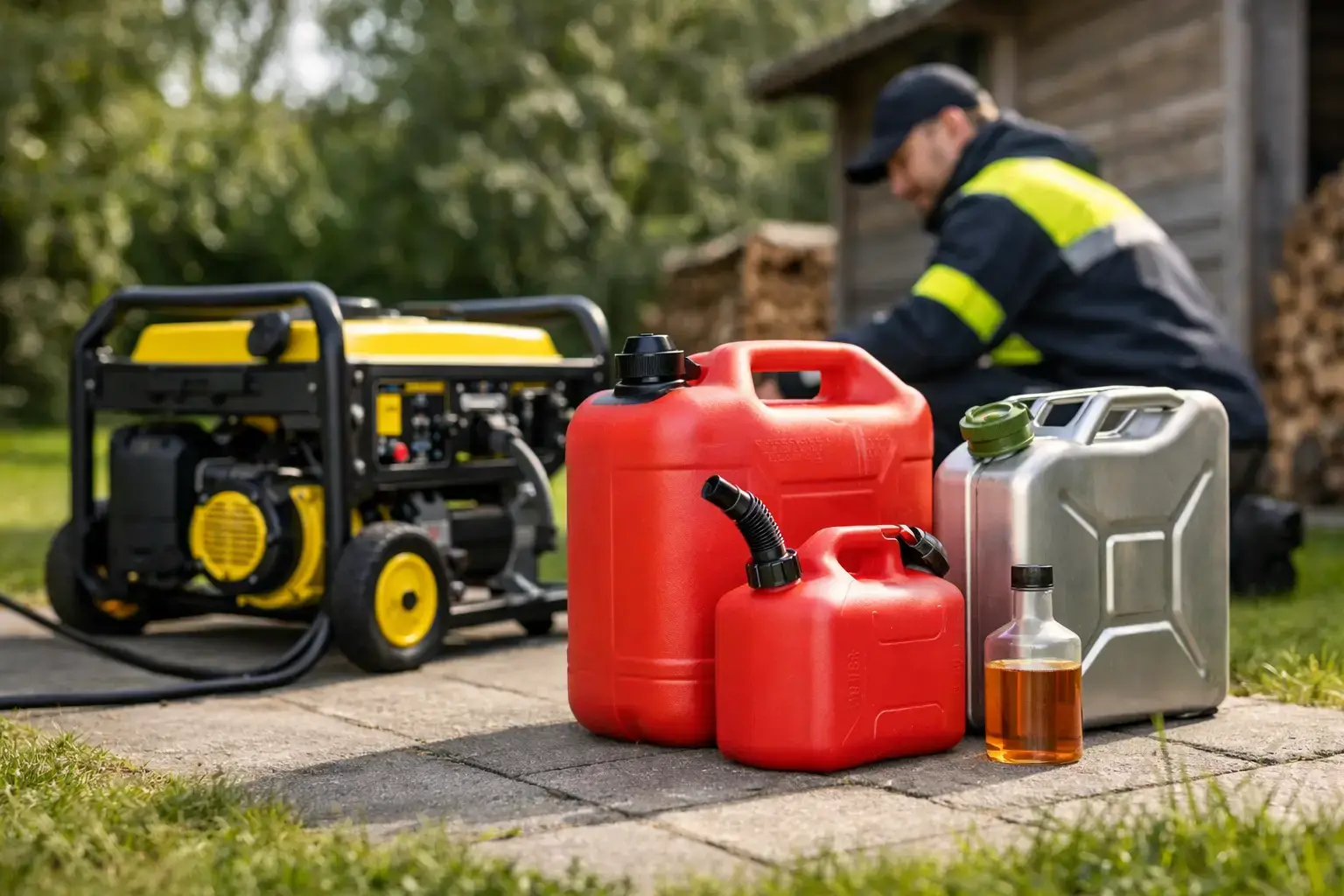
Fuel storage starts with approved containers, not leftover water jugs or unmarked cans. Use containers designed for the specific fuel, with a secure cap, durable handle, and proper venting system. Color coding helps prevent mistakes: red is commonly used for gasoline, yellow for diesel, and blue for kerosene. Labels still matter, especially on a busy property or jobsite.
For gasoline and diesel, choose quality fuel cans sized for how you use the generator. Smaller cans are easier to carry, pour, and rotate. Larger containers reduce refill trips but become heavy quickly and are harder to move safely in winter or over uneven ground. A practical setup is often several manageable containers rather than one oversized tank.
Propane must remain in approved cylinders. Never transfer propane from one cylinder to another unless you have purpose-built equipment and the training to use it. Check the cylinder valve, protective cap, hose connection, and visible condition before storage or use. A cylinder with deep rust, damage, or an unreadable certification marking should be inspected or replaced.
Avoid storing fuel in the generator’s tank for long periods unless the manufacturer specifically supports it and the fuel has been treated correctly. A fuel can is easier to inspect, rotate, and keep away from the engine. It also reduces the chance of old fuel sitting in the carburetor or fuel system between seasons.
Store Fuel Away From Heat, Sparks, and Living Areas
Gasoline vapors can travel to an ignition source. That makes storage location just as critical as the container itself. Keep gasoline and diesel in a cool, dry, well-ventilated area away from direct sun, open flames, pilot lights, welding work, electrical sparks, and battery charging stations.
Do not store gasoline or propane cylinders inside a house, basement, or living space. Avoid placing them next to a furnace, water heater, wood stove, or other appliance that can ignite vapors. A detached shed, purpose-built outdoor storage cabinet, or protected outbuilding is usually a better choice, provided it is dry, ventilated, and secure from children and unauthorized access.
Propane cylinders should be stored upright outdoors on a stable surface. Keep the valve closed when the cylinder is not connected, and keep the cylinder away from areas where snow, debris, or standing water can hide damage. Never store a propane cylinder on its side.
Local fire codes, insurance requirements, and workplace rules can limit how much fuel you may keep and where it may be stored. Follow the most restrictive applicable requirement. If you need a larger reserve for a farm, workshop, or remote property, a properly installed bulk-fuel solution may be safer than accumulating many portable cans.
Keep Gasoline Fresh and Diesel Clean
Fresh fuel is a maintenance item. Untreated gasoline can begin losing quality in a matter of months, and modern ethanol-blend fuel can attract moisture. Old gasoline may cause hard starting, rough running, carburetor deposits, and fuel-system corrosion.
Buy gasoline in quantities you can realistically use within a short rotation cycle. If you need to store it longer, add a fuel stabilizer at the time of purchase, following the treatment ratio on the product label. Stabilized fuel can last much longer than untreated fuel, but it still should be checked, rotated, and used rather than forgotten at the back of a shed.
Diesel is generally more stable than gasoline, but it is not maintenance-free. Water contamination, condensation, sediment, and microbial growth can create plugged filters and poor running. Store diesel in clean, sealed containers and keep water out of funnels, caps, and transfer equipment. If diesel will sit for an extended period, use a diesel treatment suited to storage conditions and inspect it before filling the generator.
A simple rotation system prevents most fuel problems. Mark each can with the fuel type and purchase month. Use the oldest suitable fuel in a vehicle, machine, or generator first, then refill the can with fresh fuel. This first-in, first-out approach keeps your reserve active instead of turning it into a collection of unknown liquids.
Calculate How Much Fuel You Actually Need
More fuel is not always better. The right reserve depends on generator fuel consumption, expected outage duration, available storage space, and local storage rules. Start with the generator’s published run time at a typical load, not just its maximum tank capacity.
For example, a generator that uses roughly one gallon per hour at your normal home load will need about 12 gallons for a 12-hour outage. But actual consumption changes with load. Running a refrigerator, lights, internet equipment, and a furnace blower uses far less fuel than running electric heaters, a well pump, a large compressor, and kitchen appliances at once.
Test your real setup before an emergency. Run the generator with the appliances you intend to support and note fuel use over several hours. This gives you a better reserve target than guessing from the generator’s maximum watt rating. It may also show that load management can extend your available run time more effectively than storing excessive fuel.
Refuel Without Creating a Fire Risk
Never refill a generator while it is running or while the engine and muffler are hot. Shut the unit down, let it cool, and move fuel containers clear of the operating area before opening the cap. Refuel outdoors on stable ground, using a funnel or spout that gives you control.
Do not overfill the tank. Fuel needs room to expand, especially when temperatures rise. Wipe up any spill before restarting the generator, and move the fuel can away from the unit once refueling is complete. Keep a suitable fire extinguisher accessible near your storage area and generator operating location, but do not rely on an extinguisher as a substitute for good handling.
Generator operation is also an outdoor-only task. Carbon monoxide is invisible and dangerous. Position the unit well away from doors, windows, vents, and occupied spaces, then route power with correctly rated outdoor extension cords or a properly installed transfer setup.
Build a Seasonal Fuel Check Into Your Routine
Fuel storage works best when it is routine. At the start of each season, inspect containers for swelling, cracks, leaks, rust, damaged seals, or faded labels. Check propane cylinders and hoses for visible damage. Rotate aging gasoline, inspect diesel for contamination, and test-run the generator under load.
Cold-weather preparation deserves extra attention. Keep cans off bare ground where possible, protect them from snowmelt and standing water, and make sure caps can be opened with gloved hands. If your backup plan relies on propane, keep enough cylinder capacity for the temperatures and runtime you expect. In hard winter conditions, a spare full cylinder is practical insurance.
Champion Baltics customers often choose portable power because they need equipment that can move from home to workshop, forest site, or field job without excuses. Treat your fuel reserve the same way: labeled, maintained, protected, and ready to work. When the next outage or remote job arrives, the best fuel plan is the one you have already tested.
