






Blog
Maximum Resistance and Weatherproofing of Warrior Winches

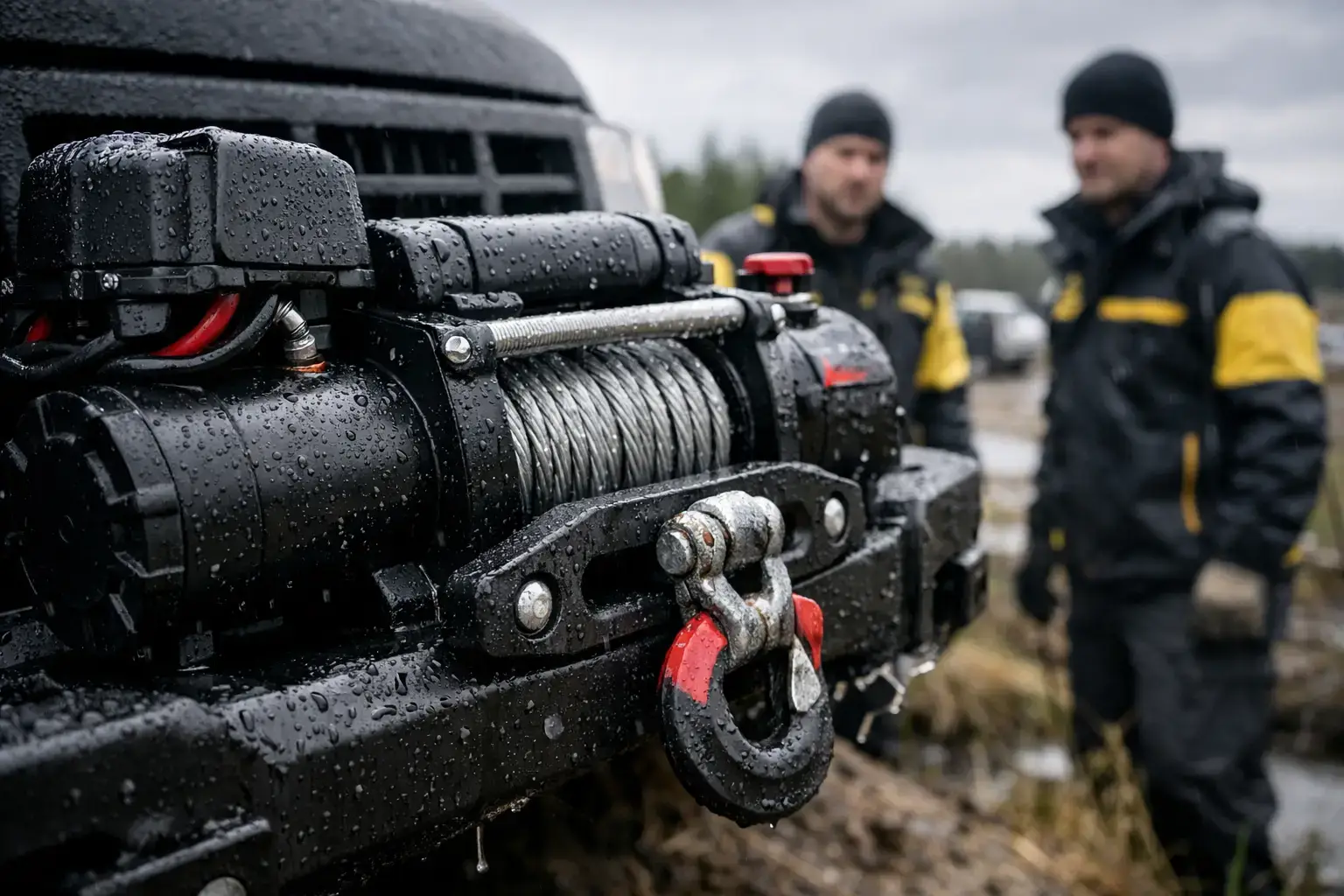
A recovery winch is most valuable when conditions are at their worst: wheels sunk in mud, a trailer stopped on a wet slope, or a vehicle stranded far from a paved road. Maximum resistance and weatherproofing of Warrior winches matter because water, abrasive grit, road salt, and freezing temperatures can turn a simple recovery job into an equipment failure. A winch built and maintained for harsh exposure gives you a better chance of completing the pull safely when there is no easy backup plan.
For landowners, off-road users, tradespeople, and field crews, weather protection is not just a feature on a specification sheet. It affects motor reliability, brake performance, cable condition, electrical connections, and the service life of the entire recovery system.
What Weatherproofing Protects on a Warrior Winch
Weatherproofing is not one part. It is a system of protections around the components that must continue working under load. The electric motor, gearbox, solenoid or control box, remote-control connections, drum, brake assembly, and wiring are all exposed to different risks.
Water is the obvious threat, especially during river crossings, rain, snowmelt, or pressure washing. But fine dust and mud are equally hard on moving components. Grit can work its way into seals and housings, while mud holds moisture against metal surfaces long after the recovery is finished. In coastal areas and on winter roads, salt adds another problem: it accelerates corrosion on terminals, fasteners, cable hardware, and mounting points.
A protected winch housing helps keep contaminants away from the motor and gear train. Sealed electrical connections reduce the risk of intermittent operation caused by moisture or corrosion. Durable external finishes help resist surface rust. These measures do not make any winch maintenance-free, but they significantly improve its ability to handle regular outdoor work.
Always check the protection rating and construction details for the specific Warrior model. The level of sealing, control-box placement, rope type, and intended use can vary between vehicle-recovery and utility winches.
Maximum Resistance Starts With the Whole Installation
A powerful winch can still fail early if it is mounted poorly. Maximum resistance is created by the winch, its mounting system, electrical supply, and recovery accessories working as one unit.
The mounting plate or bumper must be rated for the winch and vehicle application. It needs to distribute pulling forces into a suitable structural mounting area, not flex under load or rely on thin unsupported metal. Loose mounting bolts allow movement, which can damage the winch feet, distort the fairlead alignment, and fatigue the mounting surface over time.
Electrical installation deserves the same attention. Use correctly sized battery cables, protect them from sharp edges and exhaust heat, and secure them so vibration cannot wear through the insulation. Keep battery terminals clean and tight. A weak battery, undersized cables, or corroded ground connection can make a capable winch slow down, overheat, or stop when it is needed most.
The control box should be positioned where it is protected from direct spray and physical damage while remaining accessible for inspection. If the vehicle is regularly driven through deep water, mud, or snow, check the cable entries and terminals more often. A cover can help during storage, but it should not trap moisture against the winch after use.
Steel Cable or Synthetic Rope in Harsh Weather?
The right line affects both resistance to the environment and daily handling. Steel cable is highly abrasion-resistant and tolerates contact with rough surfaces well. It is a practical choice for utility work where the line may drag over dirt, rock, timber, or metal. The trade-off is weight, the need for regular lubrication, and the risk of corrosion if the cable is left wet or salt-covered.
Synthetic rope is lighter, easier to handle, and stores less kinetic energy than steel cable if it breaks. It is popular for vehicle recovery, especially when frequent handling is expected. However, synthetic rope is more vulnerable to abrasion, heat, UV exposure, and contamination by fine grit. It needs a protective sleeve where it contacts rough surfaces and should be washed after muddy or sandy use.
Neither option is automatically better in every situation. A farm or forestry utility setup may favor the abrasion tolerance of steel. An off-road recovery vehicle may benefit from the lighter handling and safer break behavior of synthetic rope. In both cases, inspect the line before every serious pull. Replace damaged, flattened, frayed, kinked, or heavily corroded line before it becomes a recovery hazard.
The Fairlead Is Part of the Weather Defense
The fairlead guides the line onto the drum and prevents unnecessary damage during angled pulls. Roller fairleads are commonly paired with steel cable, while hawse fairleads are typically used with synthetic rope. The important point is condition: rollers must turn freely, and a hawse surface must remain smooth without sharp grooves or burrs.
Mud and road grit can collect around the fairlead and cut into a rope or cable under tension. Clean it after use, especially before winding the line back onto the drum. A clean line and fairlead reduce wear every time the winch is used.
Cold, Salt, and Long Periods Without Use
Winter use exposes a winch to several problems at once. Water can freeze around the drum or line, thickened grease can increase resistance in the gear train, and salt spray can attack exposed electrical hardware. The winch may appear fine during a quick visual check, then refuse to operate under load months later.
After driving on salted roads or working near saltwater, rinse the outside of the winch with low-pressure fresh water. Avoid forcing water directly into seals, electrical connectors, or the control box. Let the unit dry, then inspect cable terminals, hook hardware, fairlead surfaces, and mounting bolts. Apply an appropriate corrosion inhibitor to exposed metal parts where the manufacturer permits it.
For a vehicle that is stored for long periods, run the winch briefly at intervals. Spool out and rewind a short length under light control to confirm that the motor, remote, and free-spool mechanism work correctly. Do not perform a high-load test without a safe anchor point and proper recovery equipment. The goal is to find an issue before a real recovery, not to stress the system unnecessarily.
A Practical Care Routine After Recovery Work
The most useful maintenance happens immediately after the job. If the winch has been submerged, packed with mud, or used in heavy rain, do not simply park and forget it. Clean visible mud from the drum, fairlead, hook, and mounting area. Rinse salt and dirt carefully, then allow the equipment to dry.
Unspool enough line to inspect the first layers on the drum. This is where trapped water and grit can stay hidden. Rewind the line evenly with light tension so it does not bunch up on one side. Check that the hook safety latch closes properly and that the recovery strap, shackles, and snatch block are clean, undamaged, and stored dry.
Before the next use, test the remote or wired controller, inspect battery voltage and connections, and confirm that the clutch engages and disengages correctly. Small checks take minutes. A seized free-spool lever or green, corroded terminal is far easier to deal with in the driveway than on a forest track after dark.
Use Weatherproofing With Safe Recovery Practice
Weather resistance protects the equipment, but it does not change safe working limits. Match the winch capacity to the vehicle or load, remembering that mud, slope, suction, rolling resistance, and snatch-block setups all affect the force required. Use rated recovery points and properly rated accessories. Keep people clear of the line and pulling path, and never stand over or step across a tensioned rope or cable.
A winch should also be used in controlled duty cycles. Long, continuous pulls generate heat in the motor and electrical system. If the winch slows down or components become excessively hot, stop and allow it to cool. For difficult pulls, use a snatch block to improve pulling power and reduce strain when the setup allows it.
A Warrior winch that is mounted correctly, protected from contamination, and checked after hard use becomes dependable recovery equipment rather than an accessory you hope will work. Treat weatherproofing as an active routine – clean it, inspect it, and correct small faults early – so your winch is ready when the ground, weather, and workload are against you.
