





Blog
Best Pressure Washer for Farm Jobs That Matter

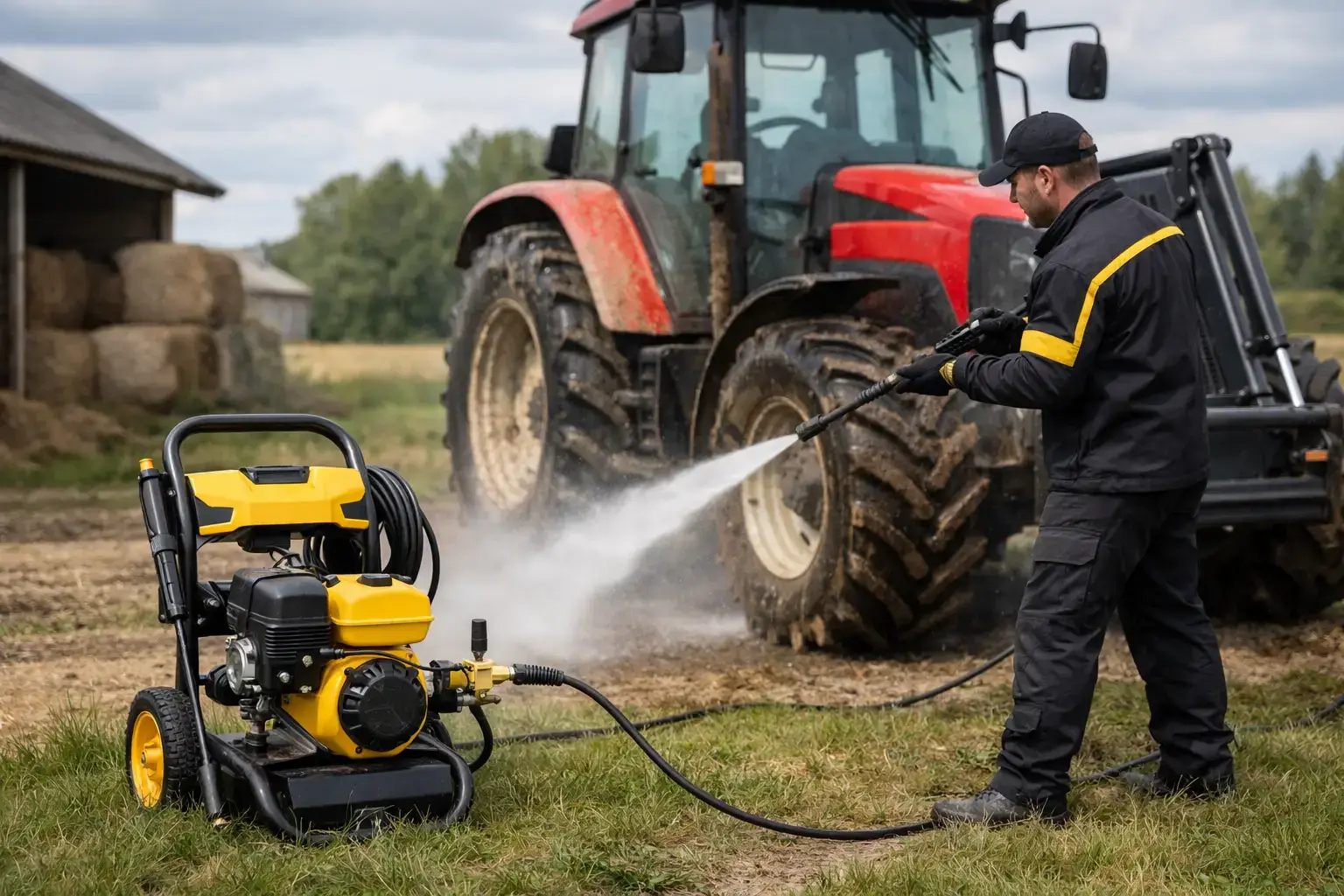
Mud does not wait for a convenient day. It hardens on tractor wheels, packs into implements, and turns barn walkways into a slippery job. The best pressure washer for farm work is not simply the unit with the highest PSI on the box. It is the machine that delivers enough water volume, starts reliably when temperatures drop, and can run long enough to clean equipment without becoming another maintenance problem.
For most farms, a pressure washer is working equipment. It needs to handle machinery, trailers, yards, fencing, feed areas, and seasonal cleanup. Choosing it comes down to matching output and construction to the jobs actually waiting outside.
What Makes the Best Pressure Washer for Farm Work?
Start with two ratings: PSI and GPM. PSI, or pounds per square inch, measures the force of the spray. It helps break loose compacted dirt, manure, grease, and dried mud. GPM, or gallons per minute, measures water flow. That flow carries loosened material away and determines how quickly you can finish a large tractor, livestock trailer, or concrete yard.
A high-PSI washer with weak water flow may hit hard but clean slowly. For farm use, GPM often matters just as much as PSI, especially when cleaning broad surfaces. A practical target for regular equipment and yard cleaning is generally a gas pressure washer in the 3,000 to 4,000 PSI range with around 2.5 to 4 GPM. The right output depends on the surfaces and the number of hours the machine will work each week.
For occasional cleaning of ATVs, small implements, and light-duty property tasks, lower output can be enough. For a working farm with tractors, loaders, manure equipment, and long washdown days, stepping up in water volume is usually worth it.
Do Not Buy by PSI Alone
Pressure and flow work together. Multiplying PSI by GPM gives a rough cleaning-unit figure, which is useful for comparing washers in the same class. But the engine, pump, hose, and fittings must also be built to support that output over time.
A unit that produces strong peak numbers but uses light-duty components may not be the better value. Look for a pressure washer with a dependable engine, a quality pump designed for regular operation, and a frame that can take being moved over gravel, mud, and uneven ground.
Gas or Electric Pressure Washer for a Farm?
An electric pressure washer makes sense near a workshop, garage, or milk room where power and water are always available. It is quieter, requires less engine maintenance, and works well for lighter washdown jobs. It is not usually the first choice for cleaning a tractor in a field shed or washing trailers away from the main building.
Gas-powered pressure washers offer the mobility most farm owners need. They can be taken to machinery, outbuildings, gates, livestock areas, and remote storage yards without relying on extension cords. They also typically provide the PSI and GPM needed for heavier work.
The trade-off is routine maintenance. Gas engines need fresh fuel, oil checks, air-filter service, and proper storage. In cold conditions, make sure the engine has a reliable recoil start, suitable oil for the season, and fuel that has not been sitting through months of storage. A machine that starts easily on a mild summer morning but refuses to run in late autumn is not ready for real farm duty.
Cold Water or Hot Water Cleaning?
Cold-water pressure washers handle the majority of farm cleaning: soil, dried mud, plant residue, dust, and general buildup. They are simpler, more portable, and usually more affordable. For many landowners, cold water plus the right detergent is the sensible working setup.
Hot-water pressure washers earn their place where oil, grease, animal fats, and heavy grime are frequent problems. Heat cuts through greasy hydraulic residue and oily workshop buildup much faster than cold water alone. They cost more, weigh more, and require more care, so they make the most sense for commercial workshops, livestock operations with regular sanitation needs, or farms that clean oily equipment every week.
If your main job is mud removal, buy enough water flow before paying extra for heat. If grease is the daily enemy, hot water can save significant time and detergent.
Build Quality Matters on Uneven Ground
Farm use is hard on equipment. The washer will be pulled across gravel, loaded into a trailer, parked beside a shed, and exposed to dust and spray. A stable steel frame, large puncture-resistant wheels, protected hose connections, and a practical handle are not cosmetic details. They determine whether the unit is easy to use after the first season.
Pay close attention to the pump. An axial cam pump is common on homeowner-grade machines and can be suitable for occasional work. For frequent, longer cleaning sessions, a triplex pump is the stronger choice. It is generally better suited to extended use, produces less heat under load, and can be serviced rather than replaced as a complete unit.
A long, abrasion-resistant high-pressure hose also improves the job. Constantly repositioning the washer around a tractor wastes time and increases the chance of dragging the machine through mud. Fifty feet is useful for many farm tasks, while longer hose runs can be valuable around larger machinery and buildings.
Use the Right Nozzles and Accessories
The spray tip controls how aggressively the washer cleans. A narrow-angle tip concentrates force and can remove stubborn dirt, but it can also damage paint, decals, soft wood, seals, and livestock-area surfaces if used carelessly. Wider-angle tips are better for general washdown and rinsing.
A practical farm setup should include several quick-connect nozzles, a detergent option, and a trigger gun that is comfortable during longer jobs. A turbo nozzle can speed up removal of packed mud on suitable hard surfaces, though it should be kept away from bearings, tires, painted panels, and fragile materials.
For concrete lanes, workshop floors, and large flat areas, a surface cleaner can produce a more even result with less overspray. For trailers, rooflines, and high-sided equipment, an extension wand may improve reach, but it should be used carefully. More reach also means less control over the spray.
Match the Washer to Your Water Supply
A pressure washer cannot create water that is not available. Check the supply before choosing a high-flow machine. A washer rated at 4 GPM needs a water source that can provide at least that amount consistently. If the supply is weak, the pump can starve for water, run hot, and wear prematurely.
Measure the available flow from the tap or water tank, especially on older rural systems. Use a proper supply hose with enough diameter and avoid tight kinks. If drawing from a tank, pond, or other non-pressurized source, use only a setup specifically designed for that purpose and protect the pump from sediment.
Water quality matters as well. Sand, silt, and mineral-heavy water shorten pump life. A clean inlet filter is cheap protection and should be checked regularly.
Safety and Maintenance Keep It Ready
Pressure washer spray can cut skin, force debris into eyes, and damage components in seconds. Wear eye protection, boots with grip, and gloves when needed. Never point the gun at people, animals, electrical equipment, hydraulic couplings, or yourself. Keep the nozzle moving and begin with a wider spray pattern before increasing intensity.
After each job, release pressure from the system, inspect the hose and fittings, and remove debris from the inlet screen. Do not let water freeze inside the pump, hose, or gun. In regions with real winter temperatures, pump protector is not optional storage gear. It helps prevent freeze damage and keeps internal seals from drying out.
Keep spare nozzles, engine oil, pump protector, and replacement filters where the washer is stored. The most useful machine is the one that can be serviced before a busy day, not after it fails in the yard.
Choose a pressure washer with enough flow for the work, an engine and pump built for the hours you expect to run, and parts support that remains available after the sale. When the next tractor comes in covered in field mud, the right machine will already be ready to work.
