




Blog
Pressure Washer Nozzle Guide

A pressure washer can clean fast or cause expensive damage in seconds, and the nozzle is usually the reason. This pressure washer nozzle guide is built to help you choose the right spray tip for the job, protect the surface, and get more from the machine you already own.
If you have ever stripped paint you meant to keep, cut lines into wood decking, or wondered why your washer feels weak on concrete, the problem often comes down to nozzle choice. Pressure, flow, spray angle, and distance all work together. Get one of them wrong and cleaning slows down or the surface pays for it.
Pressure washer nozzle guide basics
Most pressure washer nozzles are color-coded by spray angle. That angle controls how concentrated the water stream is when it hits the surface. A narrow angle hits harder in a smaller area. A wider angle spreads the force out, covers more surface, and is usually safer.
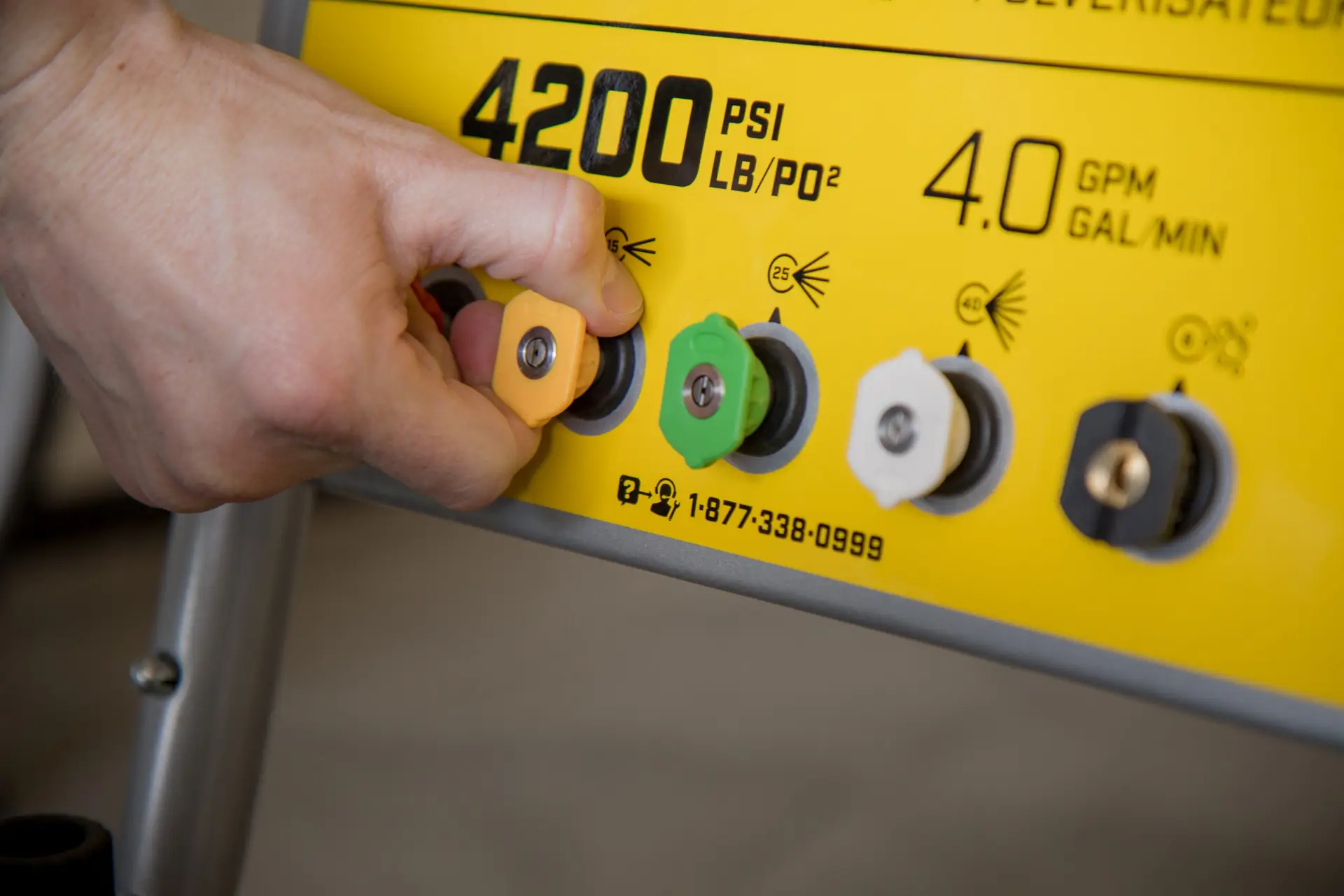
The standard set includes red 0-degree, yellow 15-degree, green 25-degree, white 40-degree, and black soap nozzles. On paper, that looks simple. In real work, the correct choice depends on the material, how dirty it is, and how much pressure your machine produces.
There is a trade-off every time. A more aggressive nozzle removes grime faster, but raises the risk of etching, splintering, or forcing water where it should not go. A wider nozzle is slower on heavy buildup, but it gives you more control and a bigger margin for error.
What each nozzle color actually does
The red 0-degree nozzle creates a very tight stream. It delivers maximum impact in one small line. That makes it useful for very stubborn buildup on hard surfaces, but it is also the easiest way to damage concrete, gouge wood, or blow apart soft materials. For most homeowners and many professionals, it is a niche tool, not a default nozzle.
The yellow 15-degree nozzle is still aggressive, but more practical. It is commonly used for stripping grime from concrete, brick, or other hard surfaces where a broad fan would take too long. It can also remove loose paint, though that is exactly why you should keep it away from finishes you want to preserve.
The green 25-degree nozzle is often the everyday working tip. It gives you enough force for driveway cleaning, siding wash-downs, equipment cleanup, and many general outdoor jobs without being overly concentrated. If you are unsure where to start, this is usually the safest first choice after testing.
The white 40-degree nozzle is built for lighter cleaning and delicate surfaces. It works well on vehicles, painted surfaces, patio furniture, windows from a safe distance, and general rinsing. It will not cut through heavy buildup quickly, but it lowers the chance of damage.
The black soap nozzle is different from the others because it is meant for low-pressure chemical application, not hard-impact cleaning. It lets the machine draw detergent properly. If your soap injector is not pulling detergent, using the wrong nozzle is one of the first things to check.
How nozzle angle affects cleaning power
People often talk about PSI first, but the nozzle decides how that pressure is delivered. A machine with plenty of output can still feel weak if the nozzle angle is too wide for the task. On the other hand, a strong machine paired with an overly narrow tip can become destructive very quickly.
Think of it this way. The same pressure spread across a wide fan is less intense at any one point. That is good for painted metal, plastic trim, and wood that is still in good condition. Concentrate that same pressure into a tight stream and you gain cutting power, but lose forgiveness.
Distance matters just as much. Move a 25-degree nozzle close enough and it becomes far more aggressive. Back a 15-degree nozzle away and it can behave more safely. That is why experienced operators test a small area first instead of assuming the color alone guarantees a safe result.
Matching the nozzle to the surface
Concrete and masonry usually handle stronger nozzles well, especially for algae, oil residue, or packed dirt. A 15-degree or 25-degree nozzle is often the right place to start, depending on how tough the buildup is. Older concrete, decorative finishes, and soft mortar joints need more caution.
Wood decking and fencing are where many mistakes happen. Wood fibers lift and scar easily under concentrated pressure. A 25-degree or 40-degree nozzle is normally the safer move, used with more distance and steady passes. If the wood is weathered, cracked, or soft, even a moderate nozzle can leave marks.
Vehicles, trailers, ATVs, and painted equipment usually respond best to a 40-degree nozzle or a soap nozzle followed by a gentle rinse. Mud may tempt you to use a narrower tip, but seals, decals, bearings, and paint all have limits. High pressure too close to the surface can force water into joints and electrical areas where it does not belong.
Siding is another case where surface type changes the answer. Vinyl can be cleaned effectively with a 25-degree or 40-degree nozzle if you work at the right distance and avoid shooting water upward under panels. Brick and tougher exterior materials can handle more force, but windows, trim, vents, and caulk lines still need care.
Farm equipment, trailers, and workshop floors often need a practical middle ground. Grease, compacted dirt, and road film can demand more bite than a vehicle wash, but hoses, electrical connectors, and worn coatings still need protection. In these situations, switching between soap, 25-degree, and 40-degree nozzles usually gets better results than trying to force one tip to do everything.
Nozzle size matters too, not just color
A proper pressure washer nozzle guide should go beyond spray angle. Orifice size matters because it affects both pressure and flow through the machine. If the nozzle opening is too large, the washer may feel underpowered. If it is too small, the machine can run above its intended pressure and put extra strain on the pump.
That matters most when replacing lost nozzles or upgrading accessories. The correct nozzle must match your machine’s PSI and GPM rating. Two nozzles may both be green 25-degree tips, but if the orifice size is wrong, performance changes immediately.
This is one reason bargain replacement tips can be a bad fit. They may physically connect, but not actually match the machine. If your washer suddenly loses cleaning force after a nozzle swap, compatibility is worth checking before assuming the pump is failing.
Turbo nozzles and adjustable nozzles
A turbo nozzle spins a narrow stream in a circular motion, giving you the cutting effect of a tight spray with more surface coverage. It is popular for concrete, stone, and heavily soiled hard surfaces. Used correctly, it saves time. Used carelessly, it can mark softer materials just as fast as a 0-degree tip.
Adjustable nozzles sound convenient because they let you shift spray pattern without changing tips. They can work well for light-duty flexibility, but fixed tips are often more consistent for demanding cleaning. If you rely on your equipment for regular work, predictable performance usually beats convenience.
Common mistakes that waste time or damage surfaces
The most common mistake is starting too aggressively. If you begin with a 15-degree or 0-degree nozzle because the surface looks dirty, you may clean quickly at first and then spend more time dealing with damage. Starting wider and moving narrower only if needed is usually the smarter sequence.
The second mistake is ignoring distance. Operators often blame the wrong nozzle when the real issue is that they are too close. A few extra inches can change the result from surface damage to controlled cleaning.
The third mistake is using high pressure when soap and dwell time would do the work better. Mold, road film, and oily grime often release more easily when detergent is applied first with the black nozzle and allowed time to work. Pressure alone is not always the fastest route.
A fourth mistake is forgetting that cold-weather equipment care matters. In harsh climates, blocked or worn nozzles can show up after poor storage, frozen residue, or mineral buildup. If the spray pattern looks uneven or the machine pulses, inspect the nozzle before assuming a larger fault.
How to choose the right nozzle fast
If you want a simple rule, match the nozzle to the most delicate part of the job, not the dirtiest. Start with white or green, test an inconspicuous area, and only step up in aggression if cleaning speed is clearly too slow. For detergent application, use the black nozzle. For concrete or stubborn hard-surface buildup, move toward yellow when the material can handle it.
If you own one machine for home, workshop, property, and vehicle use, a full nozzle set is not optional. It is the difference between one tool doing many jobs well and one tool doing every job poorly. For buyers who want dependable cleaning equipment and replacement accessories that stay work-ready, Champion Baltics serves the same practical mindset as the machines themselves – get the setup right, and the work gets easier.
The right nozzle will not make a weak machine stronger than it is, but it will make your pressure washer safer, more efficient, and far more useful when the next dirty job shows up.